
Outdoors
Waterfalls in the Finger Lakes, and How to Plan Around Them
The glaciers cut the main valleys deep and fast. The side streams that fed into them were left hanging, and they have been cutting down toward the new lake level ever since. Every one of those streams is a potential waterfall, which is why you find so many here in such a small area.
Why does this region have so many waterfalls?
Because the main valleys were deepened by ice much faster than the side streams could keep pace. Those streams were left entering the valley high above the floor, and they have been eroding downward through layered rock ever since, which produces long series of drops rather than single falls.
The rock helps. Alternating hard and soft layers erode at different rates, so streams carve staircases and undercut ledges rather than a smooth slope. That is the look people come for.
Where are the best ones?
They cluster at the southern ends of the lakes, where the land rises fastest. Watkins Glen, at the foot of Seneca Lake, is the best known and the closest to us at about twenty minutes. Ithaca, at the foot of Cayuga, is the other main concentration.
Watkins Glen State Park has a gorge trail passing nineteen waterfalls in a single mile, following a stream that drops four hundred feet between two hundred foot cliffs. We wrote about the village and what else fills a day there in our guide to Watkins Glen.
Smaller falls are scattered everywhere between. Many sit on private land or beside roads with nowhere to stop, so the state parks are where most visitors end up.
Practical points
- Spring has the most water. Late summer can reduce some falls to a trickle.
- Gorge trails are wet and the stone stays slick even in dry weather. Wear grip.
- Popular parks fill by mid-morning on summer weekends. Go early or late.
- Many gorge trails close in winter. Check before driving out.
When is the best time to see them?
Spring, for volume. Snowmelt and rain push the most water through, and the gorges are at their loudest. Autumn trades some of that flow for colour on the surrounding trees, which many people prefer. Late summer is the quietest for water.
If you are planning a trip around the season rather than a single sight, our guide to the best time to visit goes through the year month by month.
How do you combine falls with the wine country?
Walk in the morning, taste in the afternoon. Gorge trails are best early, before the heat and the crowds, and tasting rooms are better once you have finished walking. Keuka Lake is about twenty minutes west of Watkins Glen.
That twenty minutes surprises people. Our guide to the wineries near Watkins Glen explains how the two lakes sit next to each other and what each drive gives you.
What makes the rock produce staircases?
Layering. The bedrock here is shale and sandstone laid down in alternating bands, some hard and some soft. Water cuts the soft layers quickly, undercuts the hard ones above them, and those eventually break away. Repeat that a few thousand times and you get a stairway of drops.
It also explains the overhangs. Where a hard layer sits on soft rock, the stream carves back underneath and leaves a ledge you can walk behind. Several of the region's better known falls work exactly that way.
How do you stay safe in a gorge?
Stay on the trail and respect the closures. Gorge walls shed rock, particularly in spring after freezing and thawing, and the stone underfoot stays slick even in dry weather. Most incidents here involve people who left the marked path to get a photograph.
Water levels rise faster than people expect after rain upstream, even when it is dry where you are standing. If a stream is running higher and browner than when you arrived, turn round.
Photographing them
- Overcast days are better than bright sun. Gorges are high contrast.
- Morning has the least wind, which matters for long exposures.
- Spray carries further than it looks. Bring a cloth for the lens.
- Autumn gives colour, spring gives volume. They rarely coincide.
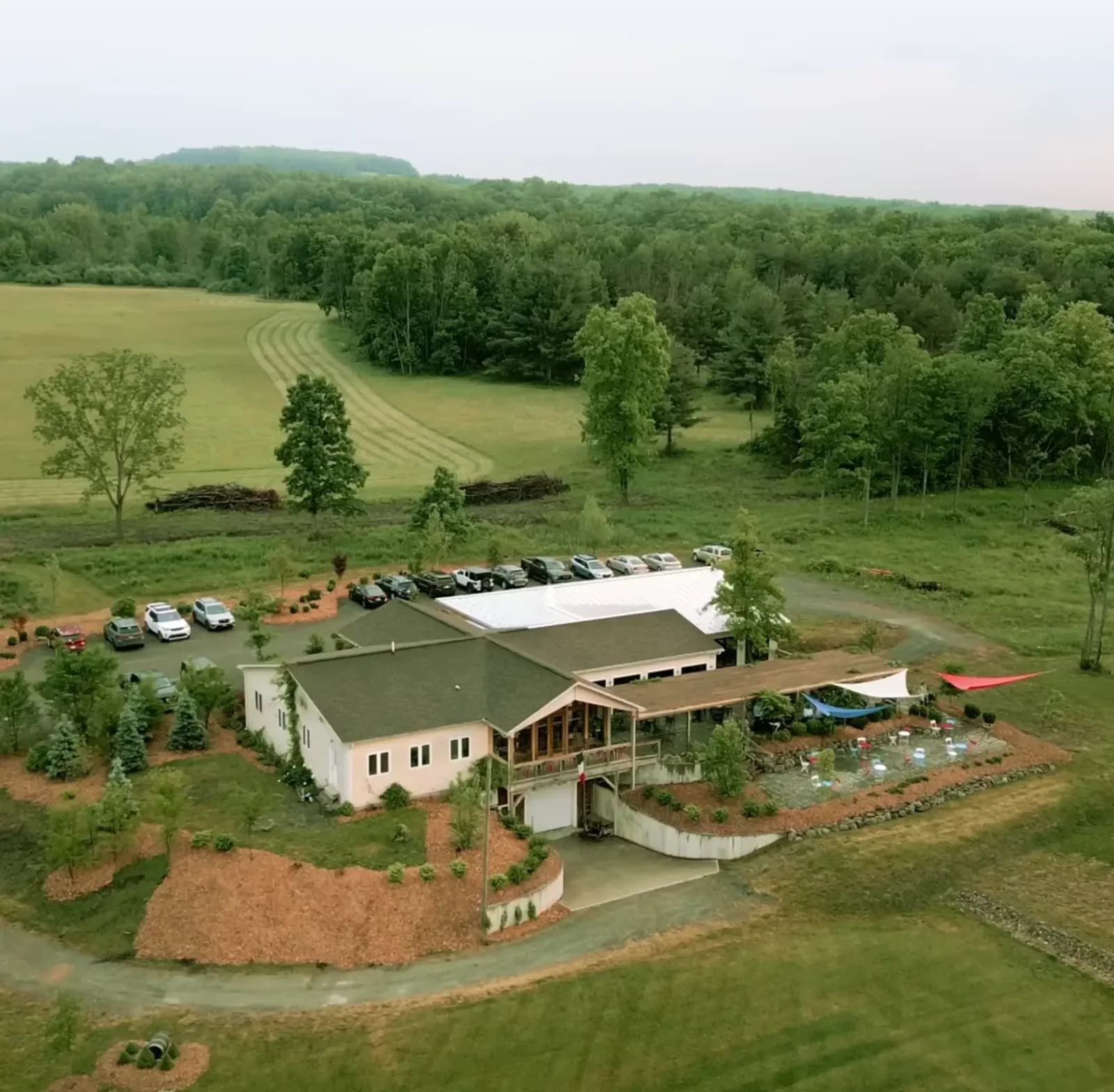
Twenty minutes west of Watkins Glen, on the east shore of Keuka. A good place to sit down after a morning in the gorge.
How many waterfalls are in the Finger Lakes?
Hundreds, though most are small or on private land. The accessible concentrations are in the state park gorges at the southern ends of the lakes.
Which waterfall is closest to Keuka Lake?
The Watkins Glen gorge, about twenty minutes east of Hammondsport at the foot of Seneca Lake.
Are the gorge trails hard?
Most are moderate rather than difficult, but they involve stairs and wet stone. Footwear with grip matters more than fitness.
Can you see waterfalls in winter?
Some freeze into ice formations, which is a sight of its own. Many gorge trails close for the season, so check before making the drive.
Written by
The Domaine LeSeurre Team
Céline & Sébastien LeSeurre and the team at Domaine LeSeurre — a family winery on Keuka Lake, in Hammondsport, New York. French roots, Finger Lakes soul.