The lake
Keuka Lake: The Facts Worth Knowing Before You Come
Guests ask us the same three questions on the terrace. Why is the lake that shape. How deep is it. And why does wine grow here when the winters are what they are. The answers are connected, and they are worth having before you drive around.
What is Keuka Lake known for?
Its shape and its wine. Keuka is the only Finger Lake shaped like a Y, with two northern arms divided by the ridge of Bluff Point. It is also where commercial grape growing in the region began, and vineyards still cover most of its slopes.
Locally it was long called Crooked Lake, for obvious reasons. The name stuck through the nineteenth century and still turns up on old maps and in business names around the villages.
How deep is Keuka Lake?
Deep enough to matter. Like the other Finger Lakes it was cut by glaciers into a long steep trough, and that depth is what stores summer warmth into the autumn and keeps winter from settling as hard on the shoreline as it does inland.
Seneca, the neighbouring lake to the east, is the deepest of the group. Keuka is smaller in every dimension, which is part of why its shores feel closer and its roads shorter.
For a visitor the practical effect is temperature. Slopes near the water stay a few degrees kinder than the hilltops behind them, at both ends of the year.
Why do grapes grow here?
Because of the water. A deep lake releases stored heat slowly through the autumn, extending the ripening season, and moderates the winter cold that would otherwise damage the vines. Without the lake, this latitude would be difficult for wine grapes.
That is why the vineyards sit on the slopes rather than the flat ground: cold air drains downhill past them, and the water below holds the temperature. Riesling became the signature grape of the whole region for the same reason, as the Finger Lakes Wine Alliance sets out.
Sébastien tasted grapes from more than two hundred vineyard sites across the region before we planted here. The lake is the constant; what changes from one slope to the next is how much of its effect you get.
Four things that shape a visit
- The Y shape means no shortcut between the two arms. Budget two hours for the loop.
- Hammondsport sits at the southern tip, where the branches meet.
- Penn Yan holds the north-east arm, Branchport the north-west.
- Slopes near the water are warmer than the hills behind, in autumn and in winter.
How does Keuka compare to the other lakes?
It is smaller and more enclosed than Seneca or Cayuga, with shorter drives between stops and less through traffic. That makes it easier to see properly in a day, and quieter when you get there. We compare the two directly in a separate guide.
If you are deciding where to base yourself, Keuka against Seneca goes through what each one is better at.
We came looking for a place where the water did the work. That is what this lake does.
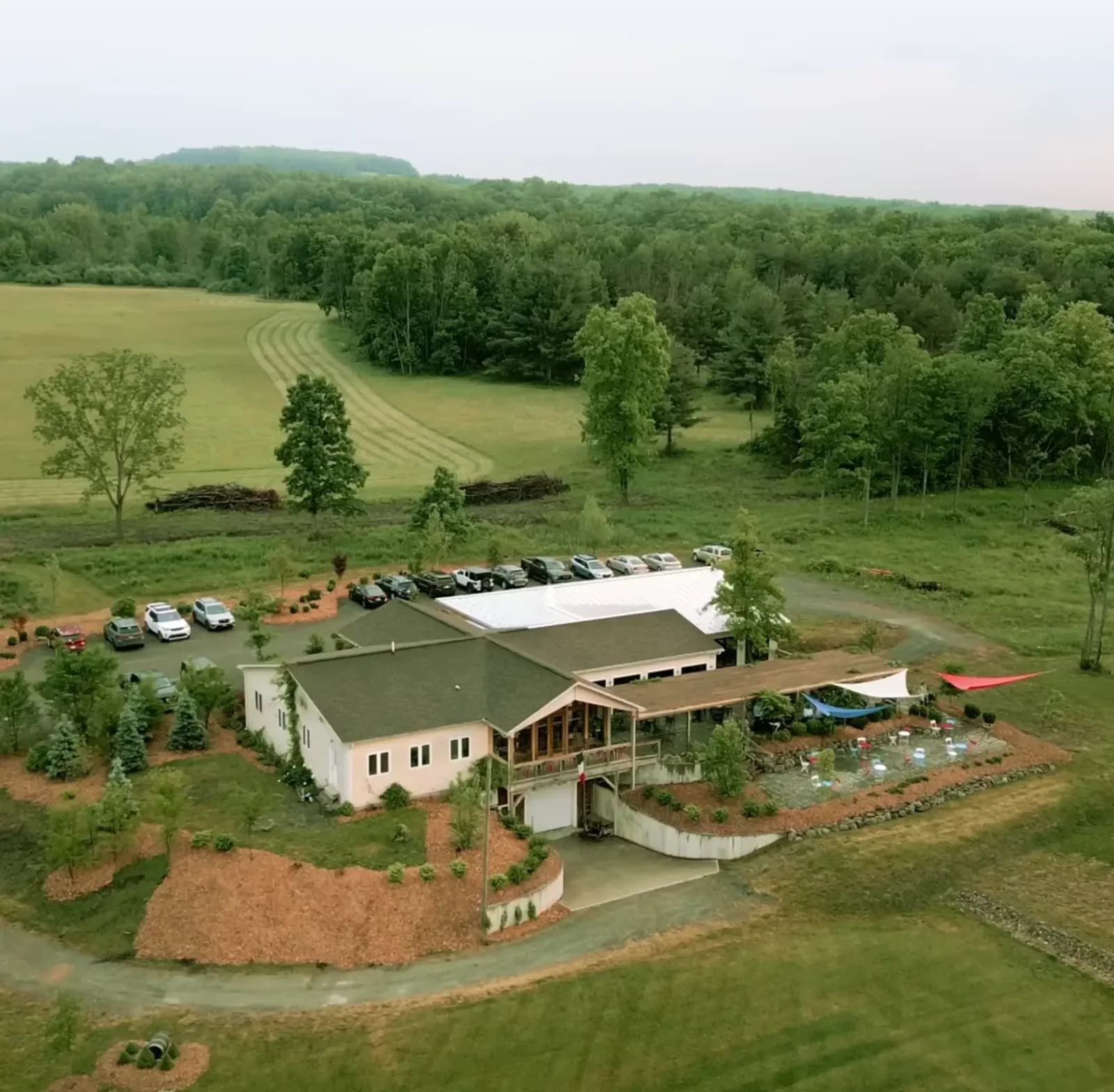
On the east shore, south of Bluff Point, where the two arms meet. Open daily, ten to six.
Is Keuka the deepest Finger Lake?
No, Seneca is the deepest of the group. Keuka is smaller in every dimension, which is part of why its shores feel closer together.
Why was Keuka called Crooked Lake?
For its Y shape. The name was in common use through the nineteenth century and still appears on old maps and in local business names.
What grapes grow on Keuka Lake?
Riesling is the signature of the region. We also grow Chardonnay, Pinot Noir, Cabernet Franc and Gewürztraminer, and make sparkling wine by the méthode champenoise.
Written by
The Domaine LeSeurre Team
Céline & Sébastien LeSeurre and the team at Domaine LeSeurre — a family winery on Keuka Lake, in Hammondsport, New York. French roots, Finger Lakes soul.