Wine 101 · Riesling
Is Riesling Sweet or Dry? A Winemaker's Answer
It's the first question we hear across the tasting bar, almost every day: is Riesling sweet or dry? The honest answer is both — and neither. Where a Riesling lands is a choice the winemaker makes, not something the grape decides. Let us explain.
Riesling has a reputation, and it isn't always a fair one. A lot of guests grew up on one very sweet bottle and filed the whole grape under "dessert wine." So they're surprised when the Riesling we pour on the terrace above Keuka Lake is dry. The grape didn't change. The decision in the cellar did.
So is Riesling sweet or dry?
Riesling can be dry, off-dry, or sweet — it spans the full range. The style is set by the winemaker, who chooses when to stop fermentation. Stop it early and some grape sugar stays behind. Let it run and the wine finishes dry. In cool-climate regions like the Finger Lakes, dry Riesling is common.
Here's the thing worth holding onto: Riesling is a canvas, not a fixed style. One grape, grown well, can become a crisp dry wine or a richer sweeter one, depending on a single decision the winemaker makes at the tank. That flexibility is exactly why the grape travels so well, and why our Riesling and our neighbor's Riesling can be built so differently.
What makes a Riesling sweet or dry in the first place?
Sweetness comes from residual sugar — the grape sugar left in the wine after fermentation. Yeast turns sugar into alcohol. If we let fermentation finish, almost no sugar remains and the wine is dry. If we stop it early, some sugar stays and the wine tastes sweeter. It's a choice, not an accident.
Let us translate that. Grapes arrive full of natural sugar. In the cellar, yeast eats that sugar and turns it into alcohol — that's fermentation, the heart of making any wine. Leave the yeast to finish its work and it eats nearly all the sugar. What's left is a dry wine. That leftover sugar has a name: residual sugar.
So a winemaker who wants an off-dry or sweet style steps in and stops fermentation early — usually by chilling the tank hard, which puts the yeast to sleep before it finishes. The sugar it didn't eat stays in the bottle. According to Wine Folly, this is why the same grape can be made bone-dry or lusciously sweet: the difference is a call made in the cellar, not a trait baked into the variety.
People ask if we grow a sweet grape or a dry grape. We grow one Riesling. Where it finishes is our decision, and we make it for each barrel.
How do you read a Riesling label to know?
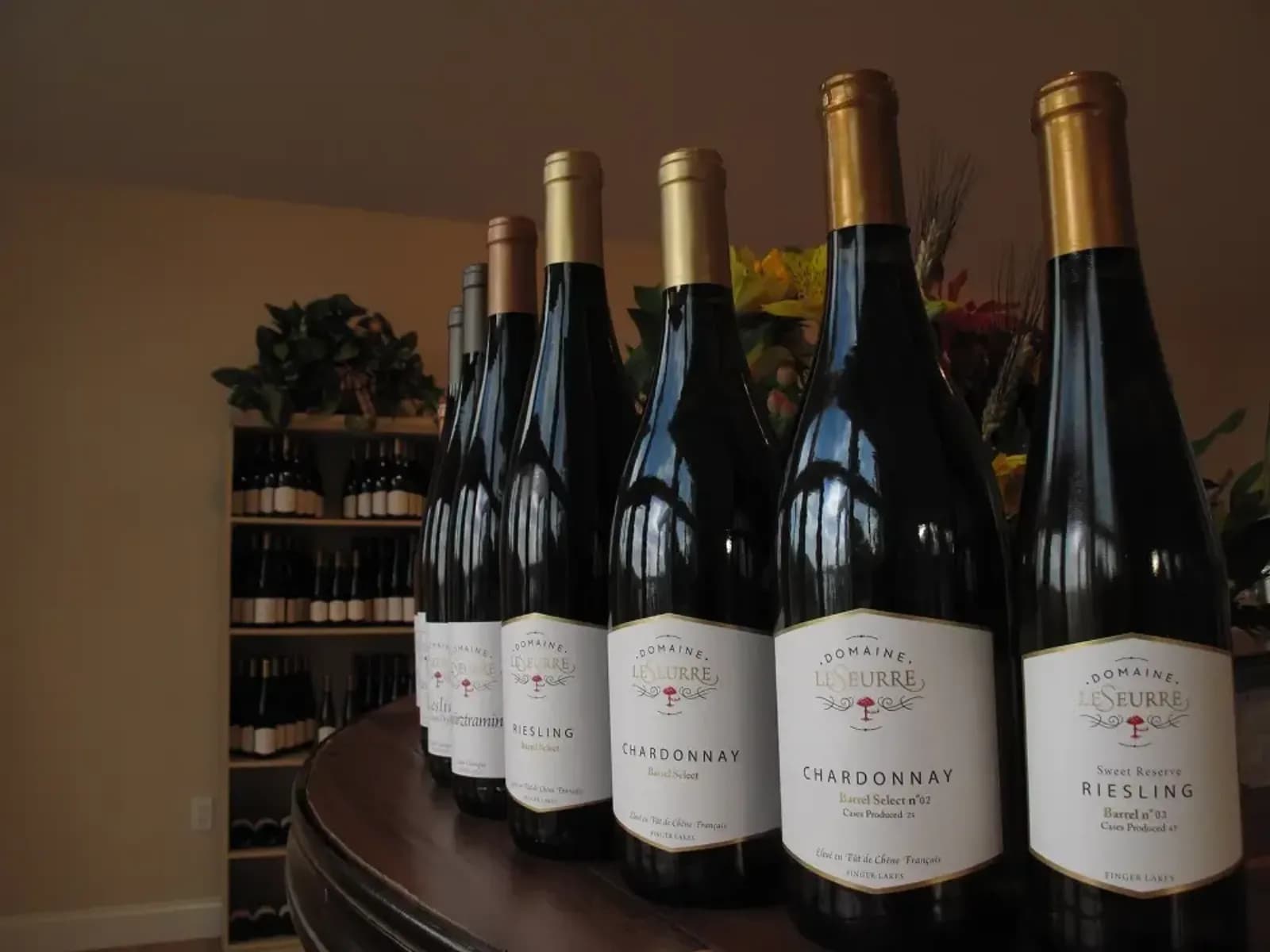
Look for the words dry, off-dry, semi-dry, or sweet on the label or the shelf tag. Many Finger Lakes producers also print the International Riesling Foundation Taste Profile scale — a small sliding bar that shows where the wine sits, from dry to sweet. When in doubt, ask the person pouring.
The label is your friend here, once you know what to look for. Plenty of Finger Lakes bottles carry a small scale on the back, put together by the International Riesling Foundation: a sliding bar running from Dry to Medium Dry to Medium Sweet to Sweet, with a marker showing where that particular wine lands. It was designed for exactly this question, so a shopper isn't guessing.
- "Dry" or "Dry Riesling" on the front — a wine made to finish with little residual sugar.
- "Off-dry" or "semi-dry" — a touch of sugar left in, a middle path.
- The International Riesling Foundation Taste Profile scale on the back label — a sliding bar from dry to sweet.
- No wording at all — that's your cue to ask whoever is pouring. We'll always tell you exactly where a wine sits.
Why do the Finger Lakes make such good dry Riesling?
The Finger Lakes are a cool-climate region, and the deep lakes hold off the cold so grapes can ripen slowly and hold their natural acidity. That structure gives dry Riesling its backbone. Cool-climate Riesling is the signature of the region, and on Keuka Lake the water shapes every vintage.
Our vines sit on a slope that drops toward Keuka Lake, and the water works like a fridge with the door cracked open. It keeps the fruit cool and lets the grapes hang late — often into the third week of October. That long, slow ripening is what gives a dry Riesling its structure and lift. The Finger Lakes Wine Alliance calls Riesling the region's signature grape, and cool-climate character is exactly why.
This is where our story shows up in the glass. Sébastien is the sixth generation of a winemaking family from Champagne, and we brought that patient, unhurried way of working to a New York hillside. We don't rush the fruit, and we make our dry Riesling the way we believe the lake wants it made. French roots, Finger Lakes soul. You can read more about how a French winemaker came to make Riesling here, or see the range on our wines page.
The short version
- Riesling isn't one style — it runs from dry to sweet.
- Sweetness comes from residual sugar, the grape sugar left after fermentation.
- The winemaker chooses the style by deciding when to stop fermentation.
- Read the label for dry / off-dry / sweet, or the IRF Taste Profile scale.
- Cool-climate Finger Lakes conditions suit dry Riesling especially well.
How do you find the Riesling you'll love?
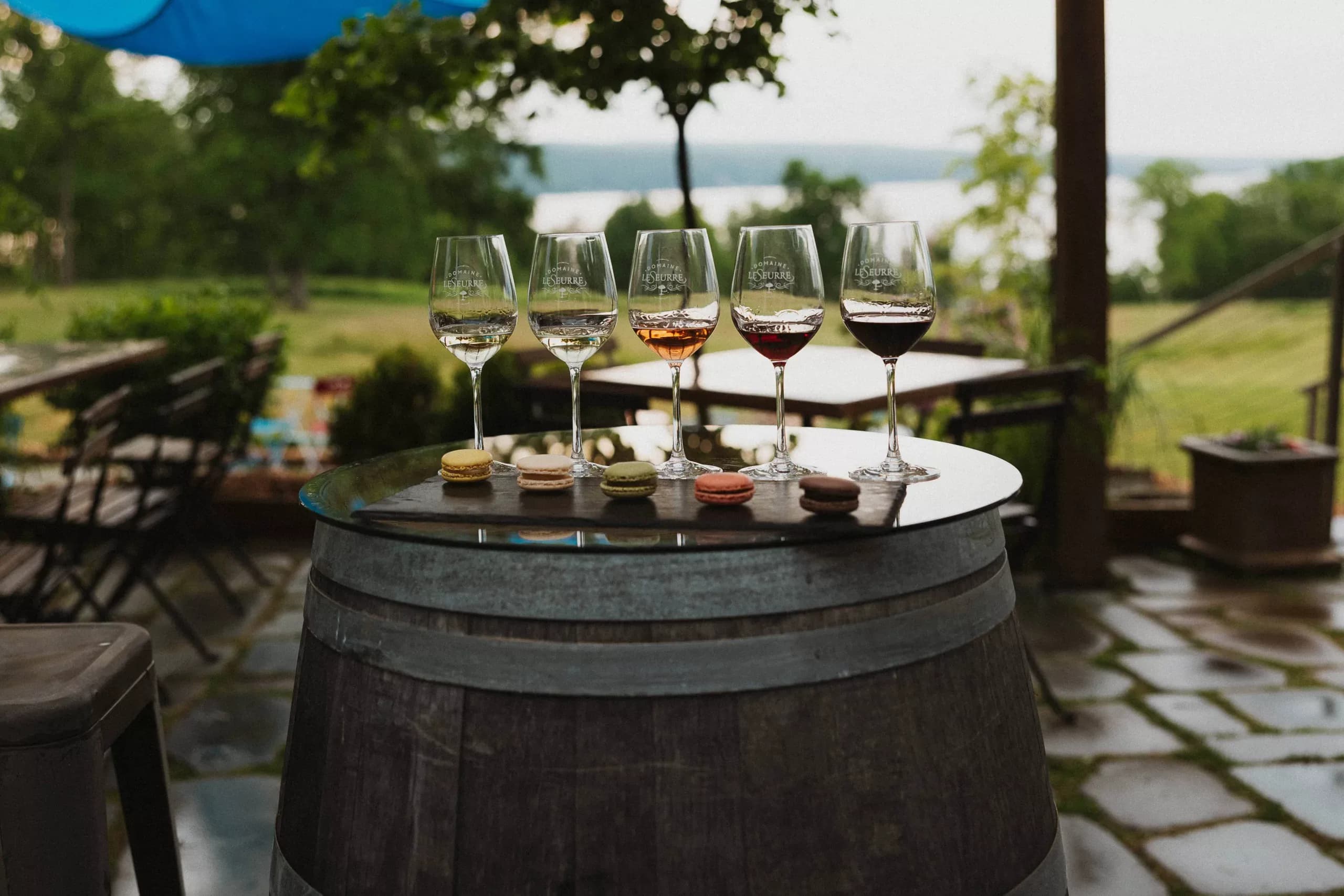
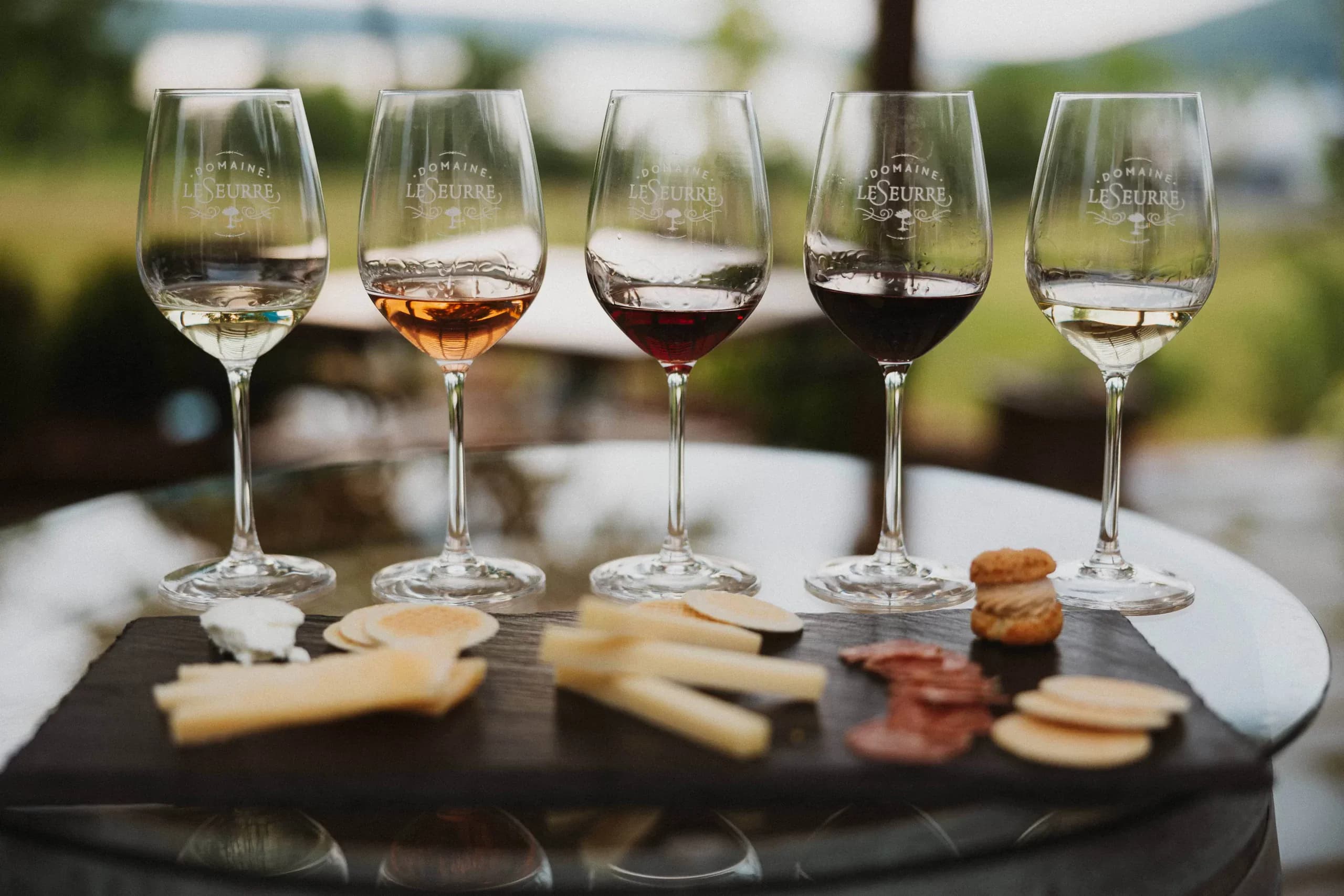
The best way to settle the sweet-or-dry question is to taste across the range in one sitting. That's what a seated tasting is for. We'll pour a few Rieslings side by side, tell you where each one sits and why we built it that way, and let you find the one that fits you — no rush, no pressure. Come visit us above the lake and we'll walk you through it.
Taste our Rieslings side by side and find your style.
Common questions about Riesling
Is dry Riesling actually a thing?
Yes. Dry Riesling is one of the most common styles, especially in cool-climate regions like the Finger Lakes. The winemaker lets fermentation finish, so almost no grape sugar remains. Our Riesling above Keuka Lake is made dry.
How can I tell if a Riesling is sweet before I buy it?
Check the label for the words dry, off-dry, or sweet, or look for the International Riesling Foundation Taste Profile scale on the back — a sliding bar from dry to sweet. If nothing is marked, ask whoever is pouring or selling it.
Is Finger Lakes Riesling sweet or dry?
Finger Lakes producers make Riesling in every style, from dry to sweet. The cool-climate region is especially known for dry and off-dry Riesling, since the lakes help the grapes ripen slowly and keep their natural acidity. Our own Riesling is dry.
Written by
The Domaine LeSeurre Team
Céline & Sébastien LeSeurre and the team at Domaine LeSeurre — a family winery on Keuka Lake, in Hammondsport, New York. French roots, Finger Lakes soul.