Wine 101 · Riesling
What Is Riesling? A French Winemaker's Take
Riesling is a white grape. That's the short answer, and it's the one most people never quite get told. Here's the longer one — where it comes from, why it grows so well on a cold lake like Keuka, and how we work it on our own slope. By the end you'll know the grape behind most of the wine you'll taste in the Finger Lakes.
We're French winemakers on the east side of Keuka Lake, and Riesling is our signature grape — the one we plant most, pick latest, and get asked about most at the tasting bar. So let's start from the beginning, the way we'd explain it to a guest who just sat down across the table.
What is Riesling, exactly?
Riesling is a white wine grape that first grew along the Rhine in Germany. It ripens slowly and does best in a cool climate, which is why it became the signature grape of New York's Finger Lakes. The word "Riesling" names the grape itself, not a style — one grape can be grown and made many ways.
Here's the thing most menus never explain: Riesling is a grape variety, the same way Chardonnay or Pinot Noir is. It's not a place and it's not a recipe. When you see "Riesling" on a label, you're being told which grape went into the bottle — and almost nothing about how it was made. That last part is up to the winemaker, and it's where a lot of the confusion starts. We'll come back to it.
The grape has been grown for a very long time. According to Wine Folly, Riesling traces back to the Rhine region of Germany, where it earned its reputation as a cool-climate grape long before it ever reached New York. That history matters, because it's the reason Riesling ended up thriving here rather than somewhere hot.
Why does Riesling grow so well in a cool climate?
Riesling ripens slowly and holds its natural acidity, so it needs a cool place where the growing season stretches long into fall. Around Keuka Lake, the deep water moderates the temperature — cooling the vines in spring, holding warmth in autumn — which lets the fruit hang late and ripen without rushing.
Think of the lake as a fridge with the door cracked open. It's a big, deep body of cold water, and it changes temperature slowly. In spring it keeps the vines cool a little longer, which protects them. In fall it holds warmth against the frost, which buys us weeks. On our slope, that means Riesling can hang into the third week of October, later than most people expect. The grape uses every one of those extra days.
This isn't just our take. The Finger Lakes Wine Alliance describes the region as cool-climate country, with Riesling as its signature grape — and Cornell's grape and wine program in Geneva, NY has studied cool-climate viticulture here for decades. Keuka fits that description as much as any lake in the region. The Y-shaped lake, the steep hillsides, the deep water: it all adds up to a place a slow-ripening grape can settle into.
How do we grow and pick Riesling here?
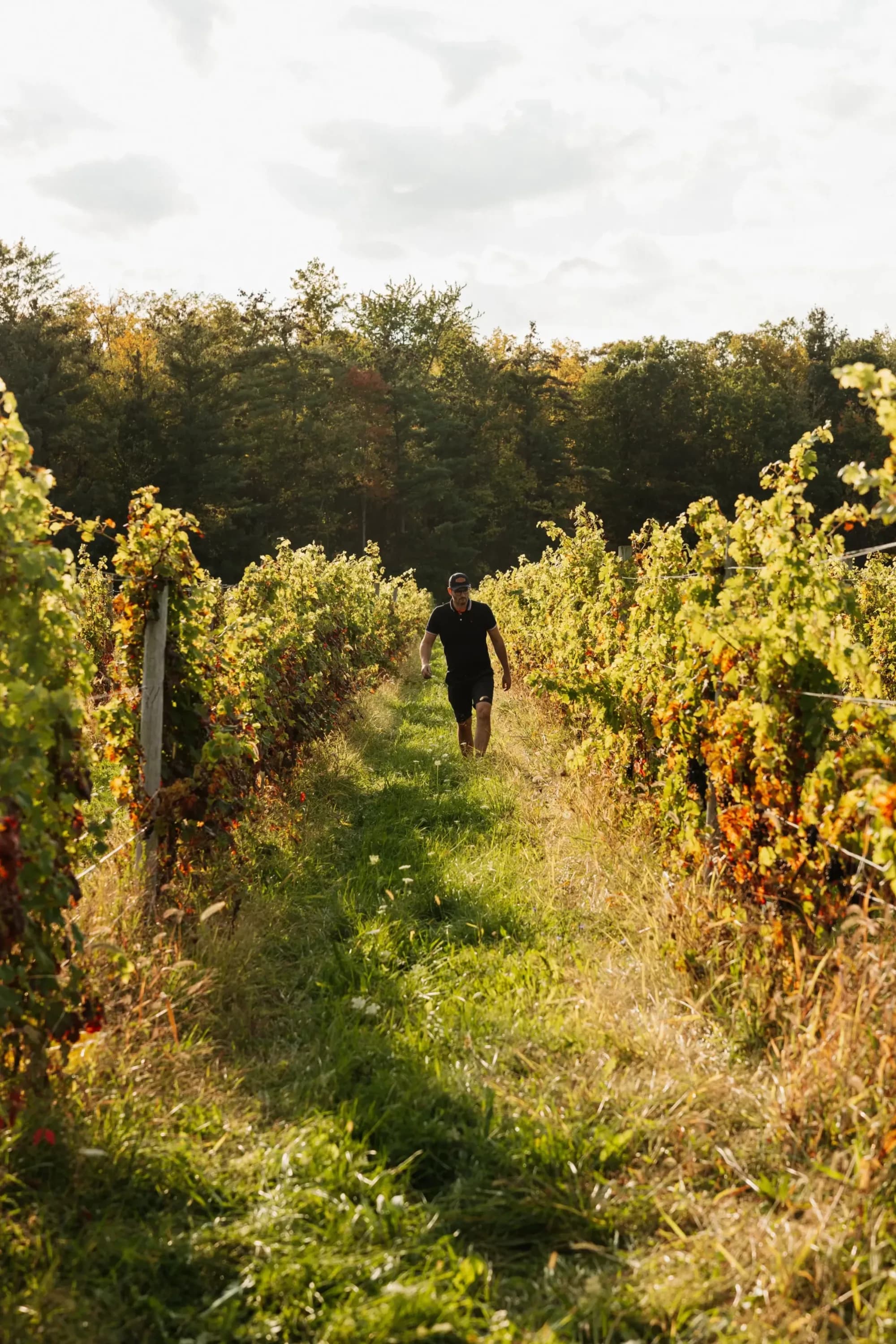
We plant Riesling on the slopes facing Keuka Lake, prune the vines through winter, and let the fruit ripen slowly through fall. We pick late — often into late October — and by hand where the block calls for it, so the fruit comes in whole and unhurried. The lake does much of the work.
The work starts in the cold. Through winter we prune the vines back, plant by plant, deciding how much fruit each one will carry next year. It's quiet, repetitive work, and it sets up everything that follows. Then we wait out the season — the flowering, the long summer, the slow color of the leaves turning.
The choice that defines our Riesling is when to pick. Late. We let the fruit hang while the lake holds off the cold, and we watch the block closely in those last weeks. When it's ready, we bring it in. Sébastien tasted the grapes from more than two hundred blocks before we ever settled here, so the decision to pick isn't guesswork — it's six generations of knowing what ripe fruit is supposed to feel like in the hand.
The lake tells us when to pick as much as the calendar does. We just have to be patient enough to listen.
Is Riesling sweet or dry?
Riesling can be made either way — the grape is the same, but the winemaker decides the style. A dry Riesling is fermented until almost all the natural grape sugar turns to alcohol. An off-dry, or half-sweet, style keeps a little of that sugar. Same grape, different method, different wine.
This is the part that trips people up, so let's keep it simple. During fermentation, yeast turns grape sugar into alcohol. Let it run all the way through and you get a dry wine. Stop it a little early and some of the grape's own sweetness stays behind — that's an off-dry style. Nothing is added either way. The difference is a method choice, made in the cellar, on the same fruit off the same slope.
Because that one question comes up at the tasting bar more than any other, we gave it its own guide. If you want the full picture, read is Riesling sweet or dry — it walks through how to read a label and what the terms actually mean before you order.
Riesling in one minute
- Riesling is a white grape, not a style or a place.
- It came from the Rhine in Germany and loves a cool climate.
- Keuka Lake moderates the temperature, so the fruit ripens slowly and late.
- The grape can be made dry or off-dry — the winemaker chooses in the cellar.
- It's the signature grape of the Finger Lakes, and ours.
Where does Riesling fit at our table?
We're Céline and Sébastien LeSeurre. Sébastien is the sixth generation of a winemaking family from Champagne; Céline grew up near the Pyrenees. We met during harvest in New Zealand and made our first Finger Lakes vintage in 2012. Riesling was one of the first grapes we planted here, and it still anchors what we pour. French roots, Finger Lakes soul — Riesling is where the two meet.
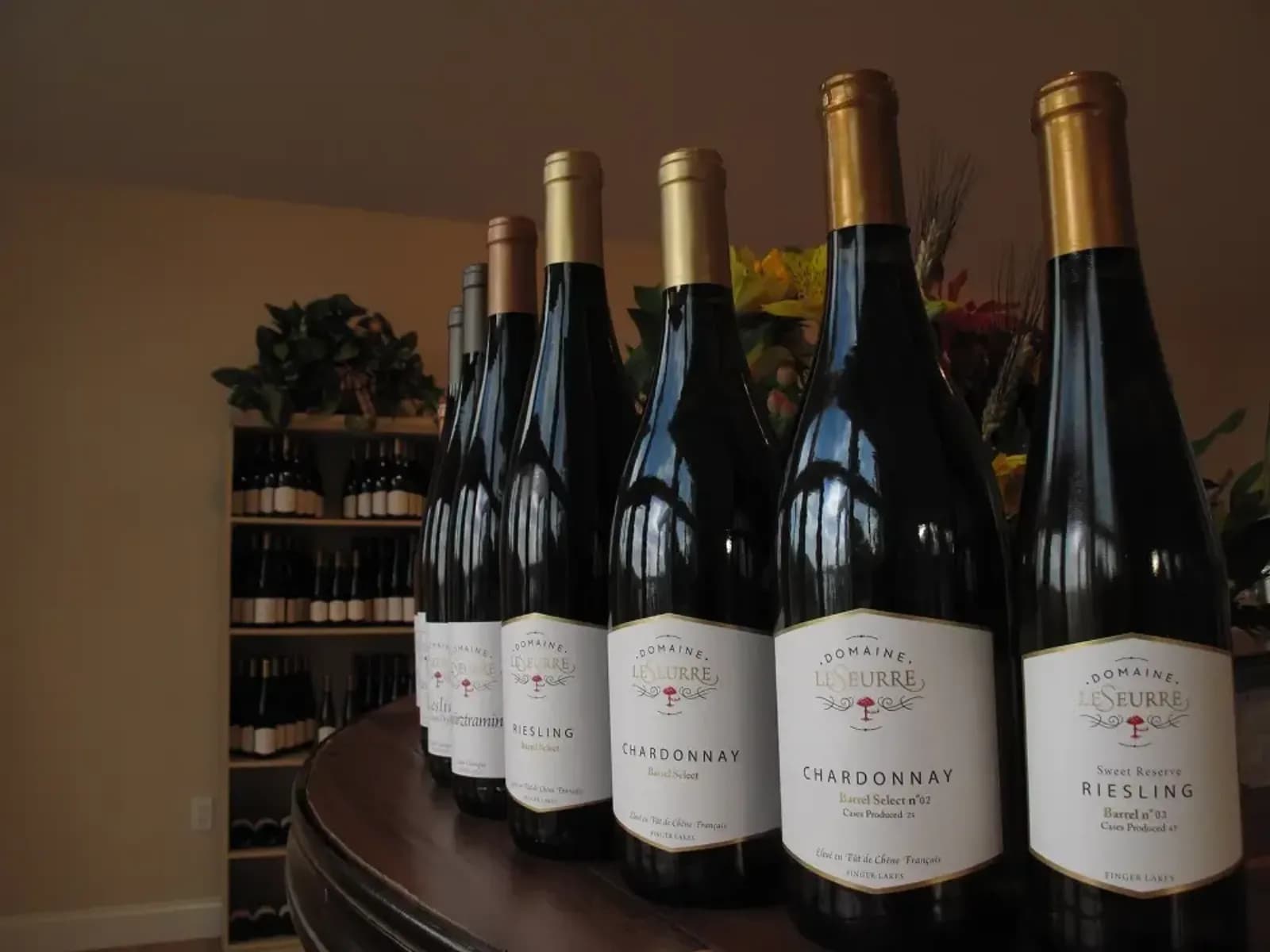
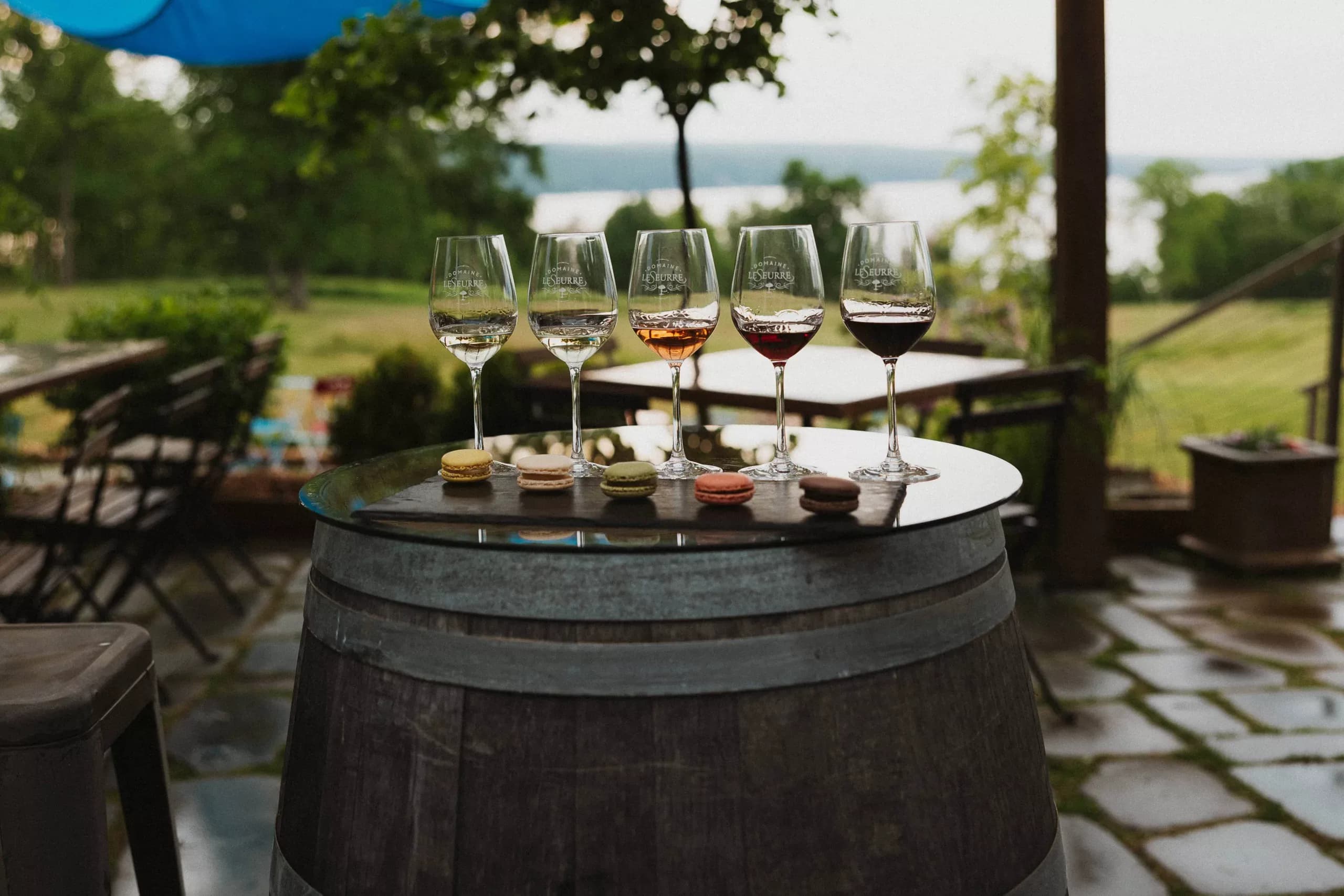
The best way to understand a grape is to sit with it. Come see our wines in person, or plan a visit to the winery above Keuka Lake. We'll walk you through the Riesling and the slope it grew on — no rush, no pressure, just the story behind what's in the glass.
Come taste the grape we plant most, on the slope where it grows.
Common questions about Riesling
Is Riesling a red or white wine?
Riesling is a white wine grape. It grows as a pale-skinned variety and is made into white wine, ranging in style from dry to off-dry depending on how the winemaker ferments it.
Why is Riesling so popular in the Finger Lakes?
Riesling ripens slowly and needs a long, cool growing season. The deep lakes of the Finger Lakes moderate the temperature, giving the grape exactly the conditions it wants. That's why it became the region's signature grape, ours included.
How is Riesling different from Chardonnay?
Both are white grapes, but they're different varieties grown and made in different ways. Riesling holds more natural acidity and is prized in cool climates; Chardonnay is more widely planted and often spends time in oak barrels. We grow both here above Keuka Lake.
When is Riesling harvested?
Riesling is one of the later grapes to come off the vine. On our slope above Keuka Lake, the lake holds off the cold and lets us pick late — often into the third week of October, once the fruit has had a long, slow fall to ripen.
Written by
The Domaine LeSeurre Team
Céline & Sébastien LeSeurre and the team at Domaine LeSeurre — a family winery on Keuka Lake, in Hammondsport, New York. French roots, Finger Lakes soul.