Wine 101 · Sparkling
A White Wine Made From Red Grapes: Blanc de Blancs vs Blanc de Noirs
At the tasting bar we sometimes set two glasses of white sparkling wine side by side. One was made from white grapes, the other entirely from black ones, the same dark-skinned grapes that make red wine. Someone always asks how a dark grape can give a white wine. The press is the answer, along with two French phrases that sound harder than they are.
Blanc de Blancs and Blanc de Noirs are printed on our own labels, next to our Sparkling Héritage Brut and our Sparkling Rosé. People read the words, nod politely, and ask what they mean once the bottle is open, which is a fine moment to explain.
The 30-second answer
- Blanc de Blancs is a white sparkling wine made from white grapes only.
- Blanc de Noirs is a white sparkling wine made from black grapes only.
- The juice of most black grapes is clear. The color sits in the skins.
- A gentle, quick press keeps a Blanc de Noirs pale.
- After the press, both follow the same méthode champenoise.
What does blanc de blancs mean?
Blanc de Blancs means "white from whites", a white sparkling wine made only from white grapes. In Champagne, that almost always means Chardonnay. The term names the grapes and says nothing about the method or the sugar level, so a Blanc de Blancs can be Brut or Extra Brut, and it can come from anywhere in the world.
The phrase is literal. The first "blanc" is the wine, the second is the grapes. With nothing dark going into the press, the winemaker has no color to manage, so the work lies in choosing the fruit and deciding when to pick it.
What does blanc de noirs mean?
Blanc de Noirs means "white from blacks", a white sparkling wine made only from black-skinned grapes such as Pinot Noir or Meunier in Champagne. The juice inside those grapes is clear, and the color lives in the skins. The winemaker presses gently and quickly so the juice stays pale.
Cut open a Pinot Noir grape and you'll find pale flesh. Red wine gets almost all of its color from the skins, which soak in the juice for days. Press the grapes whole and fast, skipping that soak, and the juice runs out nearly clear.
The Comité Champagne describes it the same way. The flesh of these dark-skinned grapes is white, and during pressing the contact between juice and skins is kept to a minimum so the wine stays uncolored.
A red grape gives you a white wine if you are quick and gentle with it. Leave the juice with the skins and it will tell you right away.
What changes in the method between the two?
Most of the change happens at the press. White grapes can be pressed with little worry about color. Black grapes are pressed whole, gently and fast, and the first, palest juice is kept apart. After that, both follow the same méthode champenoise: second fermentation in the bottle, rest on the lees, riddling, and disgorgement.
A press squeezes softly at first, then harder, and the juice changes as the pressure rises. The first juice, from the heart of the grape, is the cleanest and palest, while the later juice has spent more time against the skins. For a Blanc de Noirs you can see that difference in the tray, so the winemaker watches closely and stops early.
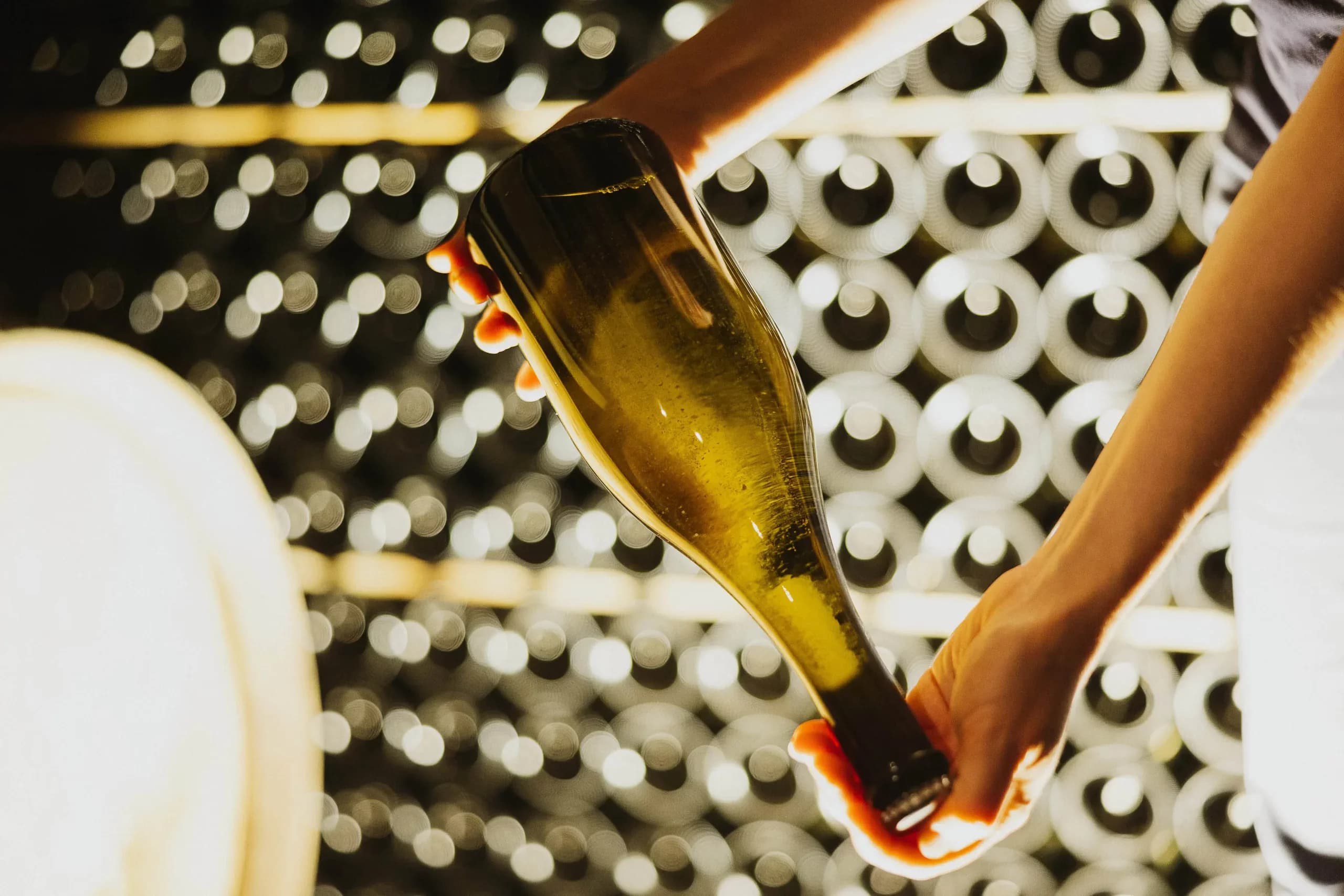
Once the base wine is made, both wines take the same road. They are bottled with a little yeast and sugar, go through their second fermentation in the bottle, and wait. Each of those steps is laid out in méthode champenoise, explained, so we'll keep it short here.
How does a sparkling rosé fit in?
A sparkling rosé is where the winemaker lets some color in on purpose. Depending on the producer, that color comes from a short contact with black grape skins or from blending in a little red wine. Blanc de Noirs and rosé can start from the same black grapes, and the press decides which one you get.
We make a Sparkling Rosé as well, and it helps to line the three up. White grapes give a Blanc de Blancs, black grapes kept pale give a Blanc de Noirs, and black grapes allowed some color give a rosé. In each case the color sits in the skin, and the winemaker decides how much of it reaches the wine.
How do we make our Blanc de Blancs and Blanc de Noirs?
Both are made by the méthode champenoise, the bottle-by-bottle method Sébastien's family has worked in Champagne for six generations, and both are late disgorged. We leave them on their lees for over ten years before that last step, much longer than most sparkling wines wait.
For these two wines, the grape sets the starting point and the long rest in our cellar above Keuka Lake shapes what follows. A decade on the lees also means we can only make a little, so our sparkling wines go mostly to our Wine Club members. The other words on the label, like Brut, are covered in what brut means.
Questions like these are easier across a table. Our Educational Wine Tasting leaves room for them, and you can browse all our tasting experiences or plan the trip on our visit page.
Come ask us about the grapes behind the bubbles.
Common questions about blanc de blancs and blanc de noirs
Is blanc de blancs always Chardonnay?
In Champagne, Blanc de Blancs is nearly always Chardonnay. Outside Champagne, the term simply means white grapes only, so other white varieties can be used. Check the back label or ask the winery.
Is blanc de noirs a red wine?
No. Blanc de Noirs is a white sparkling wine made from black-skinned grapes. The juice is pressed off the skins quickly, so it stays pale. A pink or red sparkling wine would be labeled rosé or red.
Is blanc de blancs sweet or dry?
Either, depending on the dosage. Blanc de Blancs names the grapes, while words like Brut or Extra Brut name the sugar level. Look for both on the label.
What does late disgorged mean?
It means the wine rested on its lees longer than usual before disgorgement, the step that removes the yeast sediment. Our Blanc de Blancs and Blanc de Noirs are late disgorged after over ten years on the lees.
Written by
The Domaine LeSeurre Team
Céline & Sébastien LeSeurre and the team at Domaine LeSeurre — a family winery on Keuka Lake, in Hammondsport, New York. French roots, Finger Lakes soul.