Wine 101 · Sparkling
What Does "Brut" Mean on a Bottle of Sparkling Wine?
Pick up almost any bottle of sparkling wine and you'll find the word Brut near the bottom of the label. Most people read it as a style, or even a brand. It is really a number. It tells you how much sugar went into the bottle at the very last step, and once you know that, the rest of the label is easy to read.
Guests ask us about it every week in the tasting room, usually while squinting at a label. Sébastien grew up in Champagne, the sixth generation of a winemaking family, and what follows is how we answer at the bar.
What does brut mean on a sparkling wine?
Brut is a label term for the sugar level of a sparkling wine. A Brut holds less than 12 grams of sugar per liter, most of it added in a small final pour called the dosage. It is the most common style of traditional-method sparkling wine, Champagne included, and it sits toward the dry end of the scale.
The word is French, and on a bottle it simply places the wine on a sugar scale. Twelve grams per liter sounds like a lot until you do the math. It comes to about nine grams in a whole bottle, a little over two teaspoons shared among five or six glasses. Every other word on the scale is measured against Brut, so it's the one to learn first.
What is dosage in sparkling wine?
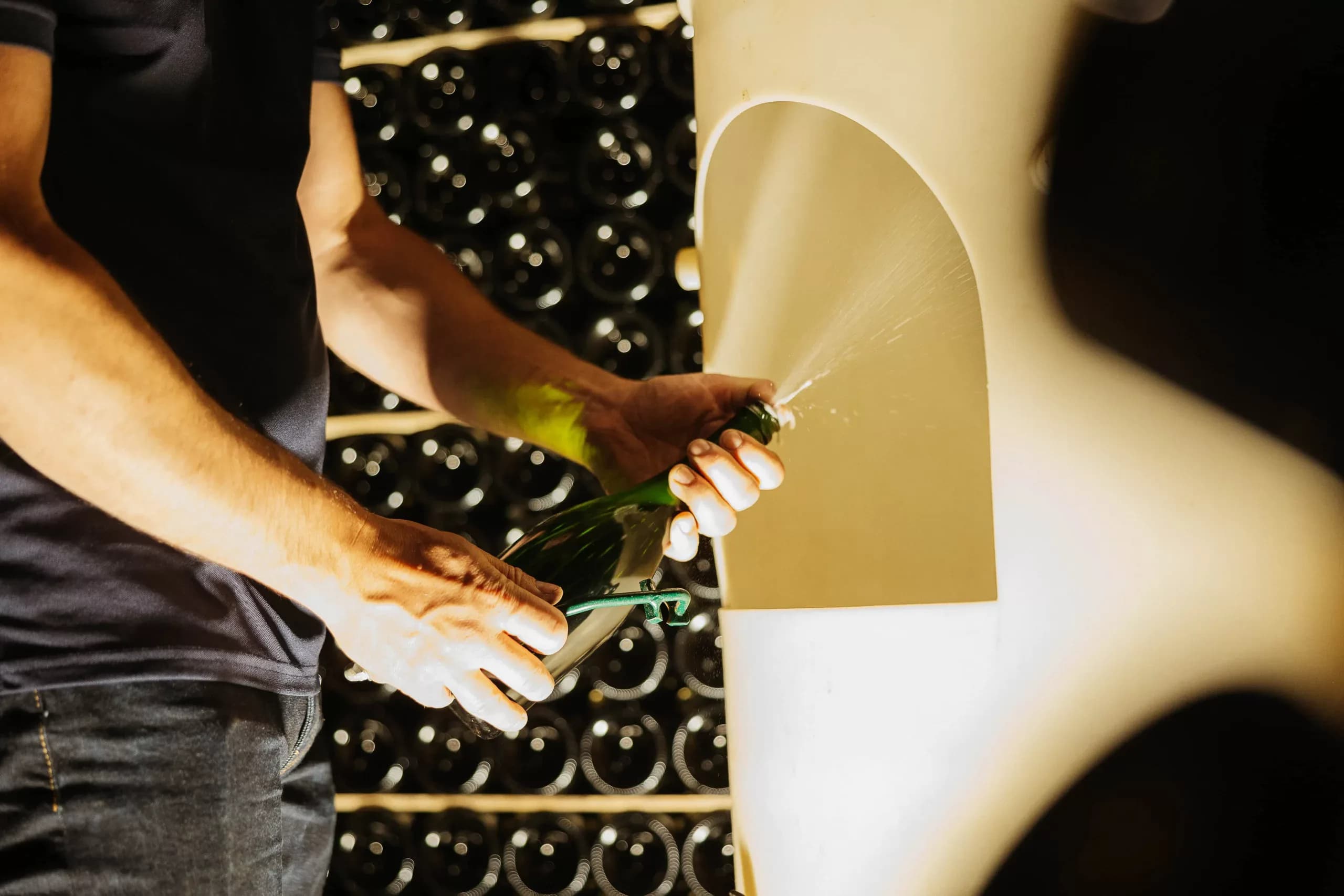
Dosage is a small measure of wine and sugar added to a sparkling wine right after disgorgement, just before the final cork goes in. The French call it the liqueur d'expédition. It tops the bottle back up once the yeast sediment is gone, and the sugar it carries decides whether the label says Brut, Extra Brut, or something else.
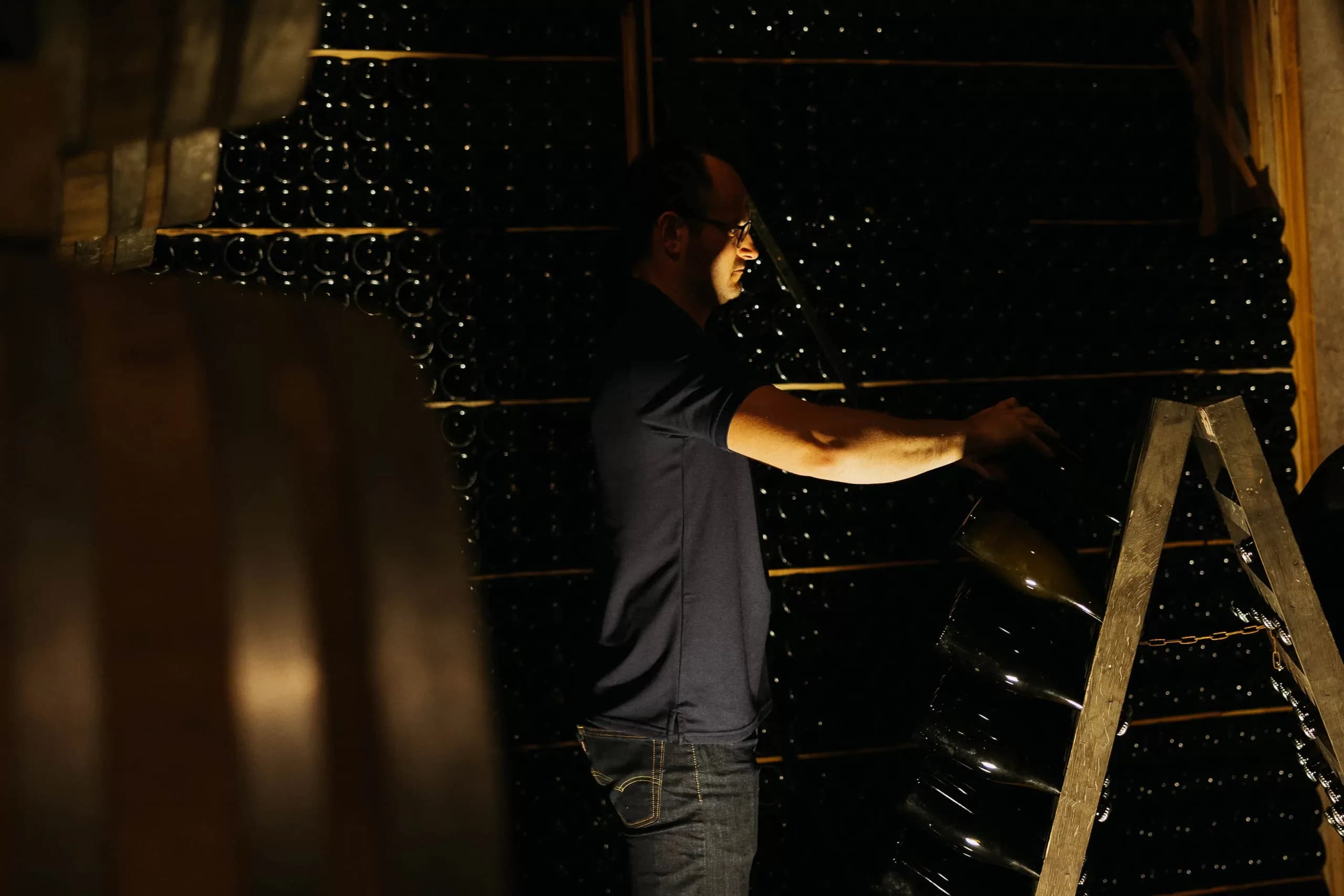
Picture the end of the méthode champenoise. The wine has rested on its lees for years, the spent yeast has been coaxed down into the neck, and at disgorgement that little plug of sediment shoots out, taking a bit of wine with it. The bottle needs topping up before its final cork, and the dosage does that job.
The Comité Champagne describes the dosage as cane sugar dissolved in wine, added just before corking. The winemaker decides how much sugar goes into that pour, and the word on the label follows from that one decision. For the whole journey from grape to cork, we go step by step in méthode champenoise, explained.
What is the full sparkling wine sweetness scale?
From driest to sweetest, the official terms are Brut Nature (under 3 g/L, no sugar added), Extra Brut (0 to 6 g/L), Brut (under 12 g/L), Extra Dry (12 to 17 g/L), Sec or Dry (17 to 32 g/L), Demi-Sec (32 to 50 g/L), and Doux (over 50 g/L). The figures are grams of sugar per liter.
- Brut Nature, also called zero dosage: less than 3 g/L, and no sugar added at all.
- Extra Brut: between 0 and 6 g/L.
- Brut: less than 12 g/L. The most common style.
- Extra Dry: between 12 and 17 g/L.
- Sec, or Dry: between 17 and 32 g/L.
- Demi-Sec: between 32 and 50 g/L.
- Doux: more than 50 g/L.
These thresholds come from the Comité Champagne. The same terms appear in the European Union's labeling rules for sparkling wine, which set the Extra Brut range at 0 to 6 grams. Producers outside Europe use the same vocabulary, us included, so a word on a Finger Lakes label means what it means in France.
Why is Extra Dry sweeter than Brut?
Extra Dry sits above Brut on the scale, at 12 to 17 grams of sugar per liter, so it holds more sugar than Brut. The names were fixed back when sparkling wine was generally much sweeter than today, and they stayed put while tastes moved toward drier wines. On this scale, dry is a relative word.
This one surprises nearly everyone, and it's our favorite fact to share at the bar. Mention at your next dinner that Extra Dry has more sugar than Brut, and someone will reach for the bottle to check.
What is the difference between brut and extra brut?
The difference is the amount of sugar in the dosage. Extra Brut holds between 0 and 6 grams of sugar per liter, while Brut holds less than 12. The method, the grapes, and the years on the lees can be identical. With less dosage, more of the finished wine's natural acidity and texture shows through.
A cook adds salt for a similar reason. A pinch rarely changes what the dish is, but it changes how the parts sit together. With very little dosage, a wine shows its acidity plainly; with a little more, that acidity comes across more gently. Both are sound choices, made for the same wine.
Time on the lees feeds into that choice. Years of rest give a wine texture and a finer bubble, and a winemaker who has waited that long often wants a light hand at the end so the work shows. Sébastien grew up with that reasoning, and it's how we think about the dosage for our own wines.
Four facts to read the label by
- Brut means less than 12 grams of sugar per liter.
- That sugar comes from the dosage, a small pour added after disgorgement.
- Extra Brut (0 to 6 g/L) and Brut Nature (under 3 g/L) have less.
- Extra Dry has more sugar than Brut, because the names are older than the taste for dry wine.
How do we make our Sparkling Héritage Brut?
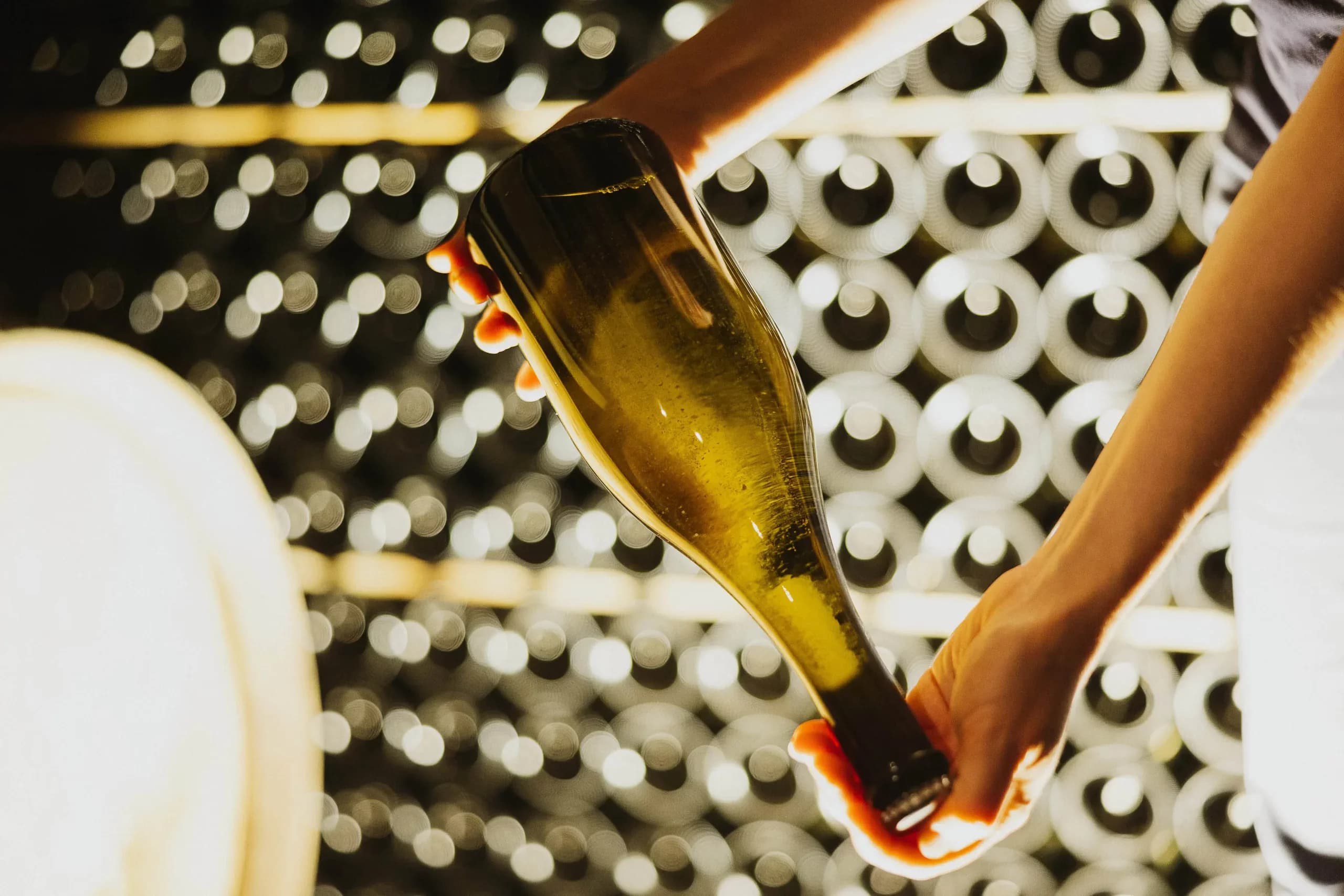
Our Sparkling Héritage Brut is made by the méthode champenoise, the slow, bottle-by-bottle way Sébastien's family has worked in Champagne for six generations. It is late disgorged. Each bottle rests on its lees for over ten years, much longer than usual, and passes through our hands at least 68 times before the dosage and the final cork.
Because the method takes so long and we make so little, our sparkling wines go mostly to our Wine Club members. The Brut has two companions, a Blanc de Blancs and a Blanc de Noirs, made the same patient way. And if you wonder why we call them sparkling wine rather than Champagne, the difference between Champagne and sparkling wine explains the name.
Dosage makes more sense with a glass in hand and someone pouring who can explain it. That is the idea behind our Educational Wine Tasting, where the team walks you through each wine and how it was made. It's listed with our other experiences.
Sit down with us above Keuka Lake and hear how each wine is made.
Common questions about brut and dosage
Is brut sweet or dry?
Brut is on the dry end of the sparkling wine scale, with less than 12 grams of sugar per liter. Only Extra Brut and Brut Nature have less. Extra Dry, Sec, Demi-Sec, and Doux all hold more sugar than Brut.
What does zero dosage mean?
Zero dosage, also labeled Brut Nature or Pas Dosé, means no sugar is added after disgorgement. The wine is topped up without any sweetening, and it must stay under 3 grams of sugar per liter.
Is brut the same as Champagne?
No. Brut describes a sugar level, and Champagne describes a place in France. A Champagne can be Brut, Extra Brut, or Demi-Sec, and a sparkling wine made anywhere, like ours on Keuka Lake, can be labeled Brut too.
Why do sparkling wines add sugar at all?
Sparkling wines from cool climates tend to have high natural acidity. A small dosage lets the winemaker balance that acidity against the texture the wine gained during its years on the lees. How much to add is a style decision, made wine by wine.
Written by
The Domaine LeSeurre Team
Céline & Sébastien LeSeurre and the team at Domaine LeSeurre — a family winery on Keuka Lake, in Hammondsport, New York. French roots, Finger Lakes soul.