Wine 101 · Understanding Wine
Dry vs Sweet Wine: The Moment the Winemaker Decides
Pour three glasses of the same grape, from the same slope, and ask the table which one is dry. The answers usually surprise people. We tend to think of dry and sweet as opposites, but what you feel in the glass comes from two things pulling against each other, sugar and acidity.
Plenty of guests arrive sure they "only drink dry," and they're right to trust what they feel. The trouble is that the word on the label and the sensation in your mouth measure different things. Once you see how, a wine list gets a lot easier to read.
What is the difference between dry and sweet wine?
The difference is residual sugar, the grape sugar still in the wine after fermentation. In a dry wine, yeast has turned nearly all of that sugar into alcohol. In a sweet wine, some sugar remains because fermentation stopped early or the grapes held more sugar than the yeast could finish. Acidity then changes how sweet it seems.
Every wine starts out sweet. Ripe grapes are full of natural sugar, and the juice we get when we crush them is sweeter than most fruit juice you buy. Yeast eats that sugar and gives off alcohol and carbon dioxide. That's fermentation, and it's how juice becomes wine.
Whatever sugar the yeast leaves behind is called residual sugar, or RS, and it's measured in grams per liter. Wine Folly puts wines on a simple ladder: bone dry under about 1 gram per liter, dry up to roughly 17, then off-dry, medium sweet and sweet as the number climbs. The figure is rarely printed, but it sits behind every "dry" you read on a label.
How does a winemaker decide if a wine ends up dry or sweet?
The winemaker decides when fermentation ends. If the yeast finishes its work, the wine is dry. If we chill the tank hard, the yeast goes to sleep and some sugar stays behind, which gives an off-dry or sweet style. Picking very ripe or late-harvest grapes can also give the yeast more sugar than it can finish.
There are two ways to a sweeter wine. The first happens in the cellar. We watch the tank, and when the wine reaches the balance we're after, we cool it down fast. The cold stops the yeast, so whatever sugar it hadn't reached yet stays in the wine. We add nothing; the sweetness is the grape's own.
The second happens in the vineyard. Grapes left on the vine late into the fall keep concentrating their sugar, sometimes so much that the yeast gives up before eating it all, because the alcohol it has made gets too high for it to keep working. That's how late-harvest wines come about, including our Vendanges Tardives (the name is French for "late harvest").
Why do some dry wines seem sweet, and some sweet wines seem dry?
Acidity changes how sweetness feels. A wine with high natural acidity can carry quite a bit of sugar and still seem balanced, even close to dry. A wine with low acidity and very little sugar can seem softer and sweeter than it is. Ripe fruit and higher alcohol can also read as sweetness.
Lemonade makes this easy to picture. Two pitchers can hold exactly the same amount of sugar, and the one with more lemon juice will seem less sweet. Wine behaves the same way, because your mouth weighs sugar against acid rather than counting grams.
Up here that matters a great deal. The Finger Lakes are a cool-climate region, and the deep lakes let grapes ripen slowly while keeping their natural acidity, as the Finger Lakes Wine Alliance describes. So a Finger Lakes wine with some residual sugar can feel far more balanced than its lab sheet would suggest. It's also why the International Riesling Foundation based its label scale on the ratio of sugar to acid rather than on sugar alone.
Sugar against acid, in short
- Sugar makes a wine sweet, and acidity decides how sweet it feels.
- With enough acidity, a wine can hold some sugar and still seem dry.
- A "dry" label describes the sugar left in the bottle, which the cellar measures.
What does the dry-to-sweet scale look like in real bottles?
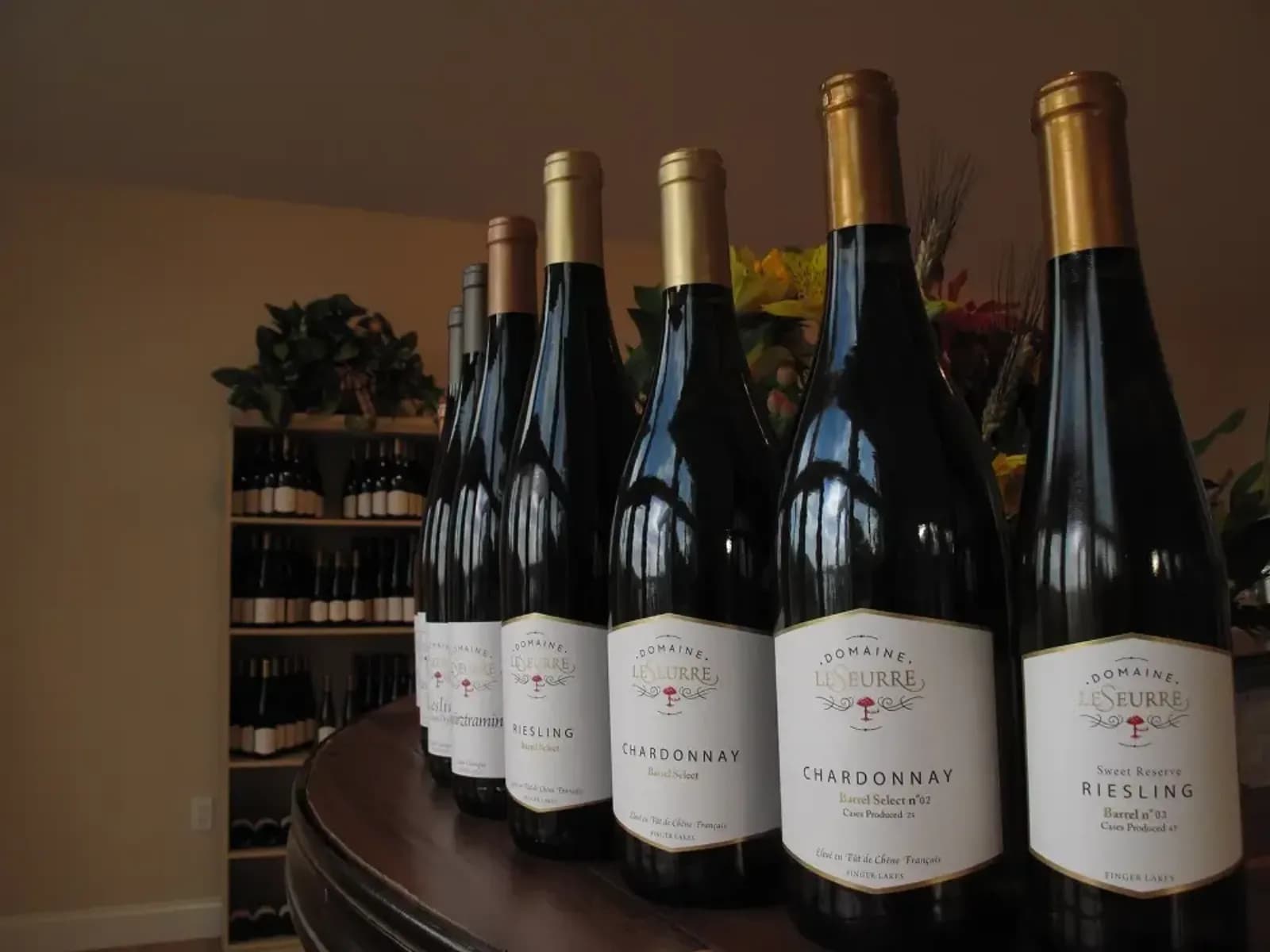
The easiest way to see the scale is one grape made three ways. Our Dry Riesling ferments until almost no sugar is left, our Semi Dry Riesling keeps some grape sugar, and our Riesling Sweet Reserve keeps more. The variety and the region stay the same. What changes is the moment we let fermentation end.
We make Riesling at three points on the scale on purpose. From one bottle to the next the grape stays the same, and the only thing that moves is when we stopped the yeast.
- Dry Riesling: fermentation runs to the end, and almost all the sugar becomes alcohol.
- Semi Dry Riesling: we stop the yeast earlier, so some of the grape's sugar stays.
- Riesling Sweet Reserve: more sugar kept, carried by the acidity the lake gives the grapes.
- Vendanges Tardives: a different road, picked late so the grapes arrive with more sugar to begin with.
For the grape itself, read what Riesling is, from a French winemaker. The question we hear most about it has its own guide, is Riesling sweet or dry, and the whole lineup is on our wines page.
How can you tell if a wine is dry or sweet before you open it?
Check the front and back label for the words dry, off-dry, semi-dry, medium sweet or sweet. Many Finger Lakes Rieslings print the International Riesling Foundation scale, a small bar running from dry to sweet. On sparkling wine, brut means dry. Late harvest or dessert wine on the label signals a sweet style.
Plenty of bottles say nothing about sweetness at all, and the grape name tells you little, since most white grapes can be made anywhere on the scale. Alcohol gives a rough hint. A wine that stopped fermenting early often shows a lower percentage, because less of its sugar became alcohol. The simplest clue is still to ask whoever is pouring.
Which is better, dry or sweet?
Each one suits different moments. Dry wines with good acidity sit well beside salty, rich dishes. Off-dry wines handle chili heat, because sugar calms the burn, and sweet wines stand up to dessert. The right choice depends on the food, the occasion and where you like to sit on the scale.
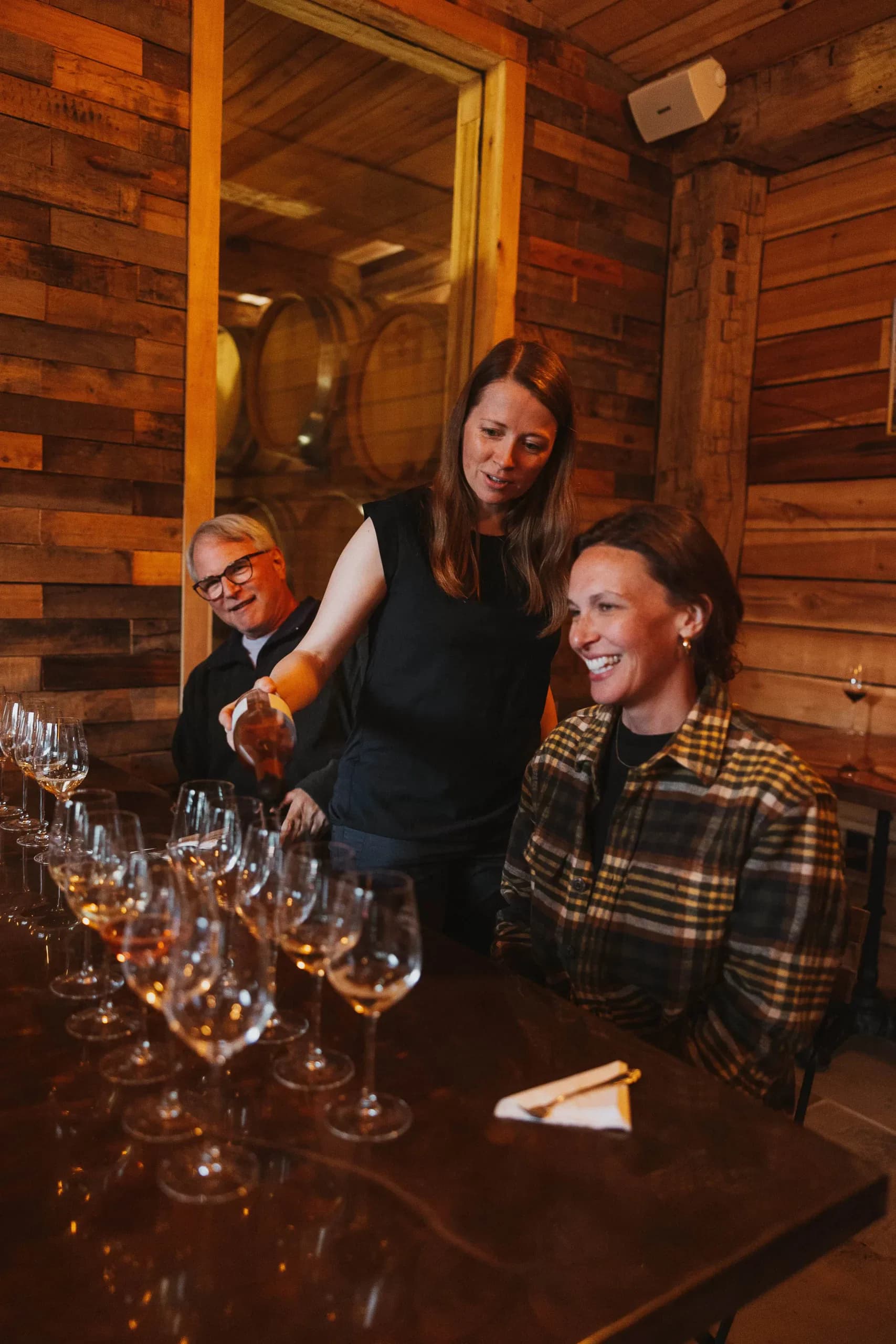
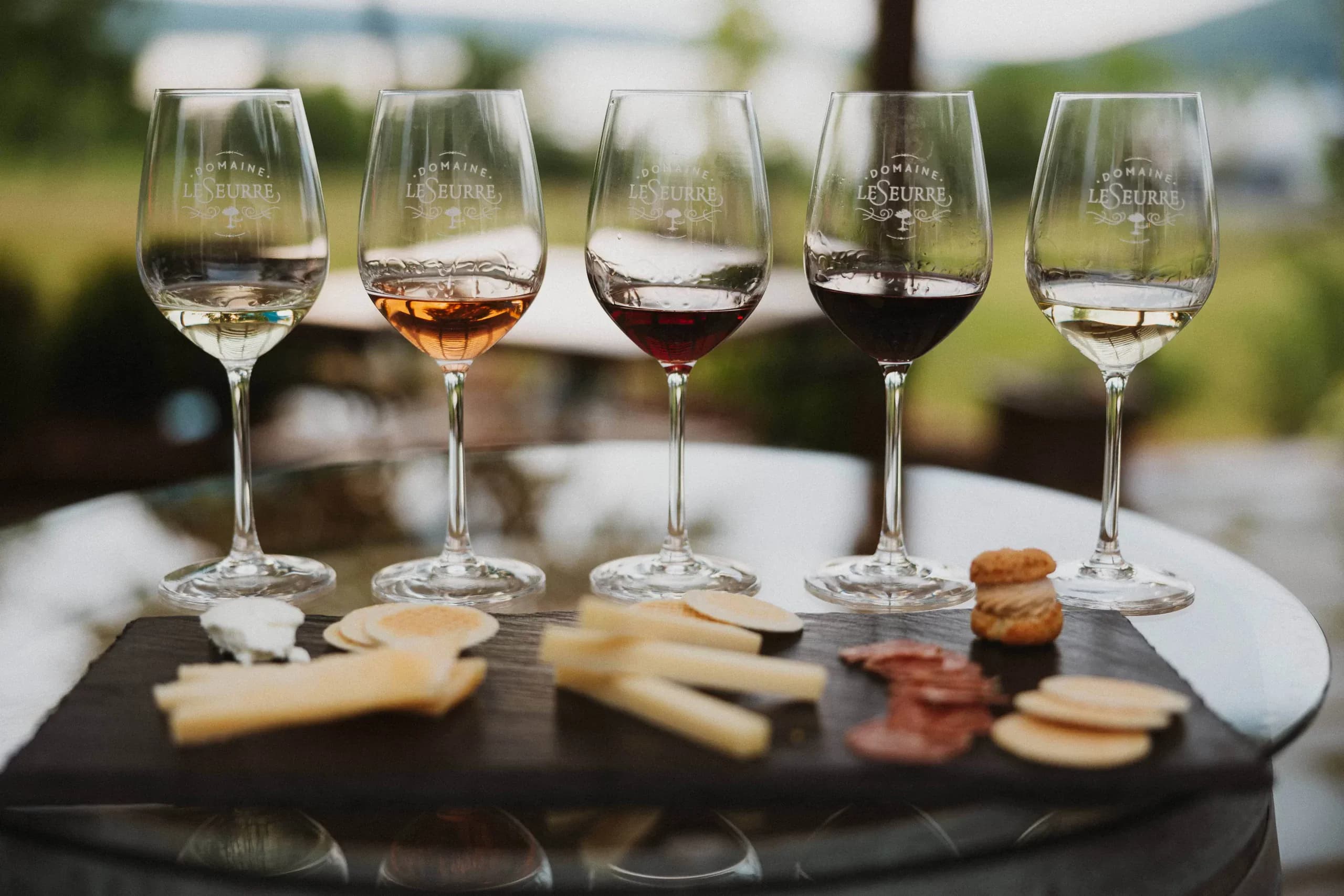
Plenty of people who swear by dry wine have simply never had a sweeter one with enough acidity to balance it. The quickest way to find your own spot is to taste across the scale in one sitting, which is what our Educational Wine Tasting is for: five wines poured by our team, with the reasoning behind each one. Visit us above Keuka Lake and put the three Rieslings side by side.
Taste the scale from dry to sweet, one glass at a time.
Common questions about dry and sweet wine
Does dry wine have sugar?
Almost always a little. Even a dry wine usually keeps a small amount of residual sugar that the yeast didn't finish. Below a few grams per liter, most people can't pick it out, especially when the wine has good acidity.
Is sweet wine made by adding sugar?
Usually no. In most sweet and off-dry wines the sugar is the grape's own, left behind because fermentation was stopped early or the grapes were picked very ripe. Sparkling wines are the main exception, since winemakers often add a small dose of sugar before corking.
Is off-dry the same as semi-dry?
More or less. Both describe a wine with a noticeable but moderate amount of residual sugar, somewhere between dry and sweet. Producers use the terms differently, so the label scale or a question at the tasting bar is the surest guide.
Written by
The Domaine LeSeurre Team
Céline & Sébastien LeSeurre and the team at Domaine LeSeurre — a family winery on Keuka Lake, in Hammondsport, New York. French roots, Finger Lakes soul.