Wine 101 · Tasting
What Is a Wine Flight? How to Learn More From Five Small Glasses
Put one glass of wine in front of someone and they will tell you whether they like it. Put a second glass beside it and they start explaining why. A wine flight is built on that shift, and so are our tastings.
The word appears on tasting room menus and wine bar boards all over the Finger Lakes, usually with nothing to explain it. It deserves an explanation, because the way a flight is put together tells you how to taste it.
What is a wine flight?
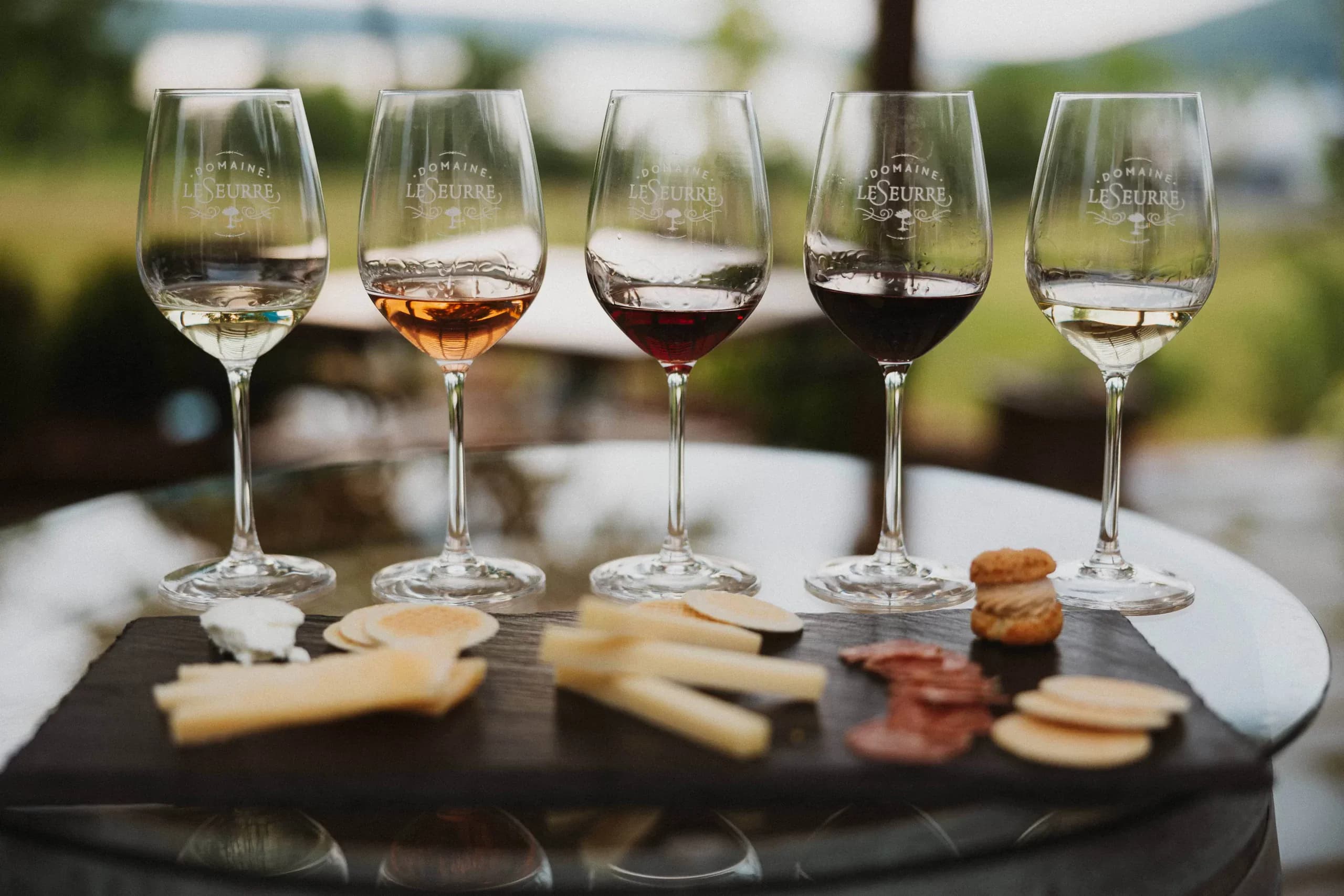
A wine flight is a set of small pours of several wines, served together or one after another, so you can taste and compare them. Most flights have three to six wines, chosen around a theme: one grape made in different styles, different grapes from one region, or a walk from dry to sweet.
The pours are small on purpose, since a flight is about comparison rather than a full glass. Each wine gets just enough to look at, smell and taste a couple of times. Some wineries set all the glasses out at once on a paddle or a mat, while we pour one at a time and talk you through each.
Why does comparing wines teach you more?
Comparing wines teaches you more because your senses work by contrast. On its own, a wine has nothing to be measured against. Next to another, its acidity, sweetness, tannin and weight suddenly stand out. A flight turns vague impressions into clear differences you can name, and remember the next time you pour.
Paint samples work the same way. One swatch of white on a wall just looks white, but hold three whites side by side and you see at once that one is warmer, one cooler, one almost gray. We sum it up for guests like this: one glass tells you what you like, and two glasses tell you why.
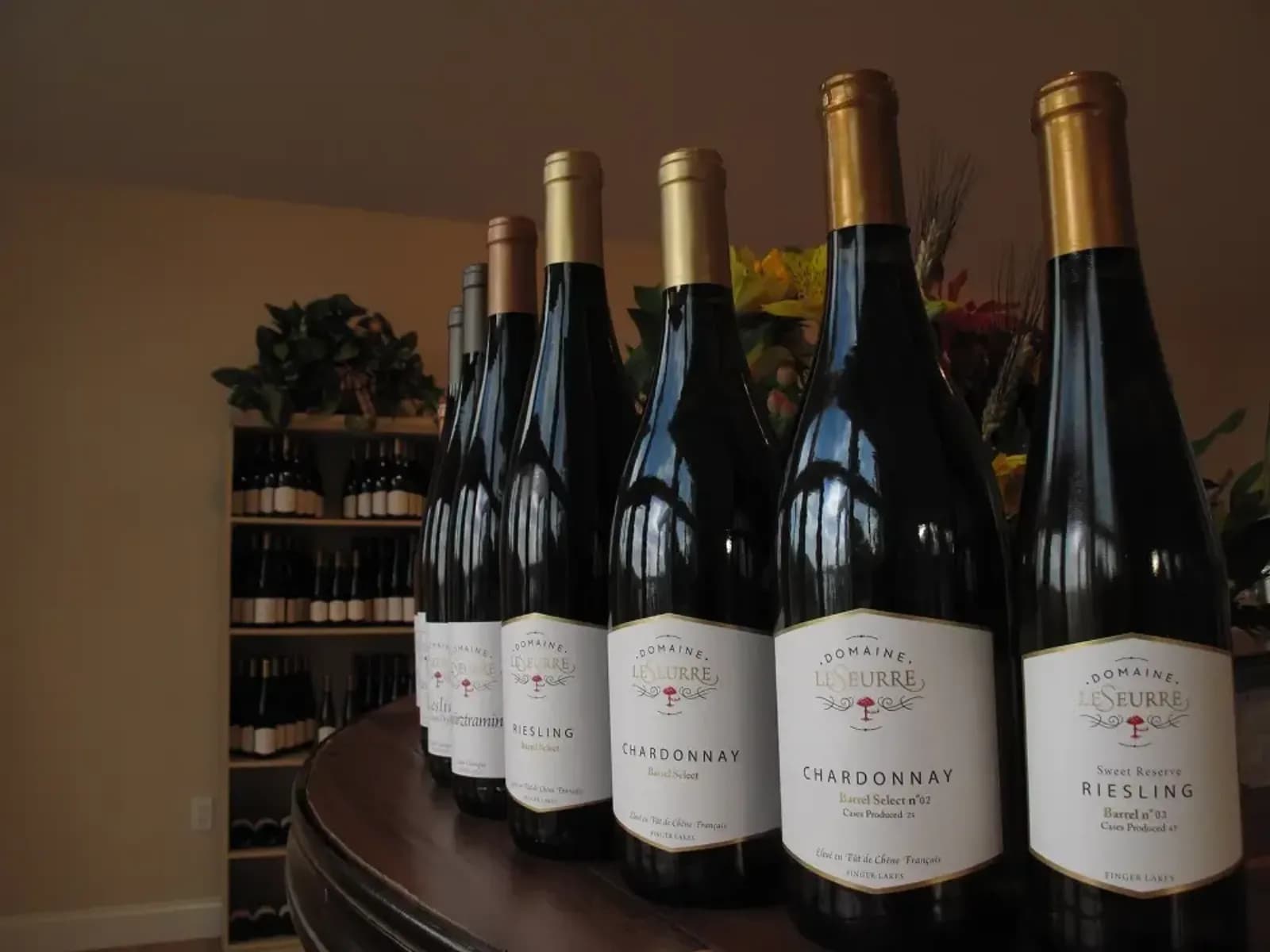
A flight is also the fastest way to understand a decision made in the cellar. Our Chardonnay Unoaked is made in stainless steel and our Chardonnay Barrel Select is aged in oak, so the grape is the same and a single choice differs. Tasted side by side, the barrel's effect on texture and weight becomes obvious, even to someone at their very first tasting.
In what order should you taste a wine flight?
Taste a wine flight from lightest to fullest and from driest to sweetest: sparkling first, then whites, rosé, reds, and any sweet wine at the end. Sugar and tannin linger in the mouth, so tasting them early would make the drier, lighter wines that follow feel thin or sharp. Follow the order the pourer sets.
- Sparkling wine, while your mouth is fresh.
- Lighter whites, then whites with more weight or time in oak.
- Rosé.
- Reds, from lighter-bodied to more tannic.
- Sweet or late harvest wines last.
The same logic holds within a single grape. Riesling, which the Finger Lakes Wine Alliance calls the region's signature grape, makes a good example. Our Rieslings run from the Dry Riesling to the Semi Dry to the Riesling Sweet Reserve, and poured in that order they show exactly how residual sugar changes a wine. Is Riesling sweet or dry covers the sugar side in more detail.
What kinds of wine flights are there?
The most common wine flights are built around a theme. A varietal flight shows one grape in several styles. A regional flight shows several grapes from one place. A vertical flight pours the same wine from different vintages, and a horizontal flight pours different wines from one vintage. Each theme isolates one variable to compare.
The theme tells you how to read the flight. When only one thing changes between two glasses, any difference you notice comes from that one thing, so a vertical flight teaches you about time in the bottle and a horizontal one about place or winemaking. Professional tasters train exactly this way, isolating one variable at a time.
How do you taste a wine flight like a pro?
To taste a wine flight the way professionals do, take small sips, drink water between wines, and use the spittoon if you are driving. For each wine, name one thing you notice about its structure. At the end, go back to the first glass, because tasting it again after the others often shows you the most.
- Ask the pourer what the theme is. It tells you what to compare.
- Keep one word per wine: lighter, heavier, sweeter, drier, more drying.
- Save a sip of the first wine and return to it at the end.
- Ask how each wine was made. Tank or barrel is a good first question.
The gestures themselves (look, swirl, smell, sip, pause) have their own guide in how to taste wine. If you are planning a full day in the region, what to expect at a Finger Lakes wine tasting covers bookings and practical details.
What does a wine flight look like at Domaine LeSeurre?
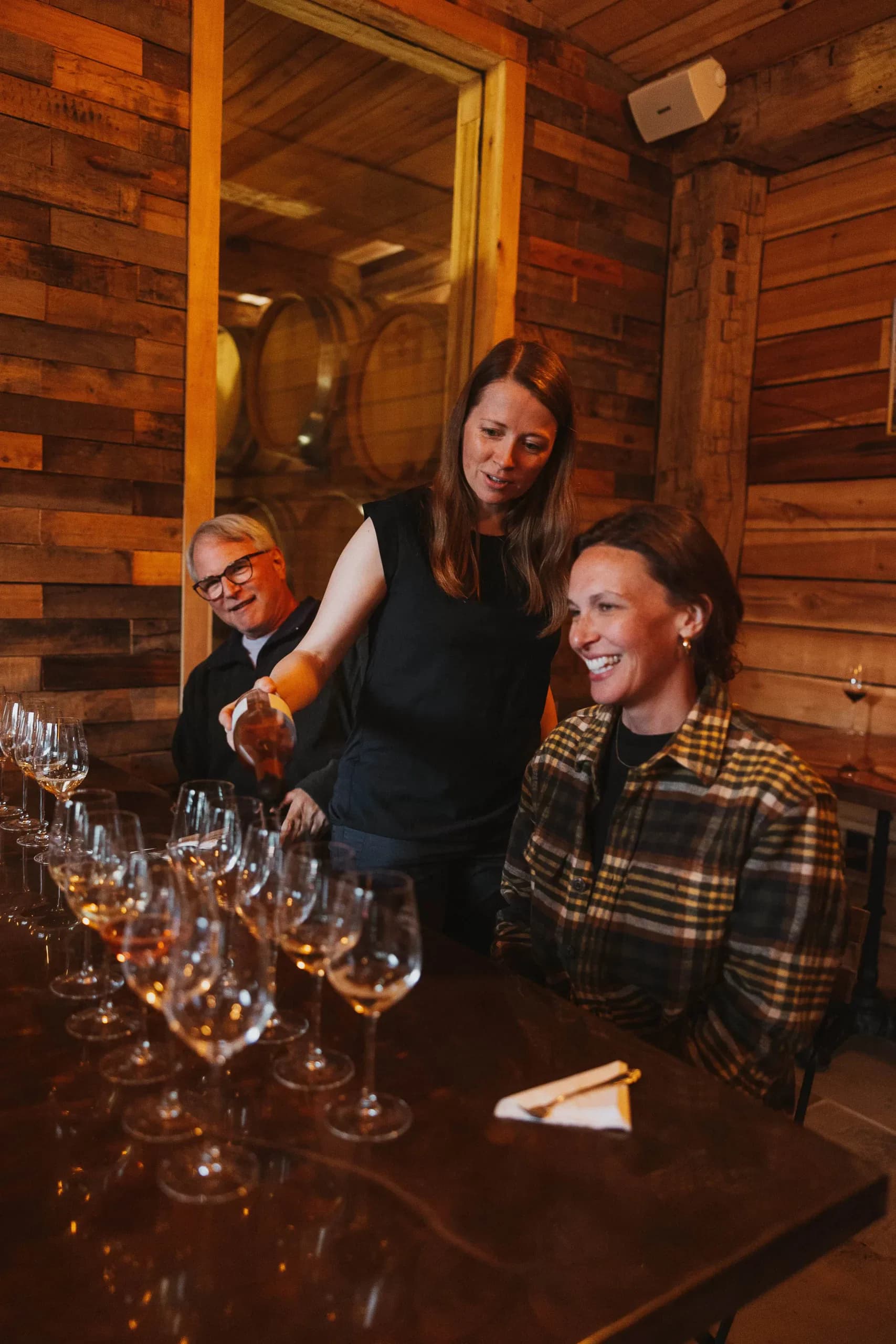
At Domaine LeSeurre on Keuka Lake, our Educational Wine Tasting is a guided flight of five wines over about 45 minutes. A member of our team pours them one at a time, in order, and explains where each grew and how it was made. It is complimentary for Wine Club members.
We are Céline and Sébastien LeSeurre, and Sébastien is the sixth generation of a winemaking family from Champagne. We built the tasting so that you go home understanding something, and a flight is the simplest route we know. Each format is described on our experiences page, and tastings are complimentary for Wine Club members and up to three guests.
Before your next flight
- A flight is several small pours tasted side by side, so you can compare them.
- Ask for the theme. It tells you which single difference to look for.
- Taste from light to full and from dry to sweet, then go back to the first wine.
Five wines, one at a time, and the story of each.
Common questions about wine flights
How many wines are in a wine flight?
Usually three to six. Our Educational Wine Tasting pours five, which is enough to compare clearly while keeping each wine distinct in your memory.
Do you have to finish every glass in a flight?
No. A couple of sips is enough to compare. Pour the rest into the spittoon or the dump bucket, especially if you are driving.
What is the difference between a wine flight and a wine tasting?
A flight is the set of wines being compared. A tasting is the experience around it, often guided by someone who explains each wine. Most tastings are built on a flight.
Written by
The Domaine LeSeurre Team
Céline & Sébastien LeSeurre and the team at Domaine LeSeurre — a family winery on Keuka Lake, in Hammondsport, New York. French roots, Finger Lakes soul.