Wine 101 · Tasting
“I Learned More About Wine in One Hour Here Than in 20 Years of Tasting”
Guests often tell us some version of it on their way out, a bag of bottles under one arm: they learned more about wine in one hour with us than in twenty years of tasting on their own. The hour itself is simple, and most of it travels home with you.
What changes in that hour is the question you put to the glass. Most of us taste a wine wondering whether we like it, which is a fair question with a short answer. We add a second one beside it: how was this made? Each step of a tasting answers a small piece of that, and you need no special vocabulary for any of them.
What are the five steps to taste wine?
Tasting wine takes five steps: look at the wine, swirl it, smell it, sip it, then pause and think. Each step tells you something about how the wine was made. The color hints at the grape and its age, swirling brings in air, and the sip shows sugar, acidity, tannin and alcohol.
- Look. Tilt the glass over something white and check the color, especially at the rim.
- Swirl. Keep the base on the table and make a few small circles.
- Smell. One quick sniff, then a slower one with your nose inside the glass.
- Sip. Take a real mouthful and let it reach every corner of your mouth.
- Think. Before the next wine, say one sentence about how this one was made.
What does the color of a wine tell you?
Color tells you about the grape, the winemaking and the age of a wine. A red takes its color from grape skins soaking in the juice, so a deeper red often means longer contact. Whites tend to gain color as they age, while reds slowly lighten at the rim after years in the bottle.
Tilt the glass over a white napkin and look at the edge, where the wine thins out, because that is where age shows first. A young red usually keeps the same color from the center to the rim. After some years in the bottle the rim fades toward brick, while a white moves the other way and deepens.
The detail guests remember best is about the juice. Squeeze almost any grape, red ones included, and the juice runs pale. A red wine gets its color from the skins, which stay in the tank with the juice while it ferments. Press dark-skinned grapes gently and keep the skins out, and you have the start of a Blanc de Noirs. Our Sparkling Blanc de Noirs begins exactly that way before it goes through the méthode champenoise.
Why do you swirl the glass?
Swirling mixes oxygen into the wine and spreads it over more of the glass, so more of its aromas rise toward your nose. Keep the base of the glass on the table and draw a few small circles. The streaks that run down the inside afterward, called legs, mostly reflect alcohol and sugar.
Thick legs mean more alcohol, sometimes more sugar, and very little else. They are one of the most repeated myths at any tasting bar, so we gave them their own article, along with the swirl.
What should you smell for?
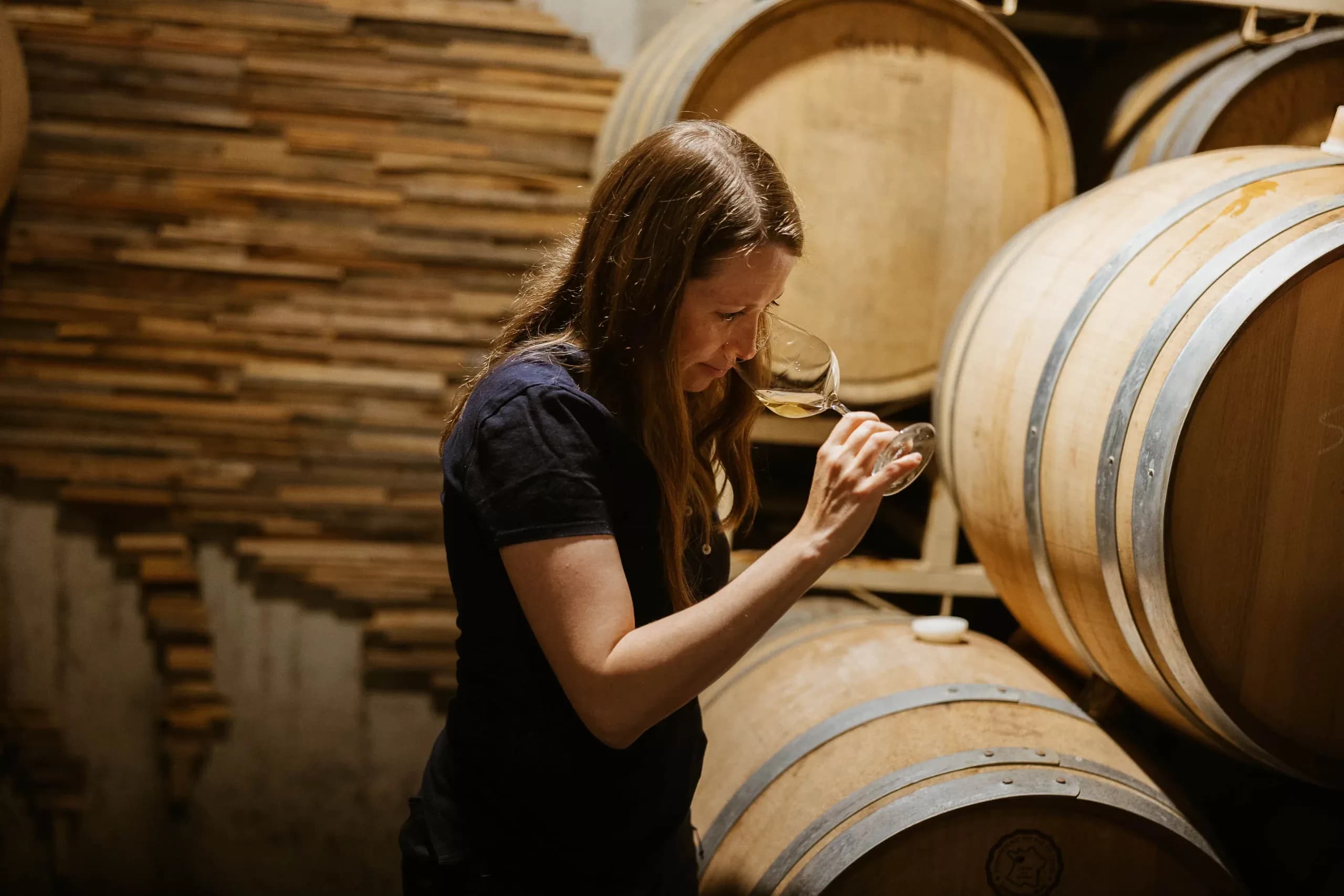
Smell for clues about how the wine was made, and leave the game of naming ingredients to someone else. Ask yourself whether the wine seems young or has some age, and whether it spent time in an oak barrel or stayed in a steel tank. The nose picks up most of what we call flavor.
Take two sniffs: a quick one for a first impression, then a slower one with your nose well into the glass. We watch this at the table all the time. Guests who try to name exact scents tend to freeze up, while guests who ask themselves "barrel or tank?" usually get it right, and they remember the answer afterward.
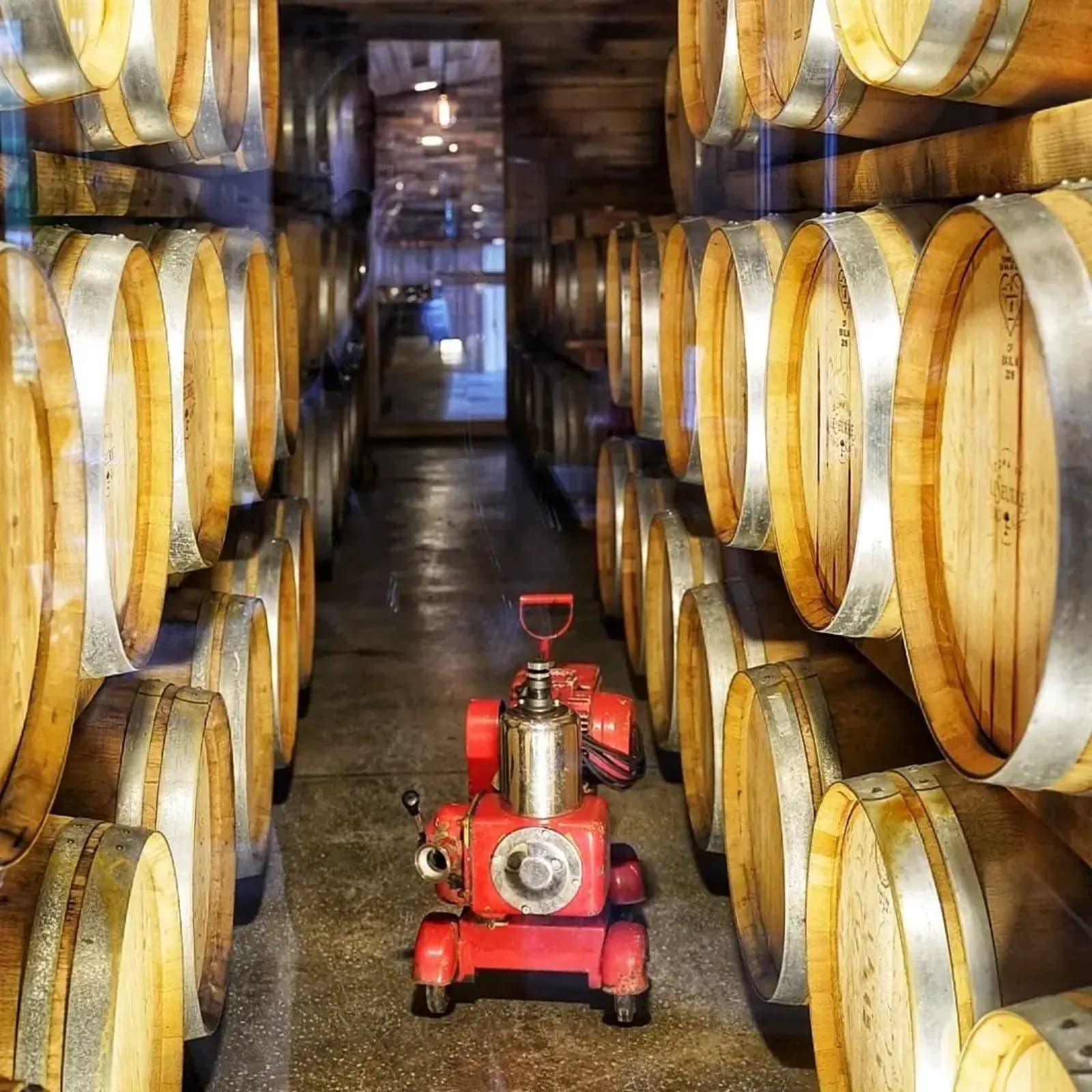
We age some of our wines in oak barrels and keep others in stainless steel, and the nose is often where you first notice the difference. Over the months, a barrel lets a tiny amount of oxygen through its wood and gives some of itself to the wine. Our Chardonnay Unoaked and our Chardonnay Barrel Select come from the same grape, so smelling them side by side is one of the quickest lessons in the room. If the barrel question catches your interest, French oak versus American oak takes it further.
What are you tasting for when you sip?
When you sip, you are reading the structure of the wine. Sweetness is the sugar left after fermentation, acidity makes your mouth water, tannin dries your gums, alcohol comes through as warmth, and body is the weight of the wine in your mouth. Hold each sip for a few seconds so every part has time to show.
- Sweetness tells you how much grape sugar the winemaker chose to leave after fermentation.
- Acidity is the mouth-watering feeling. Cool climates like ours keep more of it in the grapes.
- Tannin is the drying grip on your gums. It comes from skins, seeds and sometimes the barrel.
- Alcohol shows up as warmth at the back of the throat, and it follows how ripe the grapes were at harvest.
- Body is weight, the difference you would feel between skim milk and whole milk.
Tannin surprises people more than anything else on that list, so it has an article of its own. For the professional version of these steps, the Court of Master Sommeliers teaches a deductive tasting method in the same order: sight first, then the nose, then the mouth, and conclusions at the end.
Why take a moment after you swallow?
The pause after you swallow is where the tasting comes together. Notice how long the sensation stays, which tasters call the finish. Then put what you noticed into one sentence about how the wine was made. That sentence is what you will remember next time, and what you can pass on at your own table.
Sébastien cares about this last step more than the other four. He is the sixth generation of a winemaking family from Champagne, and to him a tasting has done its job when you leave having understood something, ideally something you could explain to a friend over dinner.
When our guests host a dinner and open one of our bottles, they can tell their friends: this one spent time in French oak.
What the hour leaves you with
- A red wine gets its color from the skins, because the juice itself is pale.
- Swirling adds air. Legs show alcohol and sugar, and they tell you little about quality.
- The drying feeling on your gums is tannin, a texture that comes from skins, seeds and barrels.
- When a wine makes your mouth water, that is acidity, and a cool lake climate helps the grapes keep it.
Where can you learn to taste wine in the Finger Lakes?
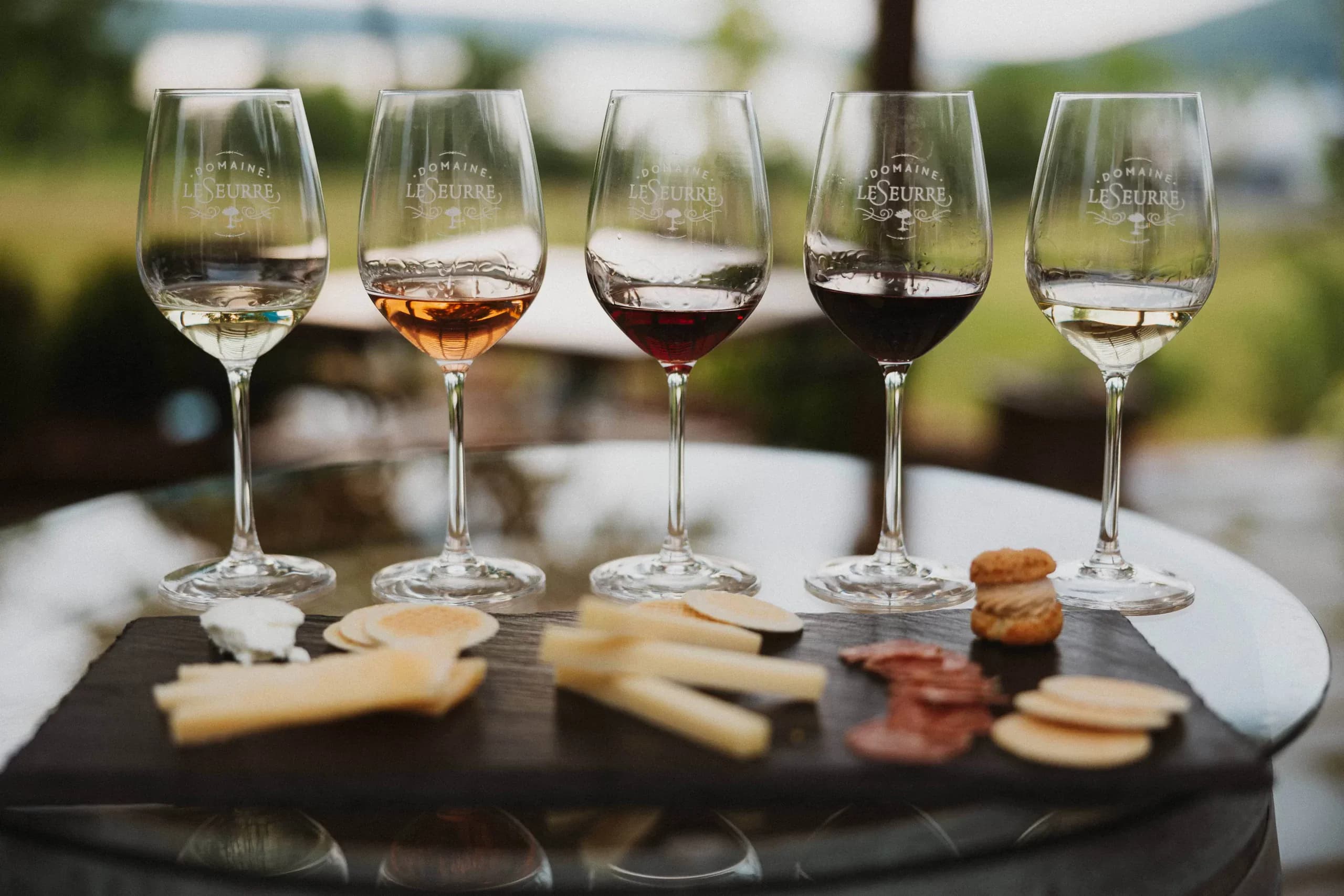
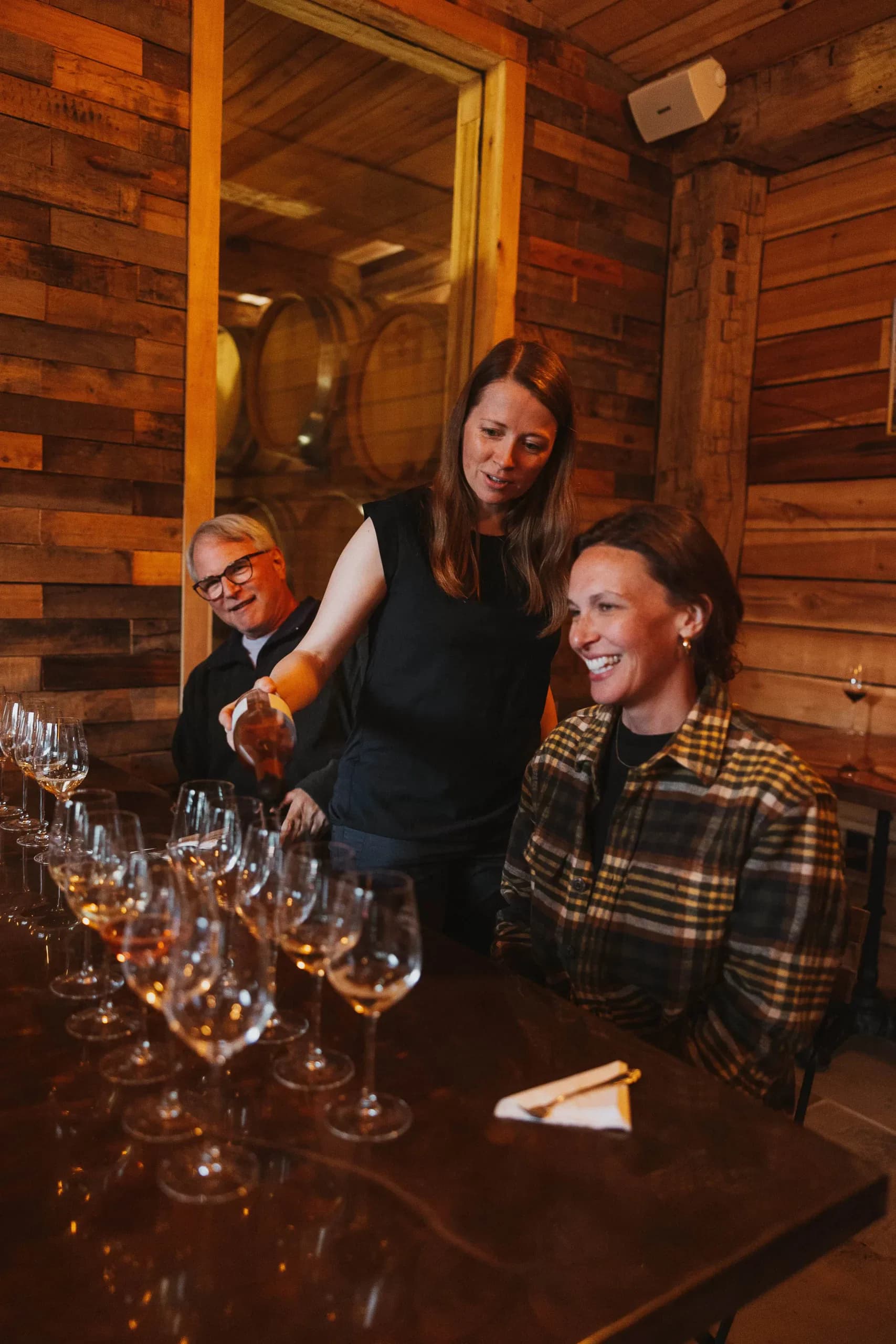
Many Finger Lakes wineries offer seated, guided tastings. At Domaine LeSeurre on Keuka Lake, our Educational Wine Tasting pours five wines over about 45 minutes, and someone from our team explains how each one was made. It is complimentary for Wine Club members, and it is the hour guests talk about on their way out.
The five wines arrive one at a time, in an order that lets you compare each one with the last. Most of the learning happens in that comparison, which is why we wrote about what a wine flight is and how to read one. For a first tasting anywhere in the region, what to expect at a Finger Lakes wine tasting covers the practical side.
All our formats are on the experiences page. Tastings are complimentary for Wine Club members and up to three guests, and the Wine Club page explains how membership works.
Come for an hour, and leave with a few sentences of your own.
Common questions about tasting wine
Is it rude to spit at a wine tasting?
No. Most tasting tables have a spittoon, and using it is normal, especially if you are driving between wineries. You still feel the sweetness, acidity and tannin before you spit, and those are most of what a tasting is about.
In what order should you taste several wines?
Most tastings go from sparkling to white, then rosé, then red, and from dry to sweet. Sugar and tannin linger in the mouth, so a sweet or tannic wine poured first can make the next dry wine feel sharper than it is.
Can beginners enjoy a guided wine tasting?
Yes. Guided tastings are made for beginners. The person pouring explains each wine, and all you have to do is notice what you feel and ask questions.
Written by
The Domaine LeSeurre Team
Céline & Sébastien LeSeurre and the team at Domaine LeSeurre — a family winery on Keuka Lake, in Hammondsport, New York. French roots, Finger Lakes soul.