Wine 101 · Structure
What Is Tannin in Wine? That Drying Grip, Explained
Take a sip of a young red wine, wait a second, and run your tongue along your gums. They feel dry and a little rough, the way they do after a cup of strong black tea. That feeling is tannin, and once you know its name you will notice it in every red you pour.
Of all the words we use in the tasting room, tannin causes the most confusion, mostly because people mix it up with "dry," which means something else on a wine label. Sorting the two out changes how you read a red, and how you choose one for dinner.
What is tannin in wine?
Tannin is a family of natural compounds, called polyphenols, found in grape skins, seeds and stems, and in oak barrels. In wine you feel it more than you taste it. Tannin binds to the proteins in your saliva, so your mouth loses its slickness and feels dry and slightly rough. Red wines carry far more than whites.
Saliva keeps your mouth slippery because it is full of proteins, and tannin grabs onto them. With fewer free proteins, your gums and tongue lose their glide and you get that dry, grippy sensation. Wine Folly describes it the same way, as a texture that sits closer to touch than to taste.
Winemakers count tannin as part of a wine's structure, along with acidity, sugar and alcohol. It gives a red its grip, and it is one of the reasons some reds can age for years.
Where does tannin in wine come from?
Tannin in wine comes from four places: the grape skins, the seeds, the stems when whole clusters go into the tank, and the oak barrel if the wine is aged in wood. The longer the juice sits with skins and seeds, the more tannin it pulls out. New barrels give more than older ones.
- Skins. The main source in most red wines, released as the juice soaks with them during fermentation.
- Seeds. Their tannin is harsher, which is why winemakers press gently and take care with pump-overs.
- Stems. Some winemakers ferment whole clusters with their stems, which adds more.
- Oak barrels. Wood has tannin of its own and passes some of it into the wine as it ages.
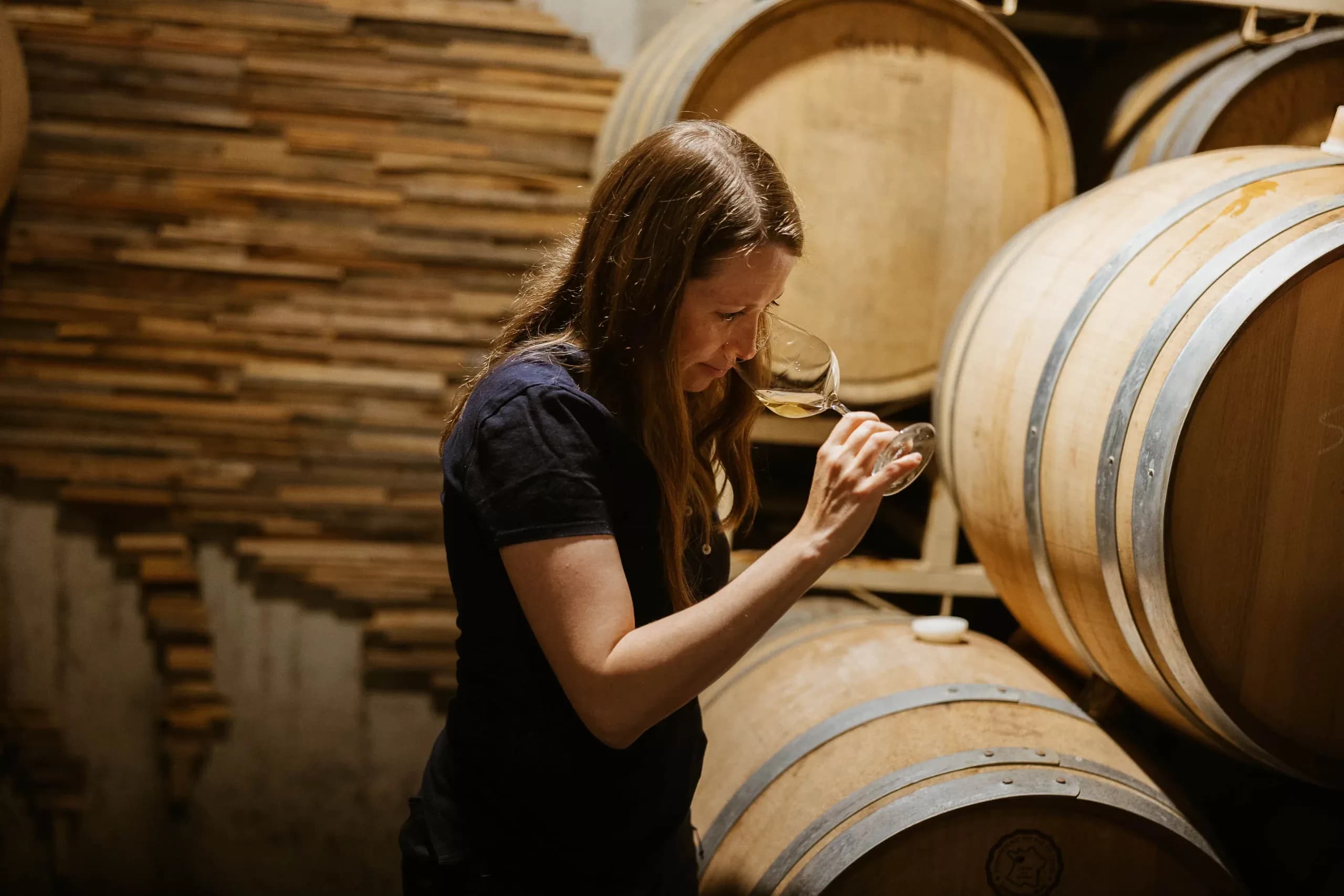
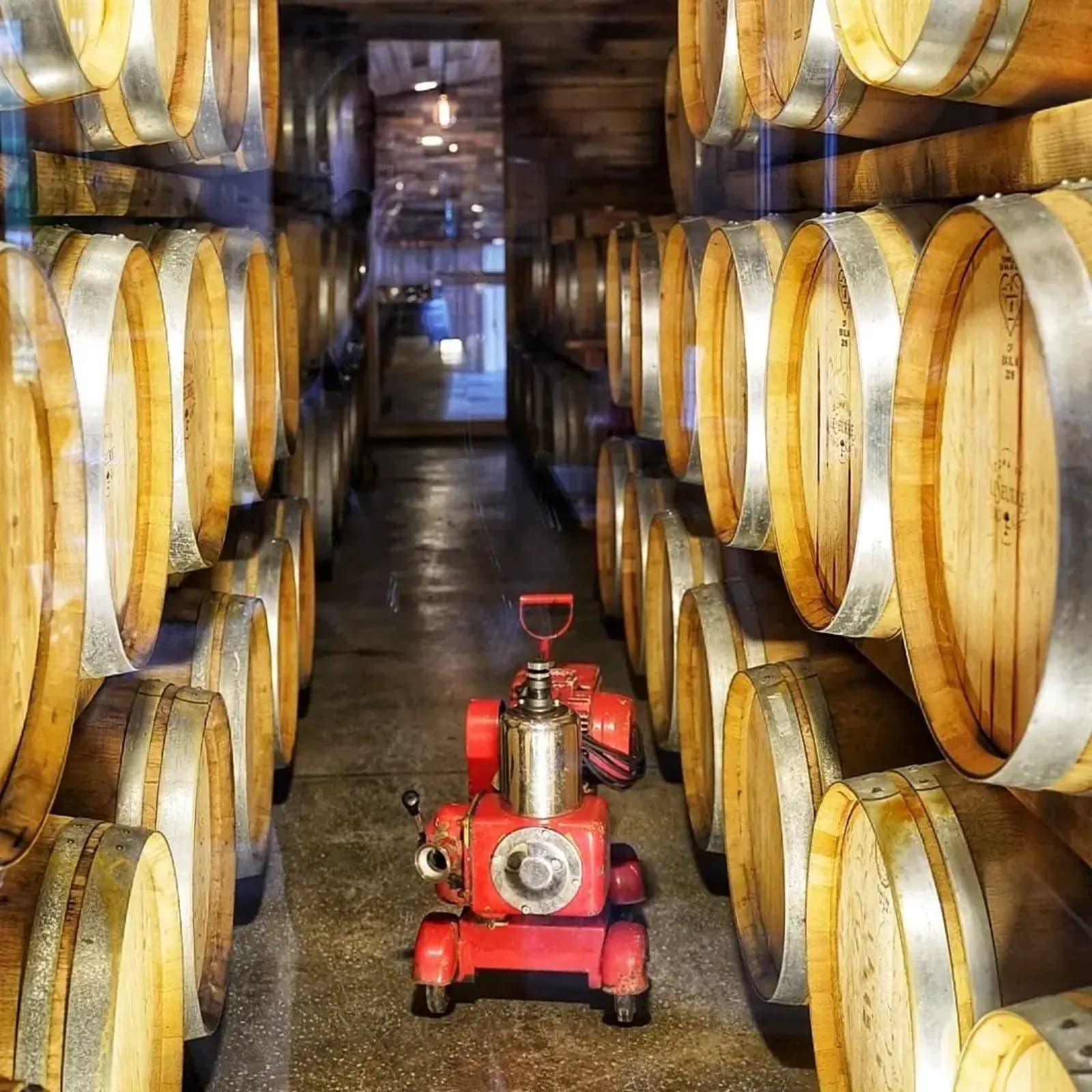
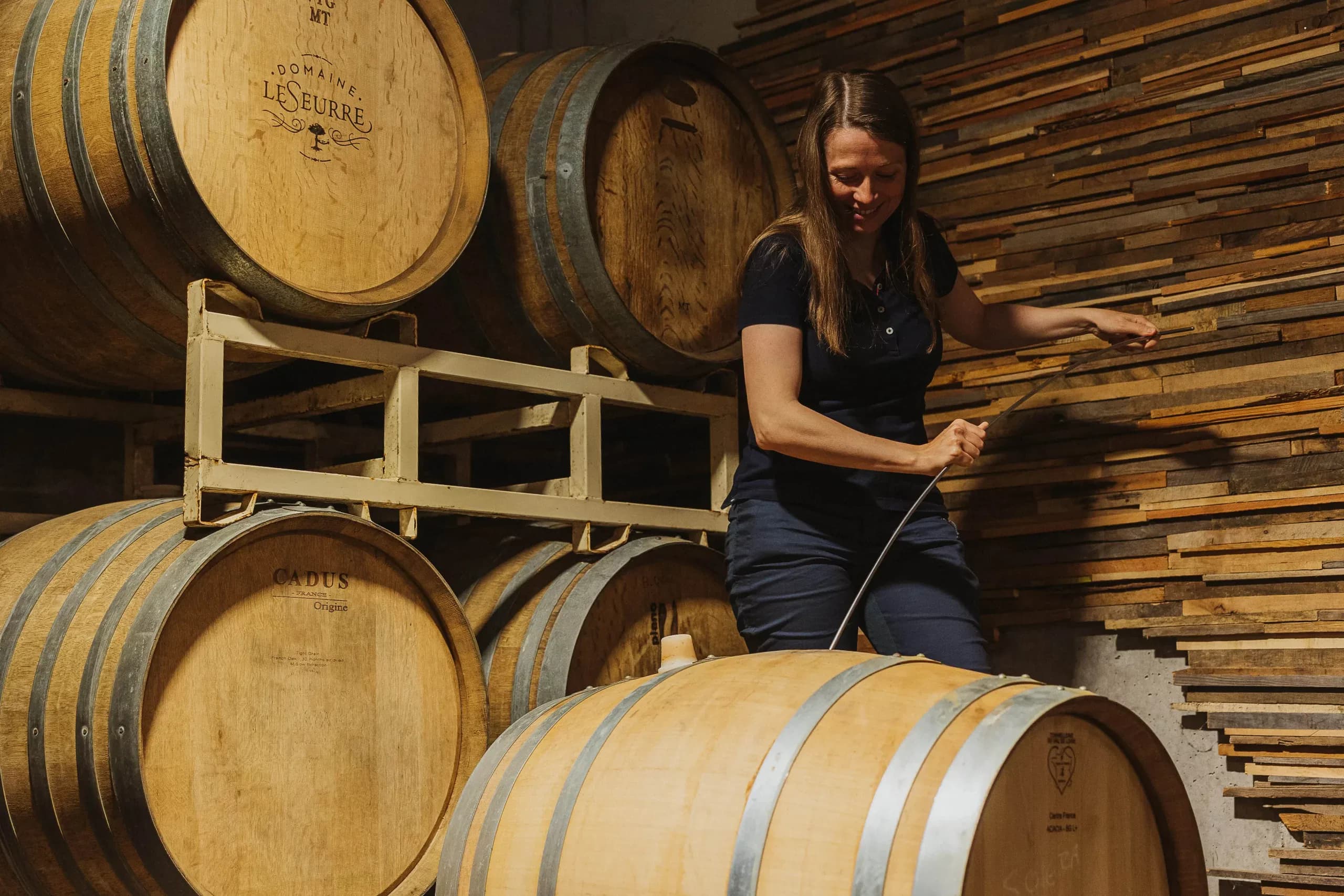
The barrel is where our cellar comes in. We age part of our wines in oak, and most of our reds carry "Barrel Select" on the label, from the Pinot Noir to the Cabernet Sauvignon. A barrel adds a little tannin of its own, but over the months it also lets a tiny amount of oxygen through the wood, and that slow air softens the grip the skins gave the wine. The different kinds of barrels get their own piece in French oak versus American oak.
Why does red wine have more tannin than white?
Red wine has more tannin because it ferments with its skins and seeds, sometimes for weeks, and that is where most tannin lives. White wine grapes are usually pressed first, and only the juice ferments. Rosé sits in between: the juice spends a short time with the skins, then continues on its own.
Put simply, white wine is made from juice and red wine from the whole grape. The skins give a red both its color and its tannin, which is why the two usually travel together.
Grape variety plays a part too. Pinot Noir has thin skins and tends to be gentler, while Cabernet Sauvignon, with its thick skins and small berries, usually carries more. Cabernet Franc tends to land somewhere between them.
Is tannin the same as a dry wine?
Tannin and dryness are two separate things. A dry wine has little or no sugar left after fermentation, while tannin is the drying sensation on your gums. A dry white can have almost no tannin, and a red can carry plenty of tannin along with a touch of sugar. The words sound alike, so people mix them up.
The quickest way to keep them apart: a dry wine has no sugar left, and a drying wine has tannin. Acidity is the third sensation people confuse with both. It works the opposite way, making your mouth water where tannin dries it out. Sip a Riesling and then a young red, and you will feel the two in under a minute.
How does tannin change as a wine ages?
As red wine ages in the bottle, tannin molecules slowly link together into longer chains. Longer chains feel smoother in the mouth, and some grow heavy enough to fall out as sediment at the bottom of the bottle. That is why an older red often feels softer than the same wine did when it was young.
Oxygen speeds the same process up a little. That is one reason a firm young red can feel gentler after some time in a decanter, and one reason we swirl the glass, which wine legs and swirling explains.
What does tannin change at the table?
At the table, tannin looks for fat and protein. A steak, a lamb chop or an aged cheese coats the mouth, and tannin cuts through that coating so each bite feels fresh again. Salt also softens the feel of tannin. Chili heat and delicate fish tend to clash with a tannic red.
It works as a trade. The fat in the food gives tannin something to grab, so the wine feels smoother, and the tannin clears the fat, so the food feels lighter. That exchange is why red wine and a grilled steak have been served together for so long. Chili heat goes the other way, because tannin and alcohol make the burn feel stronger.
Our pairings rest on this kind of structure, and our food and wine pairing guide walks through the method. For our reds in particular, see Cabernet Franc food pairing and Pinot Noir food pairing. The bottles themselves are on our wines page.
Tannin, the short version
- Tannin is a texture you feel on your gums, more than a taste.
- It comes from grape skins, seeds and stems, and from oak barrels.
- Red wine ferments with its skins and seeds, so it carries far more tannin than white.
- Fat and protein soften tannin, and tannin clears the fat in return.
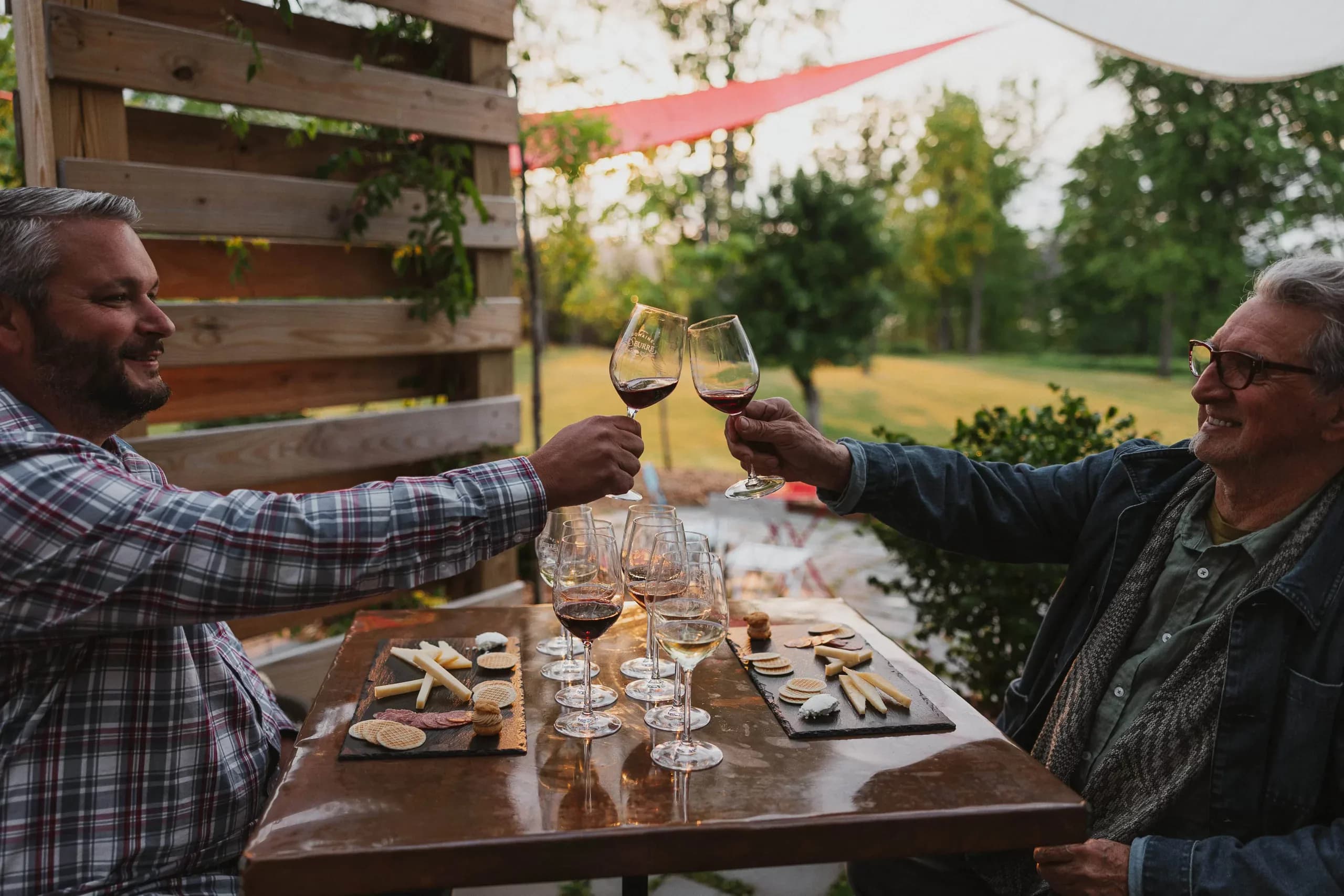
Tannin is easiest to understand with a few reds poured side by side and someone explaining where each grip comes from, which is how our Educational Wine Tasting works.
Feel the difference between our reds, one glass at a time.
Common questions about tannin
Does white wine have tannin?
A little. White wine grapes are usually pressed before fermentation, so the juice spends almost no time with skins and seeds. A white aged in oak picks up a small amount from the barrel.
Which red wines have the most tannin?
Thick-skinned grapes like Cabernet Sauvignon usually carry the most, especially when young and aged in new oak. Thin-skinned grapes like Pinot Noir are gentler. Winemaking choices, such as how long the skins stay in, matter as much as the grape.
Why does red wine make my mouth feel dry?
Tannin binds to the proteins in your saliva, so your mouth loses its slippery coating. The feeling fades after a moment, and it softens a lot when you eat something with fat or protein.
Written by
The Domaine LeSeurre Team
Céline & Sébastien LeSeurre and the team at Domaine LeSeurre — a family winery on Keuka Lake, in Hammondsport, New York. French roots, Finger Lakes soul.