Wine 101 · In the Cellar
“This One Was Aged in French Oak”: What That Really Means
Picture a dinner at your place. You open a bottle, pour for your friends and mention that this one spent time in French oak. Then someone asks what that actually changes, and this article is here so you can answer.
The scene comes straight from Sébastien. When he talks about why guests come to a tasting, he talks less about liking the wine than about leaving able to explain it. Barrels make a good example, because almost everyone has heard of French and American oak, and very few people know what separates them.
When they host a dinner and bring out our wines, they're able to say, "This one was aged in French oak."
What is the difference between French oak and American oak?
French oak comes mostly from slow-growing European species in managed French forests, which gives a tight grain. American oak is mostly white oak grown in the United States, which grows faster and has a wider grain. French staves are split by hand along the grain; American staves can be sawn. That changes how the barrel breathes and gives.
It starts with the tree. French barrels are usually made from sessile and pedunculate oak grown in forests such as the Allier, the Limousin and the Vosges, where the trees grow slowly and close together. Slow growth leaves narrow growth rings, which coopers call a tight grain. American barrels mostly use white oak, a different species that grows faster and more openly.
Then comes the way the wood is cut. Wine Folly and the Oxford Companion to Wine describe the same mechanism. American white oak is dense, with tiny natural plugs in its cells, so it stays watertight even when sawn into staves. French oak has fewer of them and has to be split along the grain to stay watertight. Splitting wastes far more wood per tree, which is part of why French barrels cost more.
What does an oak barrel actually do to wine?
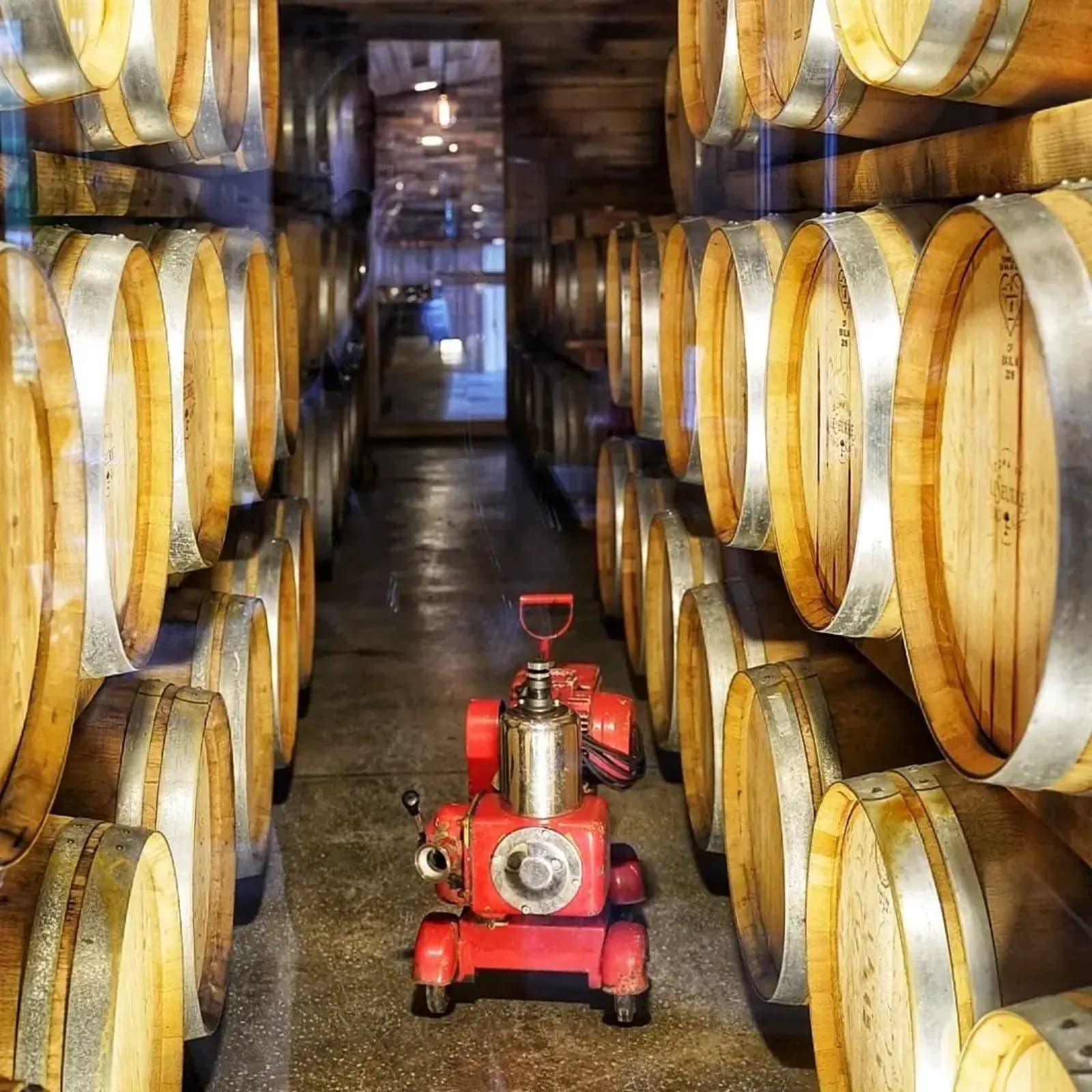
An oak barrel does two things. It lets very small amounts of oxygen reach the wine through the wood and the bung hole, which softens tannins and builds texture over months. It also gives the wine compounds from the wood itself, including wood tannin, which adds structure. A steel tank does neither of these.
A barrel works a bit like a very slow lung. Wood lets some air through, so over months a tiny trickle of oxygen reaches the wine. In reds, that slow contact helps tannins soften and settle, and it helps stabilize color. In whites like Chardonnay, it builds weight and a rounder texture. A steel tank is sealed and neutral, so none of this happens there.
The wood also gives up some of itself. Oak holds its own tannin, the same drying, grippy substance found in grape skins, and some of it passes into the wine and firms up its structure. We explain where tannin comes from, and how it feels, in what tannin in wine is.
How does French oak change a wine compared with American oak?
French oak's tight grain releases its wood compounds more slowly and gradually, so it tends to shape a wine's structure and texture quietly over time. American oak's wider grain and sawn staves usually give more, faster, so its imprint on the wine is stronger. Winemakers choose between them depending on how much the barrel should speak.
French oak works quietly and American oak more openly. A tightly grained French barrel lets the wine take on wood slowly, which tends to give finer, more integrated tannins and leaves room for the grape and the place. American oak gives its character more generously. Some wines have the body to carry a stronger barrel, while others would disappear under it.
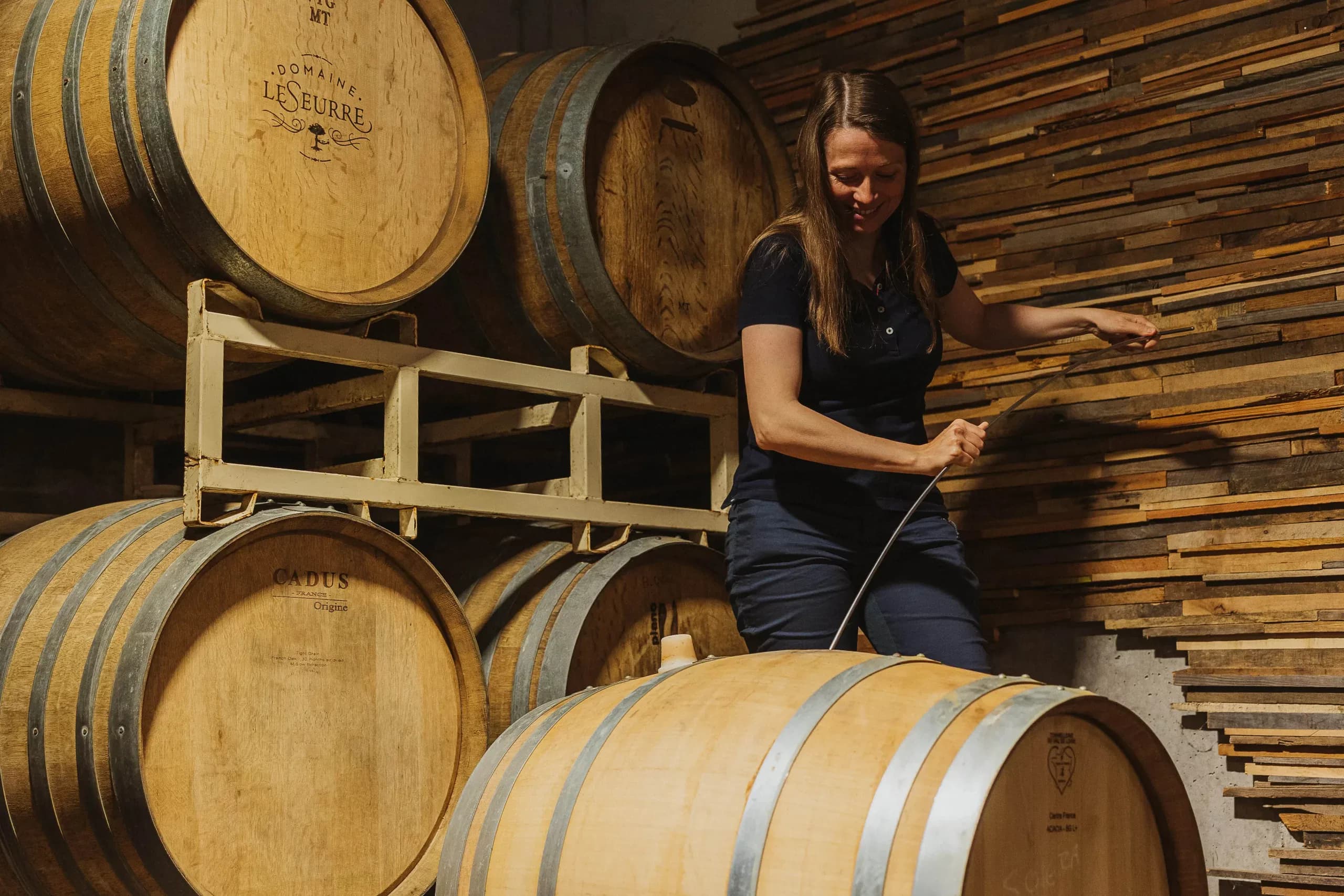
The cooper's work counts as well. Staves usually season outdoors for a couple of years before they're shaped, and then they're bent over a fire to form the barrel. How much heat the cooper uses changes what the barrel gives, so two French oak barrels can behave quite differently depending on where the wood grew and who made them.
If a guest asks about the barrel
- French oak grows slowly with a tight grain and gives to the wine gently over time.
- American oak grows faster with a wider grain and gives more, sooner.
- A new barrel has the most to give; after several fills it mostly lets the wine breathe.
What is the difference between new and used oak barrels?
A new barrel gives the most wood tannin and has the strongest influence on the wine. Each refill leaves it less to give, and after several vintages it's called neutral, meaning it mainly lets in oxygen and shapes texture. Many winemakers blend wine from new and used barrels to set the balance they want.
The age of a barrel often matters more than the country its oak came from. A wine aged in a brand-new barrel and the same wine aged in a barrel on its fourth fill can end up far apart. Size plays a part too, since more of the wine touches wood in a smaller barrel and the effect is stronger. The classic Bordeaux barrique holds 225 liters, about 59 gallons.
Which of our wines are aged in oak?
We age part of our wines in oak barrels. On our list, the name Barrel Select marks a wine aged in barrel, across whites and reds: Chardonnay, Riesling, Gewurztraminer, Sauvignon Blanc, Pinot Noir, Cabernet Franc, Cabernet Sauvignon, Merlot and Lemberger. Our Chardonnay Unoaked is made in tank, for comparison.
The pair we like to pour together is our Chardonnay Unoaked and our Chardonnay Barrel Select, the same grape with one decision changed. Tasting them side by side is the quickest way to understand what a barrel adds, and we go further into that comparison in Riesling vs Chardonnay.
Sébastien comes from six generations of a winemaking family in Champagne, where patience in the cellar is part of the craft. Our sparkling wines take that patience further, with over ten years on the lees, as we explain in the méthode champenoise, explained. If you'd like to know which barrels a particular wine saw, ask us at the tasting bar; questions like that are what our Educational Wine Tasting is for.
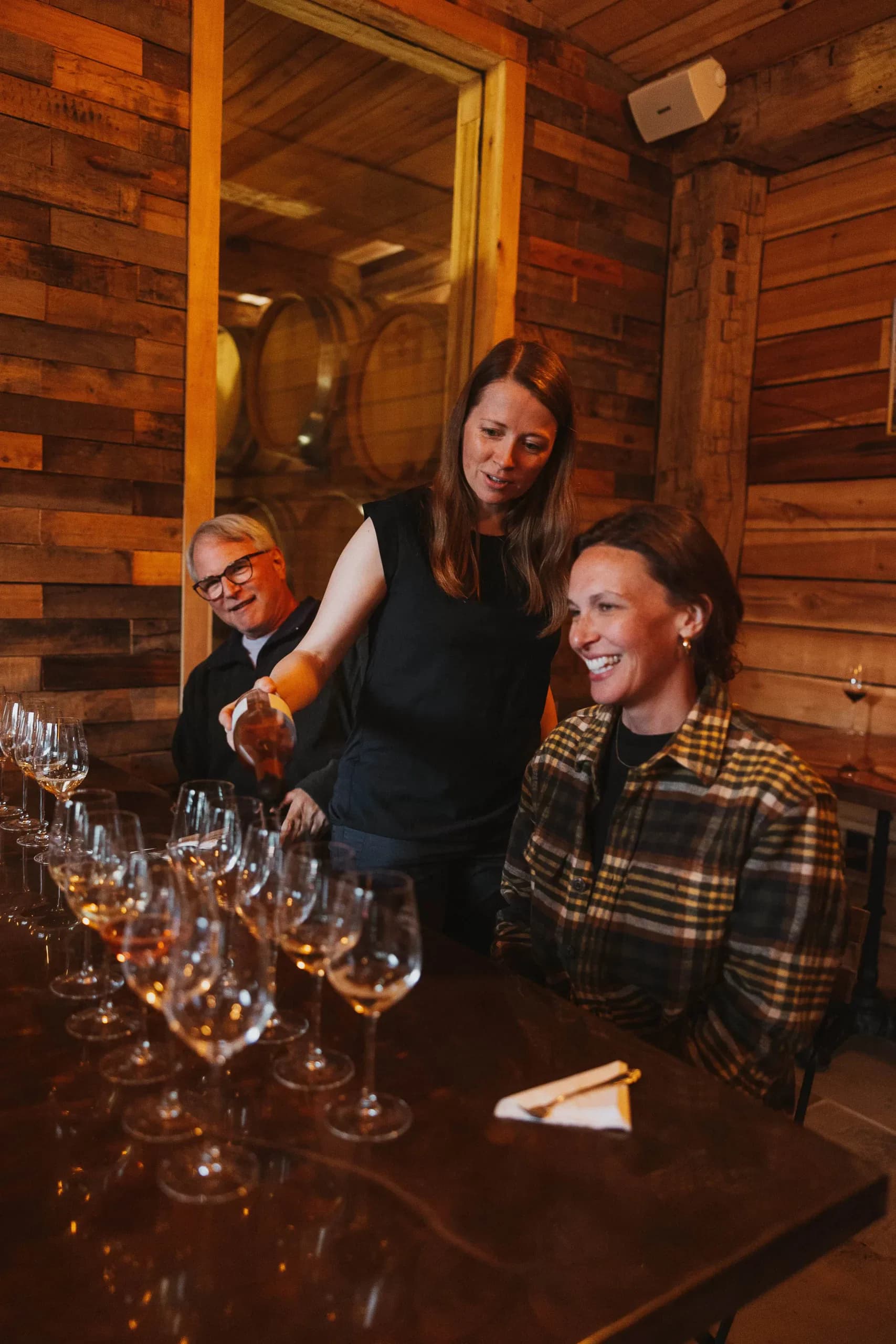
Taste the difference a barrel makes, with the people who chose it.
Common questions about oak barrels
Why are French oak barrels more expensive?
Mostly because of how they're made. French oak has to be split along the grain to stay watertight, which uses much more of each tree than sawing. The slow-growing trees and the seasoning time add to the cost.
Is French oak better than American oak?
Neither is better in general. French oak tends to give its character slowly and gently, while American oak gives more, faster. The right choice depends on the wine, how much body it has and how much the winemaker wants the barrel to show.
How long does wine stay in oak barrels?
It varies widely, from a few months for some whites to well over a year for structured reds. The winemaker tastes the barrels regularly and decides when the wine has taken what it needs.
Does all red wine age in oak?
No. Many reds are aged in oak, but some are made in steel or concrete to keep them lighter and more direct. On our list, the words Barrel Select tell you a wine was aged in barrel.
Written by
The Domaine LeSeurre Team
Céline & Sébastien LeSeurre and the team at Domaine LeSeurre — a family winery on Keuka Lake, in Hammondsport, New York. French roots, Finger Lakes soul.