Wine 101 · Grapes
Riesling vs Chardonnay: Which One Should You Open Tonight?
Guests ask us to compare Riesling and Chardonnay more than any other pair of white grapes. Both grow in the Finger Lakes and both are on our list, yet in the cellar we treat them almost as opposites. We keep Riesling away from wood so it stays itself, and we often send Chardonnay into a barrel.
Most comparisons of these two grapes turn into a list of flavors. We'd rather show you what we do to each one after harvest, and why, because that's something you can see and explain to someone else. With that in mind, you'll pick up the difference in almost any bottle.
What is the main difference between Riesling and Chardonnay?
Riesling is an aromatic variety from Germany's Rhine that winemakers usually ferment in stainless steel to keep its character precise. Chardonnay, from Burgundy in France, is a more neutral grape that takes well to oak barrels and extra cellar work. Riesling keeps higher acidity and can be dry or sweet; Chardonnay is almost always dry.
Picture two students. Riesling arrives already knowing who it is, and our job is mostly to stay out of its way. Chardonnay takes on the shape of its teacher: give it a barrel, time on its lees or softer acidity, and it changes with each choice. That's why winemakers sometimes call it a winemaker's grape.
They come from different places, too. According to Wine Folly, Riesling comes from the Rhine region of Germany and Chardonnay from Burgundy, in eastern France. Chardonnay is also one of the main grapes of Champagne, where Sébastien's family has made wine for six generations, so we grew up around it.
Why does Riesling usually stay in stainless steel?
Riesling is an aromatic variety whose character comes from the grape and the place it grew. Fermenting it in closed stainless steel tanks, often kept cool, protects that character from oxygen and wood. The wine keeps its natural acidity and its precision. Many winemakers see any added influence as something that blurs the grape.
A steel tank adds nothing to the wine. It doesn't breathe or give off tannin, and it lets us control temperature closely, which suits a grape like Riesling. We want the wine to tell you about our slope above Keuka Lake and the long, cool fall the lake gives us, as we explain in what Riesling is, from a French winemaker.
Riesling also usually skips a step that many Chardonnays go through, malolactic conversion. In that second, gentle fermentation, bacteria turn the grape's sharper malic acid into softer lactic acid. Blocking it keeps Riesling's acidity intact, and that acidity is what lets Riesling range from dry to sweet (more on that in dry vs sweet wine).
We break our own rule with one wine. Our Riesling Barrel Select spends its time in barrel, which gives it a different structure from our tank-made Rieslings and shows that the grape can answer more than one way.
Why does Chardonnay go into oak barrels?
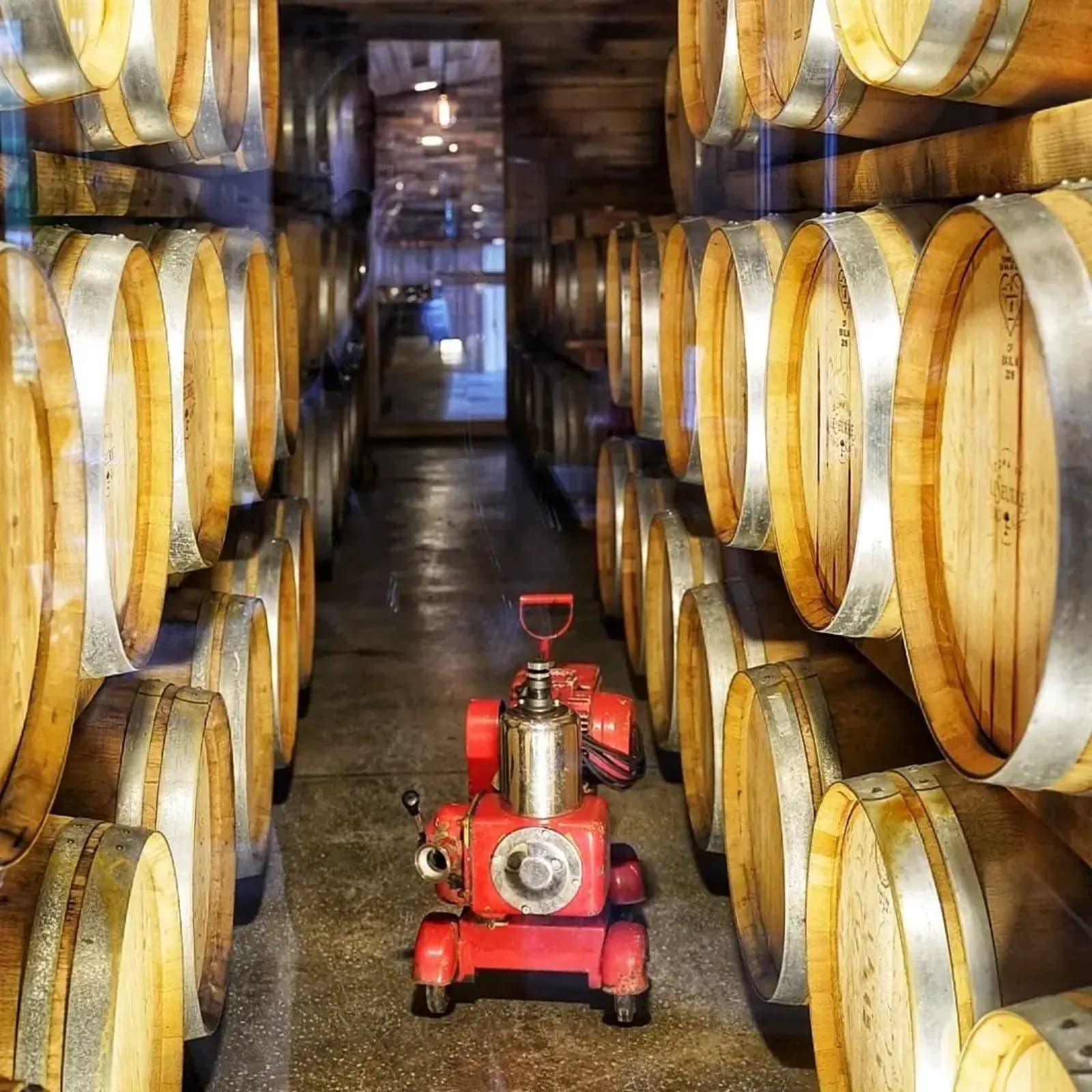
Chardonnay has a quieter personality than Riesling, so it responds well to barrels. Oak lets tiny amounts of oxygen reach the wine, adds wood tannin and changes its texture. Many Chardonnays also go through malolactic conversion and rest on their lees, which gives a rounder, fuller wine. The result depends heavily on the winemaker's choices.
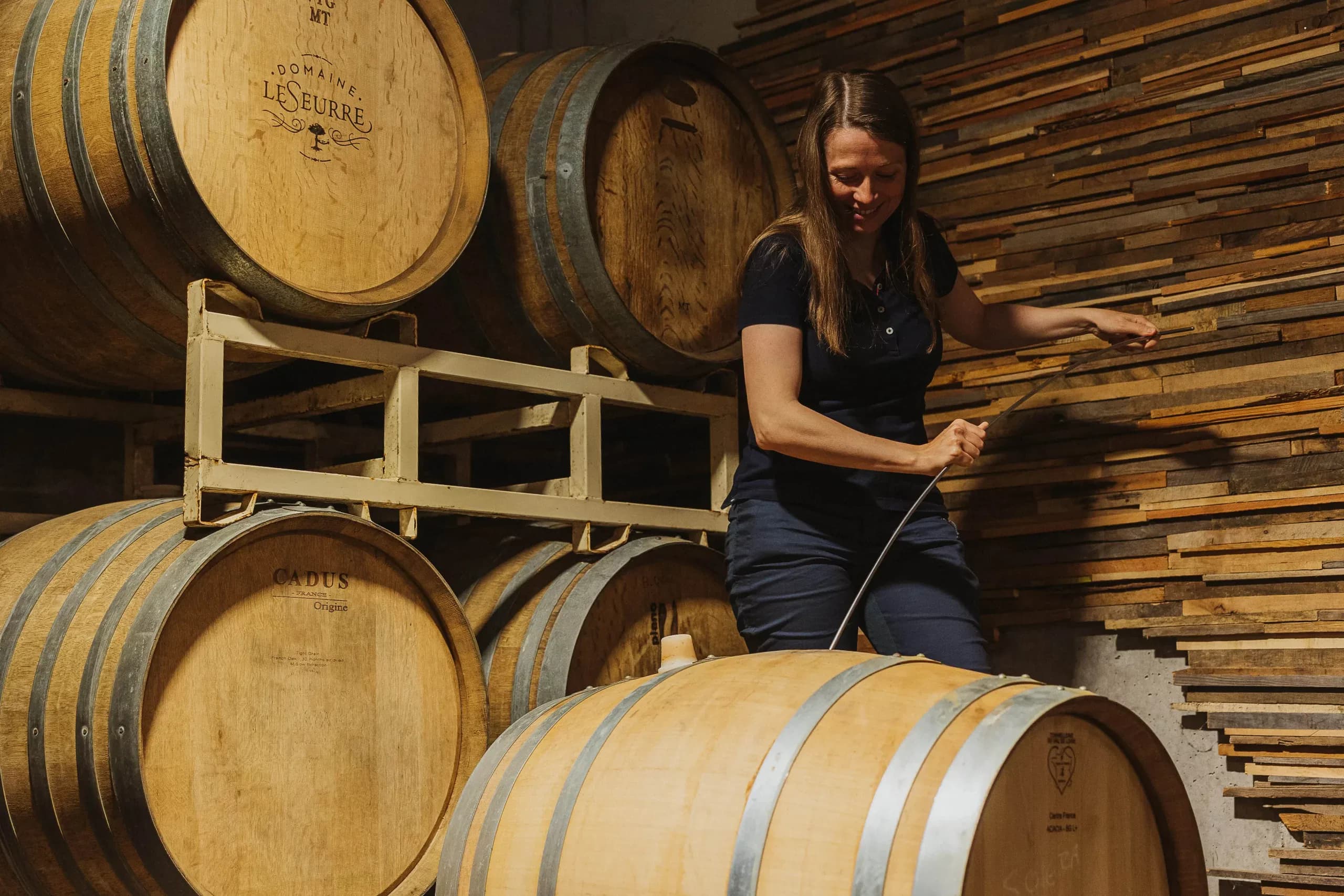
A barrel works slowly. Oak breathes a little, so over months the wine meets small amounts of oxygen, which softens its edges and gives it more weight. Leaving the wine on its lees, the spent yeast that settles after fermentation, adds body as well. Some winemakers stir the lees back up in the barrel, a step the French call bâtonnage.
Chardonnay takes all of this in and still tastes like itself, while the same treatment would cover up what makes Riesling interesting. What the wood itself does, and how French and American barrels differ, is the subject of French oak vs American oak.
What is the difference between unoaked and oaked Chardonnay?
Unoaked Chardonnay is fermented and aged in stainless steel, so it keeps more of its natural acidity and a lighter body. Oaked Chardonnay spends time in wooden barrels, which adds wood tannin, lets in a little oxygen and usually gives more weight. The grape is the same in both bottles; the cellar method is what separates them.
We make both, and pouring them together teaches more than anything we could say. Our Chardonnay Unoaked is made in tank and our Chardonnay Barrel Select is aged in oak, so side by side you're tasting one grape from one region with one decision changed. We set up the same kind of comparison with our three Rieslings.
Steel or barrel, in brief
- We keep Riesling in steel so it stays itself.
- Chardonnay takes the shape of the cellar, which is why people call it the winemaker's grape.
- Our Unoaked and our Barrel Select are the same Chardonnay with one decision changed.
How do Riesling and Chardonnay grow in the Finger Lakes?
Both grow well in the cool Finger Lakes climate. Riesling is the region's signature grape: it ripens slowly, holds its acidity and handles cold winters well. Chardonnay also does well here, ripening earlier in the season. The deep lakes moderate temperatures for both, stretching the fall so the fruit can hang longer.
The Finger Lakes Wine Alliance calls Riesling the region's signature grape, and the cool climate explains why. On our slope, the lake keeps the vines cool in spring and holds warmth into the fall. Chardonnay generally ripens earlier than Riesling, which here can hang into late into the fall.
Both grapes also keep good natural acidity in this climate. That gives our Chardonnay a firmer frame than the same grape grown somewhere hot, and it's part of why we can give it time in barrel without it turning heavy.
Which one should you open tonight?
Let the meal decide. Riesling's high acidity, and the touch of sugar in its sweeter styles, suits spicy and salty dishes. Barrel-aged Chardonnay has the weight for roast chicken, pork and creamy sauces. Unoaked Chardonnay fits lighter fish and vegetables. Tasting them side by side is the fastest way to know your own preference.
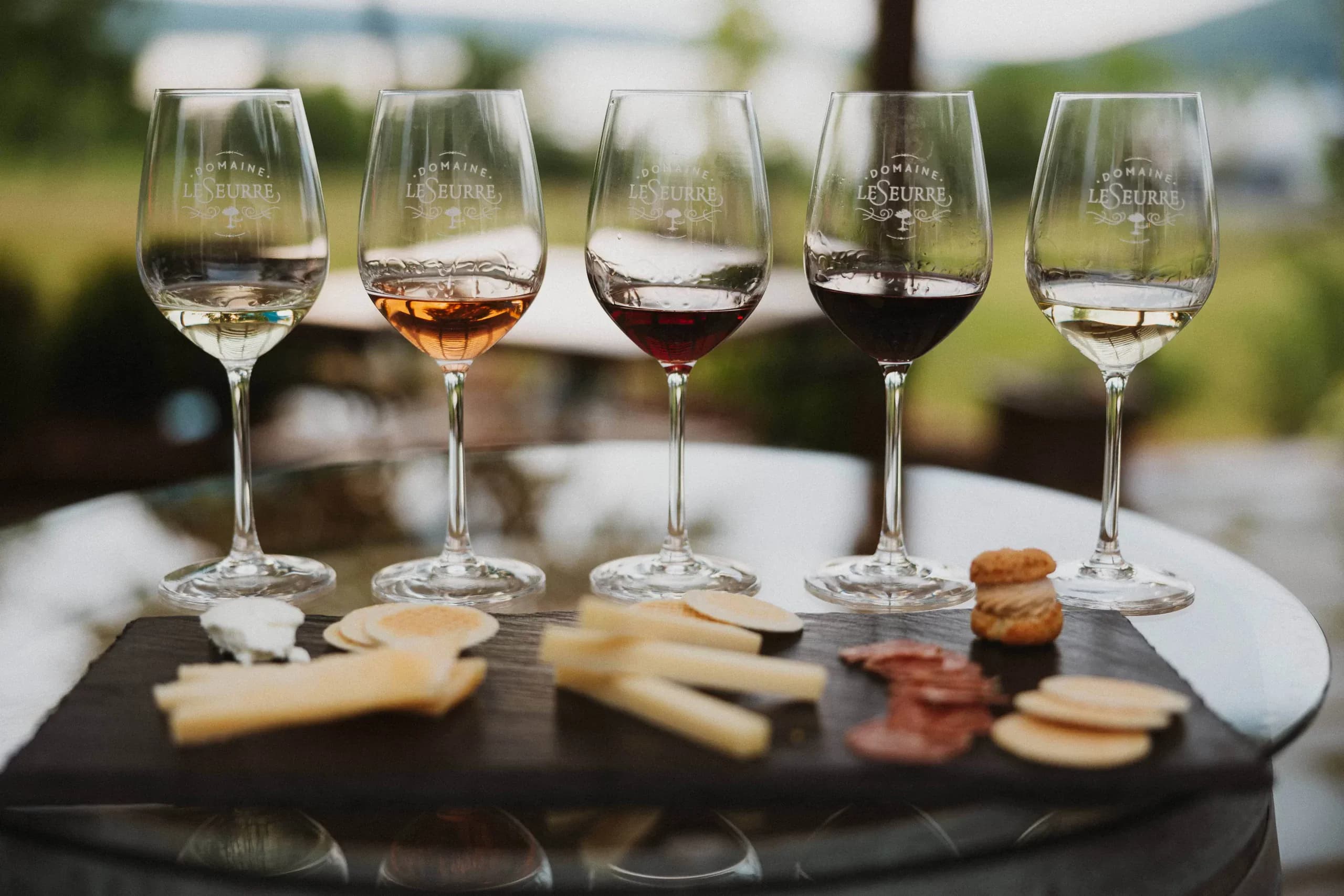
If you'd rather taste than read, our Educational Wine Tasting pours five of our wines side by side, and our team will tell you which ones went into steel and which saw a barrel. You can also browse our wines before your visit.
Taste our Riesling and our two Chardonnays side by side.
Common questions about Riesling and Chardonnay
Is Riesling sweeter than Chardonnay?
Often, but not always. Riesling can be made anywhere from dry to sweet, while Chardonnay is almost always made dry. A dry Riesling has no more sugar than a Chardonnay; it just carries more natural acidity.
Which is lighter, Riesling or Chardonnay?
Riesling is usually lighter in body, especially when made in stainless steel. Chardonnay can be light when unoaked, and fuller when aged in barrel, rested on its lees or put through malolactic conversion.
Can Riesling be aged in oak?
Yes, though it's less common. Most Riesling is made in stainless steel, and traditional producers who use wood tend to choose large, older casks that add little of their own. Our Riesling Barrel Select is one of our barrel-aged exceptions.
Written by
The Domaine LeSeurre Team
Céline & Sébastien LeSeurre and the team at Domaine LeSeurre — a family winery on Keuka Lake, in Hammondsport, New York. French roots, Finger Lakes soul.