Wine 101 · Tasting
What Are Wine Legs, and Why Do We Swirl the Glass?
Swirl a glass of wine, set it down, and watch. After a few seconds, clear drops gather near the top and slide back down in thin streaks. Someone at the table usually says, "Great legs, that's a good wine." The legs do tell you something real, though it has more to do with alcohol and sugar than with quality.
Guests ask about legs at our tasting bar more than almost anything else. The physics behind them is simple, and the swirl that creates them turns out to be the more useful gesture of the two.
What are wine legs?
Wine legs, also called tears, are the drops that form on the inside of a glass after you swirl and then run back down in streaks. They appear because alcohol evaporates faster than water. Wines with more alcohol show more legs, and wines with more sugar show slower, thicker ones. Legs say little about quality.
The French call them larmes, tears. In German they are Kirchenfenster, church windows, for the arches they draw on the glass. Whatever the name, it is the same thing: a thin film of wine climbing the glass and falling back in drops.
Why do wine legs form?
Legs form because of the Marangoni effect. When you swirl, a thin film of wine coats the glass. Alcohol evaporates from it faster than water, so the film grows more watery and its surface tension rises. That tension pulls more wine up the glass until drops gather, grow heavy and slide back down.
In kitchen terms, water pulls harder on its surface than alcohol does. At the top of the film the alcohol leaves first, so that edge is mostly water, and it tugs the wine below it upward. The wine climbs and piles into a ridge until gravity brings it back down. The effect is named after the Italian physicist Carlo Marangoni, who studied how differences in surface tension make liquids move.
You can test it at home. Cover a swirled glass with your hand or a coaster and the legs slow down and fade, because the alcohol has nowhere to evaporate to. Lift the cover and they come back.
What do wine legs really show?
Legs show two things about a wine: its alcohol and its sugar. More alcohol means more evaporation and more legs, and more sugar makes the wine slightly thicker, so the legs fall more slowly. The glass plays a part too, since temperature, humidity and soap residue can change the picture from one pour to the next.
Heavy, slow legs therefore suggest a wine higher in alcohol, sweeter, or both, which is useful to know. A late harvest wine like our Vendanges Tardives usually drips more slowly than a dry white, because its grapes kept more sugar on the vine. A light, low-alcohol wine may barely show legs at all.
Wine Folly makes the same point about alcohol and sugar, and adds that a clean glass with no residue gives the clearest read. That also explains why one wine can look different in two glasses on the same table.
What do legs tell you about quality?
Legs tell you very little about quality. A great wine can have faint legs, and a simple wine with plenty of alcohol can have thick ones. Quality shows in the balance between acidity, sugar, tannin and alcohol, and in how long the sensation lasts after you swallow, which only tasting can tell you.
So when someone at dinner praises the legs, you can tell them what they are looking at: alcohol at work, with sugar slowing it down. Judging the wine itself means tasting it, and how to taste wine goes through that step by step.
Why do we swirl wine?
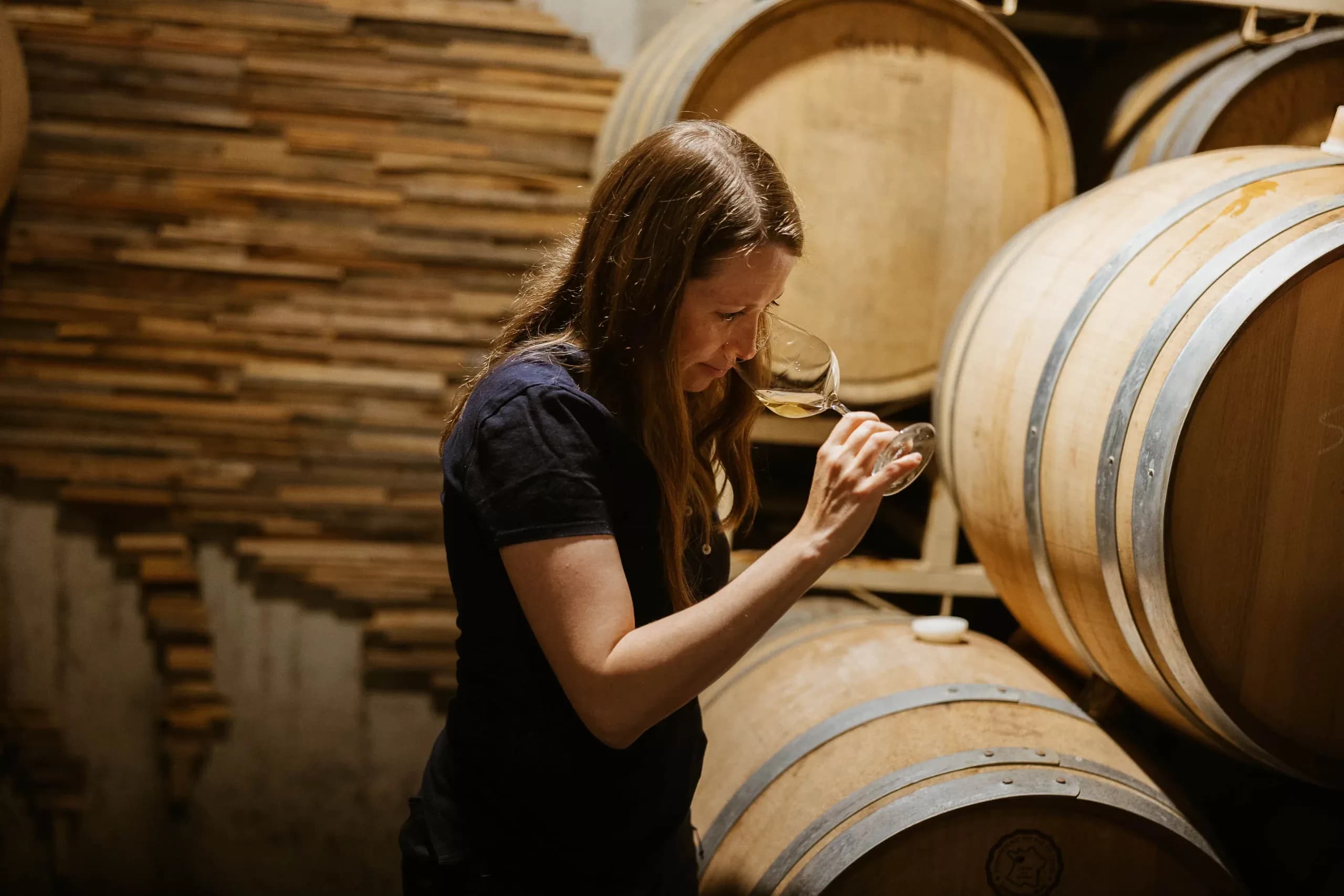
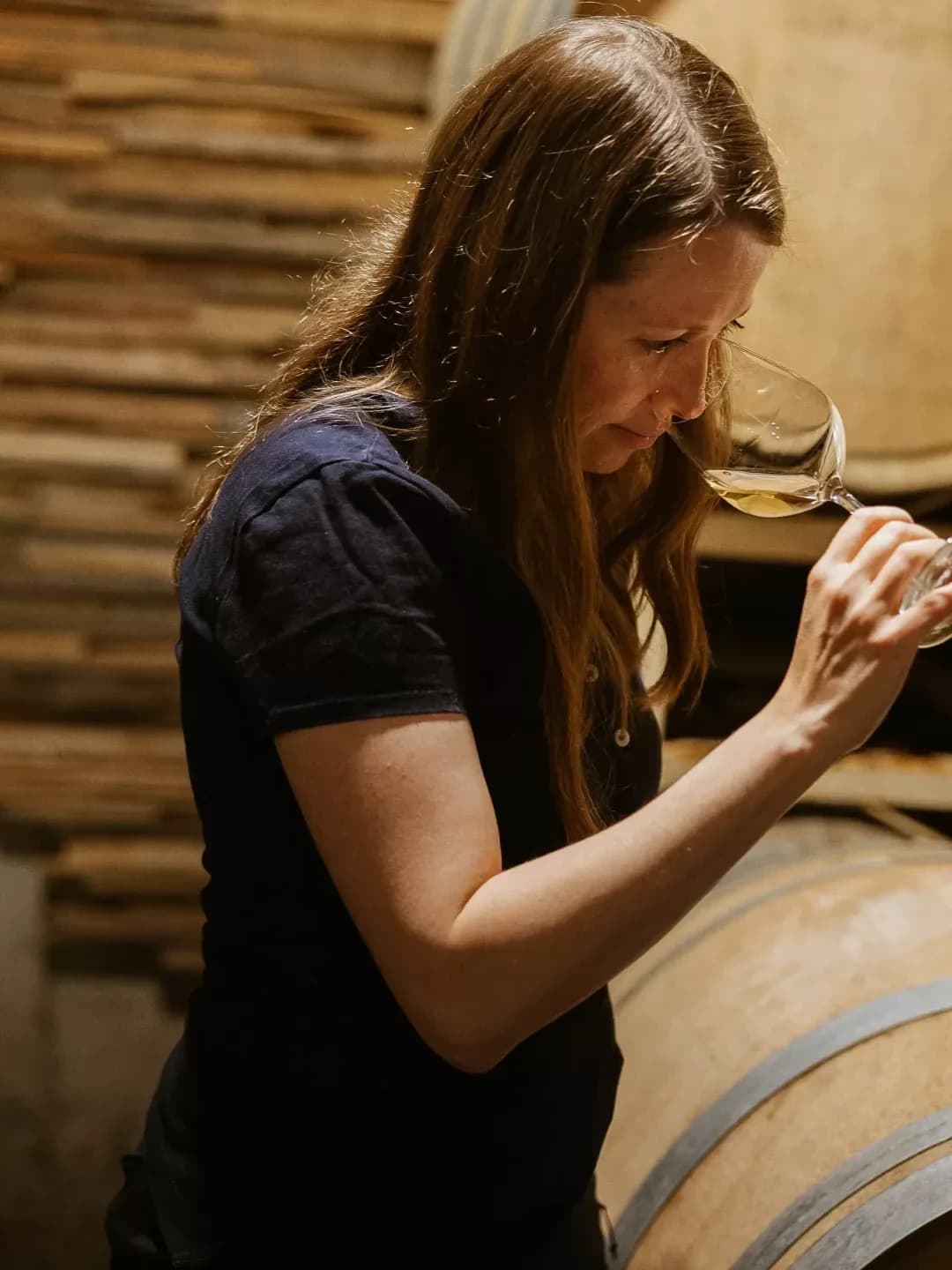
We swirl wine to bring oxygen into it and to spread it over a larger surface of the glass. Both help its aromas lift out of the wine and toward your nose, so there is more to smell. A few seconds of swirling can make a young, closed wine much easier to read.
A sealed bottle has kept the wine away from air, sometimes for years, and its first contact with oxygen wakes it up. The swirl does in seconds, on a small scale, what a decanter does over a longer stretch. It is also why a glass often changes between the first sip and the last.
Oxygen does more than lift aromas. Over time it softens the grip of tannin in a young red, as we explain in what is tannin in wine, and it keeps an opened bottle changing over the following days, the subject of how long wine lasts after opening.
How do you swirl a wine glass properly?
Pour the glass about a third full, hold it by the stem, and keep the base flat on the table. Move it in a few small, quick circles, about the size of a coin, then stop and smell right away. Swirling on the table is steadier than swirling in the air, and your wine stays in the glass.
- Fill the glass about a third of the way, so the wine has room to move.
- Hold the stem. Your hand stays off the bowl and the wine stays cool.
- Keep the base on the table and draw small circles for three or four seconds.
- Stop, then bring your nose into the glass while the wine is still moving.
When should you swirl more gently?
Swirl sparkling wine gently, because a hard swirl knocks the bubbles out of it. Go easy with very old wines as well, since they can be delicate once they meet the air. Most young whites, rosés and reds take a confident swirl well, and it brings out the most in them.
Our sparkling wines are made by the méthode champenoise and rest more than ten years on the lees, so those fine bubbles took a long time to build. A slow half-turn of the glass is plenty. We explain the method in méthode champenoise explained.
Legs and the swirl, briefly
- Legs come from alcohol evaporating faster than water, the Marangoni effect, and they show alcohol and sugar.
- Quality shows up in the mouth: balance, and how long the sensation lasts after you swallow.
- Swirling adds oxygen, which helps the wine open up so there is more to smell.
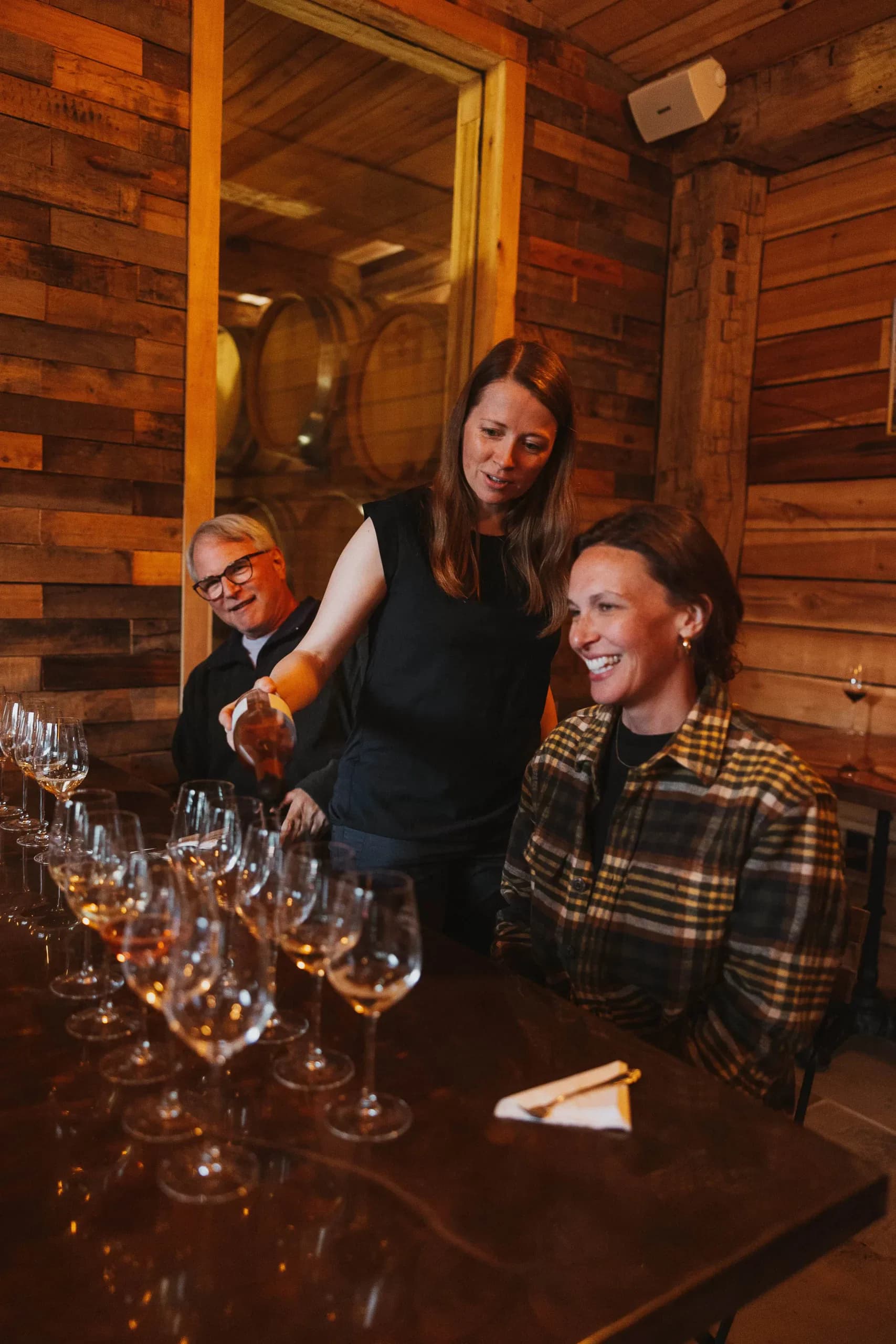
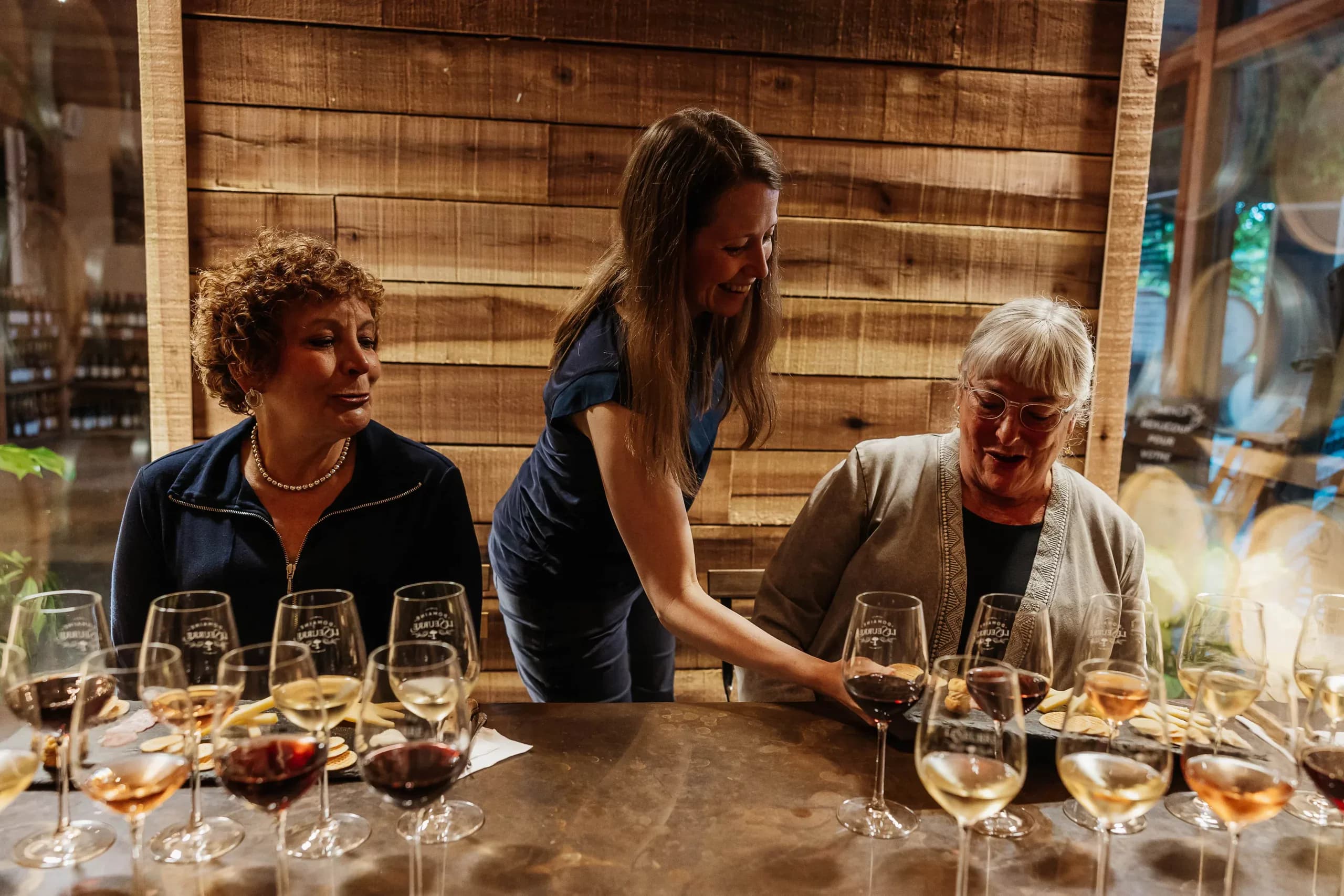
To practice the swirl with someone guiding you, our Educational Wine Tasting pours five wines over about 45 minutes, and the visit page helps you plan the rest of the day.
Come swirl a few glasses with us above Keuka Lake.
Common questions about legs and swirling
Do more legs mean a better wine?
No. More legs mean more alcohol, and slower legs usually mean more sugar. Quality comes from balance and length, which you can only judge by tasting.
Should you swirl white wine?
Yes. White wines open up with oxygen too. A few small circles on the table are enough, and they make the wine easier to smell.
Why do some wines have no legs?
Wines low in alcohol and sugar show very few legs. A cold wine, a humid room or a glass with detergent residue can also hide them.
Written by
The Domaine LeSeurre Team
Céline & Sébastien LeSeurre and the team at Domaine LeSeurre — a family winery on Keuka Lake, in Hammondsport, New York. French roots, Finger Lakes soul.