Food & Wine · Pairing
Food and Wine Pairing: The Simple Method We Teach at Our Table
Most pairing advice starts with flavor, which is exactly where people get lost. At our table above Keuka Lake we start with how a wine is built and how a dish is built, and five simple matches between the two cover nearly every plate you'll ever cook.
We're Céline and Sébastien LeSeurre, and pairing is a big part of how we host. Sébastien comes from a Champagne family that has made wine for six generations, where the bottle is chosen for the meal, and we brought that habit to a Finger Lakes table. Guests often arrive expecting a list of rules. They usually leave with a way of looking at a plate.
What is the basic rule of food and wine pairing?
Match the structure of the wine to the structure of the dish. Start with weight, so light food gets a light wine and rich food gets a fuller one. Then balance the details: acidity handles fat, a little sugar calms spicy heat, tannin needs protein, and bubbles cut through fried and salty food.
Structure is the part of a wine you can measure: how much acidity it carries, how much grape sugar is left after fermentation, how much tannin came from the skins or the barrel, whether it has bubbles, how much alcohol it has, and how heavy it sits in the mouth. A dish has a structure too, made of fat, salt, sugar, heat, acidity, and the texture that comes from the way it was cooked.
We like this approach because it's predictable. Two people can argue all night about what a wine reminds them of, yet they'll agree in seconds that a glass feels sharp next to a creamy sauce or harsh next to a chili. Everyone's tongue reads structure the same way, and that's what makes it teachable. Wine Folly builds its pairing basics on the same idea, starting from the taste components before it gets to specifics.
How does acidity work with fatty food?
Acidity cuts through fat. A wine with high acidity refreshes your mouth between bites of butter, cream, cheese, or fried food, so every bite lands as clearly as the first. It works in reverse too: a dish built on lemon, vinegar, or tomato needs a wine with at least as much acidity.
Think of the lemon you squeeze over fried fish. It resets your mouth after each bite, and a wine with good acidity does the same job, which is why cool-climate whites are so useful at the table. The Finger Lakes Wine Alliance describes our region as cool-climate, with deep lakes that let the grapes ripen slowly and hold on to their natural acidity. That acidity is what lets our Dry Riesling sit comfortably next to a cream sauce.
The reverse matters just as much. Pour a low-acid wine beside a salad with a sharp vinaigrette and the wine goes flat and heavy, as if it had lost a fight. When the dish is acidic, the wine has to match it or beat it.
Why does a little sweetness help with spicy food?
Sugar calms chili heat, and alcohol fans it. A wine with some residual sugar and moderate alcohol softens the burn of a spicy dish, while a dry, high-alcohol, or heavily tannic wine makes the heat feel stronger. With sweet dishes, the wine should be at least as sweet as the food.
This is the one that surprises our guests most. Pour a big dry red with a Thai curry or a plate of hot wings and the fire gets louder. Switch to an off-dry Riesling and it settles down, because the touch of sugar left in the wine rounds off the heat and the lower alcohol stops feeding it. Riesling covers the whole range from dry to sweet, so it has its own Riesling food pairing guide.
Sweetness in the food follows its own rule. Next to a sweet dish, a dry wine feels thin and sour, since the sugar on your plate pushes the wine's acidity forward. A glazed ham, a cranberry sauce, or a slice of pie wants a wine with some sugar of its own, and our guide to wine with ham works through exactly that problem.
What does tannin do with protein?
Tannin binds with protein and fat, which is why a firm red feels smoother with a steak than it does on its own. With little protein on the plate, tannin feels drying. It also clashes with oily fish and chili heat, so keep your most structured reds for red meat and aged cheese.
Tannin is the drying grip you feel on your gums after a sip of red wine. It comes from grape skins and seeds, and from oak barrels, and on its own it can feel rough. Give it a piece of grilled meat and the protein and fat soak up that grip, so the wine feels softer and the meat feels juicier.
The more tannin a wine has, the more protein and fat it needs. Pinot Noir carries less tannin and stays friendly with poultry, pork, or salmon, as our Pinot Noir food pairing guide explains. Cabernet Franc has more grip and wants lamb, a burger, or a hard cheese, which is where our Cabernet Franc pairing guide picks up.
Why are bubbles so good with fried and salty food?
Bubbles and acidity scrub away the coat of oil and salt that fried food leaves in your mouth. Sparkling wine is usually high in acidity, and the carbonation adds a physical cleaning effect on top. That's why it works with fries, fried chicken, potato chips, tempura, oysters, and salty cheese.
Fried food leaves a film of oil in your mouth, and salt makes you thirsty. The bubbles lift the oil away and the acidity resets your mouth, while the salt, in return, makes the wine feel softer.
Our sparkling wines are made by the méthode champenoise, the bottle-by-bottle way Sébastien's family has worked in Champagne. They rest over ten years on the lees, each bottle is handled at least 68 times by hand, and most of them go to our Wine Club members. Raw shellfish has its own guide, on wine with oysters.
How do you match the weight of a wine to a dish?
Pair light with light and rich with rich. A full-bodied wine raised in new oak overwhelms a delicate dish like poached fish or a green salad, and a braise or a creamy gratin makes a light wine disappear. Body comes from alcohol, sugar, and time in oak barrels, so those are the signals to read.
Weight is the first thing we check, and the easiest to feel. Skim milk and whole milk contain the same basic stuff, yet one sits heavier in the mouth, and wine behaves the same way. A wine aged in oak barrels picks up more body and a rounder texture than one kept in stainless steel, because the barrel lets in a little oxygen over the months.
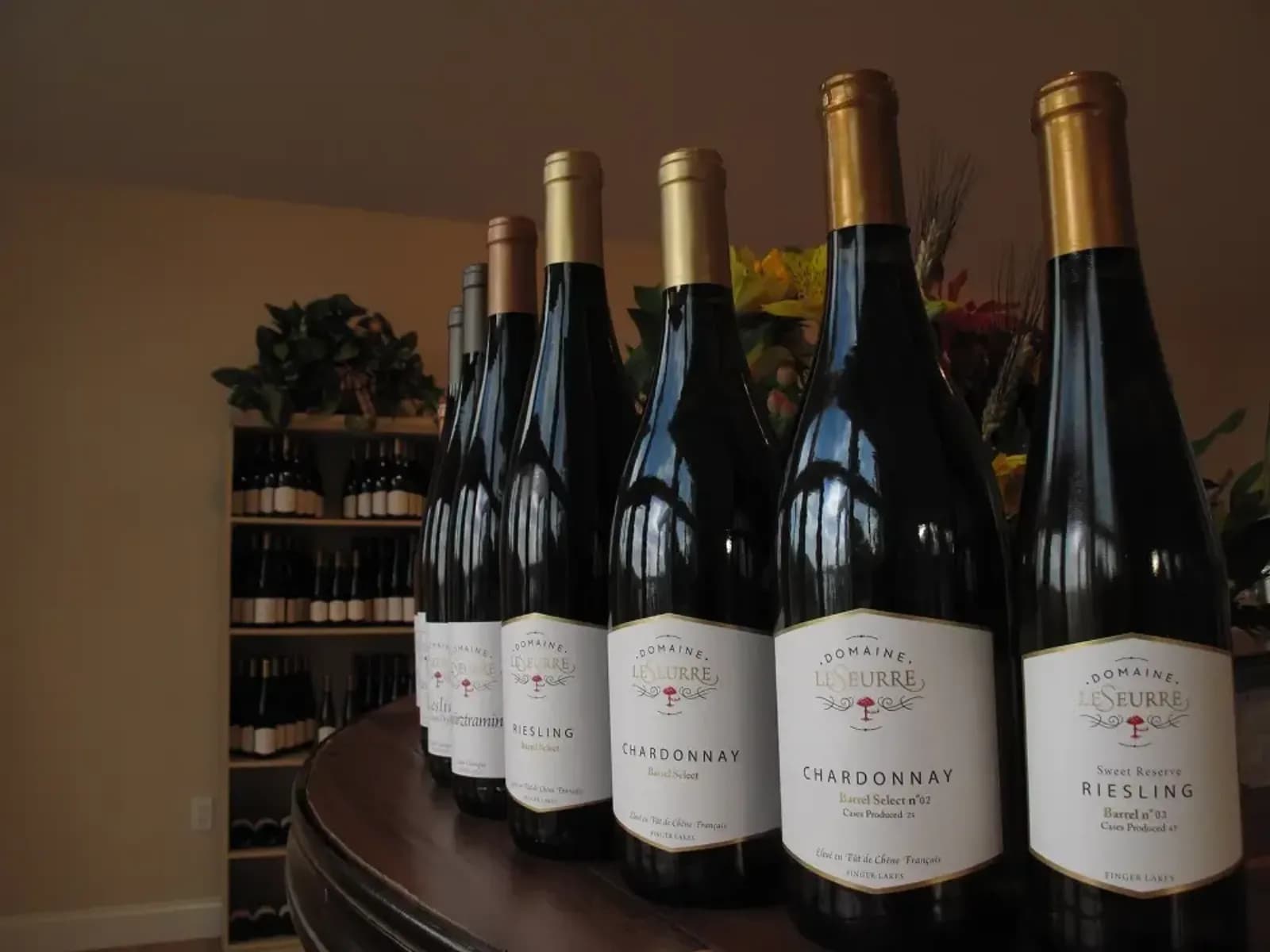
Chardonnay shows this better than any other grape. We make a Chardonnay Unoaked, raised in tank, and a Chardonnay aged in barrel, so the same grape comes in two weights for two different plates. Our Chardonnay food pairing guide sorts out which goes where. Gewurztraminer is another fuller white that can handle rich, aromatic dishes, and our Gewurztraminer pairing guide covers it.
The five matches, in short
- Acidity cuts fat, the way lemon cuts fried fish.
- A touch of sugar calms chili heat, and alcohol makes it louder.
- Tannin needs protein, which is why steak softens a firm red.
- Bubbles lift away salt and oil.
- Check weight first: light with light, rich with rich.
What matters more, the meat or the sauce?
Usually the sauce. Chicken in a lemon and caper sauce and chicken in a mushroom cream sauce call for two different wines, even though the meat is identical. Find the strongest element on the plate, whether that's fat, acidity, sugar, or heat, and pair the wine to that element first.
The old line about white with fish and red with meat works as a shortcut, but it looks at the wrong thing. Grilled salmon with a mustard glaze can take a light red, and pork with apples and cream wants a white with good acidity. The cooking method counts as well, since grilling and roasting add weight while poaching and steaming keep a dish light.
Holiday tables are the hardest test, with ten dishes landing at once. For those we wrote a separate guide to the best wine for Thanksgiving, built around two or three bottles that cover the whole spread. A cheese board is a similar puzzle, and our wine and cheese pairing guide sorts the cheeses by how they're made.
How do you build a pairing at home?
- Decide how heavy the dish is: light, medium, or rich.
- Find the loudest element on the plate, whether it's fat, acidity, salt, sugar, or chili heat.
- Pick a wine of about the same weight.
- Check the balance. Fat wants acidity, heat wants a little sugar, protein can carry tannin, and salty or fried food likes bubbles.
- Sip the wine, take a bite, then sip again. The second sip tells you whether it works.
That second sip is the real test. If the wine feels better after the bite, you've found your pairing. If it feels thinner or harsher, one of the five matches is out of balance, and by now you know which one to change.
Where can you practice food and wine pairing with us?
What we hope is that, when our guests host their own dinner and open one of our bottles, they can explain why it suits the dish and what the barrel did to the wine.
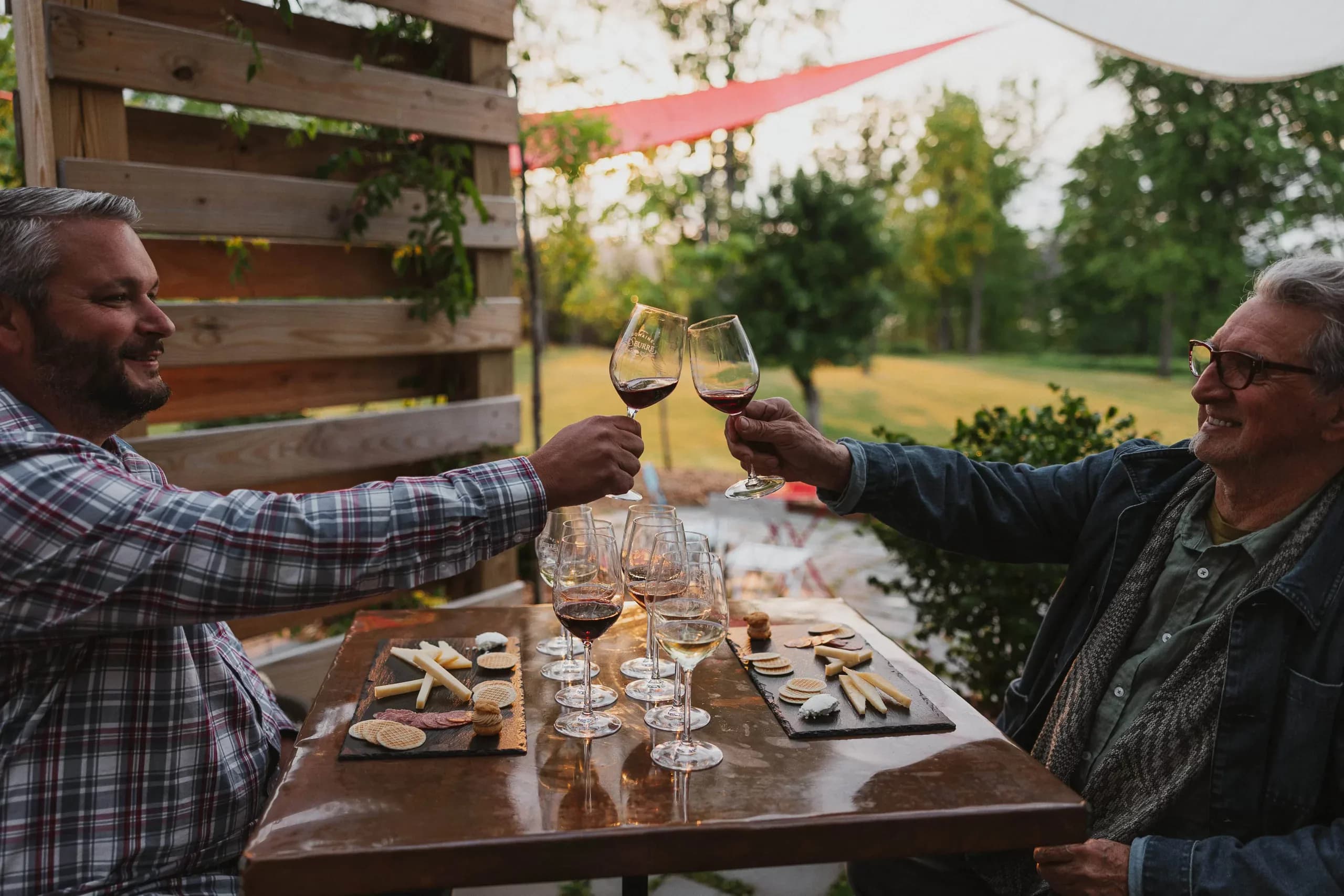
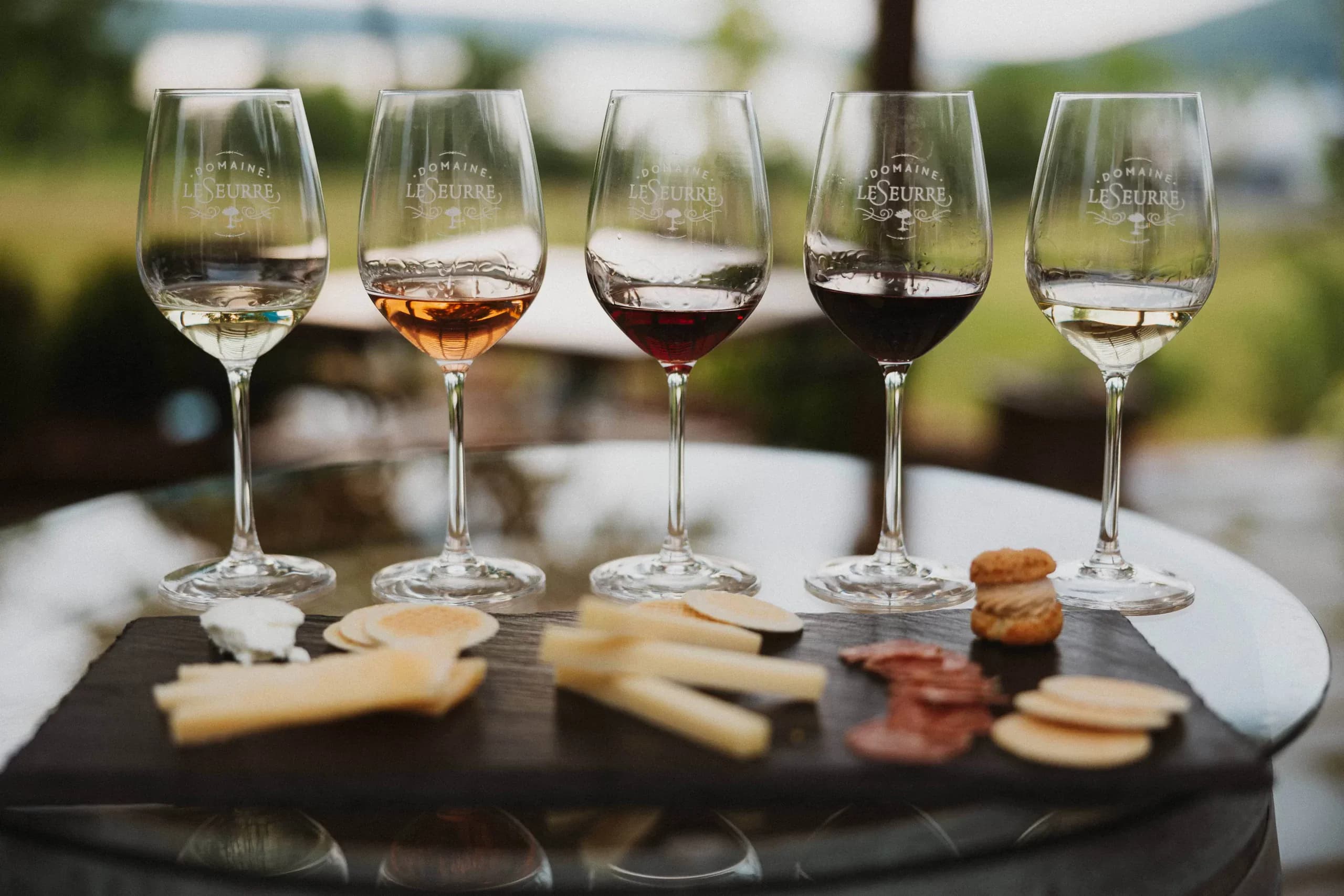
Our Signature Wine & Food Pairing is a seated experience of about 75 minutes that follows the seasons, and we explain each pairing through its structure so the method goes home with you. The Educational Wine Tasting, five wines in about 45 minutes, is the shorter way in. Both are on our experiences page, and our visit page helps you plan the rest of the day.
Sit down for a pairing and take the method home with you.
Common questions about food and wine pairing
What are the basic rules of food and wine pairing?
Match weight first, then balance acidity with fat, a little sugar with spicy heat, tannin with protein, and bubbles with fried or salty food. A sweet dish needs a wine at least as sweet, and an acidic dish needs a wine with at least as much acidity.
Is it true that white wine goes with fish and red wine with meat?
It's a handy shortcut, but the sauce and the cooking method matter more than the protein. A light, low-tannin red can work with grilled salmon, and a white with good acidity can work with pork in a cream sauce.
What is the most versatile wine for food?
A wine with good acidity and little or no oak is the easiest to pair. Dry or off-dry Riesling, dry rosé, and sparkling wine all fit, which is why we often suggest them when a table orders many different dishes.
Written by
The Domaine LeSeurre Team
Céline & Sébastien LeSeurre and the team at Domaine LeSeurre — a family winery on Keuka Lake, in Hammondsport, New York. French roots, Finger Lakes soul.