Food & Wine · Pairing
Wine with Ham: Pair the Glaze First
A baked ham looks easy to pair until you pour a big dry red beside it and the wine turns bitter and thin. The pork is fine. The glaze is what does that, and once you see what a glaze does to wine, choosing the bottle gets simple.
Ham turns up on a lot of our guests' tables, at Easter, at Christmas, and on any Sunday when the family is large, so the question comes up often at the tasting bar. We always answer it the same way, by looking at what the ham brings to the plate and what the wine needs to bring back.
What wine goes best with ham?
Ham pairs best with wines that have high acidity, low tannin, and a touch of residual sugar. An off-dry Riesling is the classic match, since its sugar stands up to a sweet glaze and its acidity cuts through the salt and fat. Dry rosé and light reds like Pinot Noir work well too.
Look at what a glazed ham actually is. The pork is cured, so it's salty, there's a layer of fat under the skin, and on top sits a glaze of brown sugar, honey, maple, or pineapple. Every slice carries salt, fat, and sugar, and the wine has to deal with all of them at once.
Acidity takes care of the fat and the salt, a little sugar in the wine answers the sugar in the glaze, and low tannin keeps the glaze from turning the wine harsh. Put those together and you land on Riesling, which the Finger Lakes Wine Alliance calls the signature grape of the Finger Lakes.
Why does a sweet glaze change the wine?
Sugar in food makes a wine seem less sweet and more acidic than it really is. Beside a honey or brown-sugar glaze, a bone-dry wine can feel sour, thin, or bitter. A wine with a little residual sugar keeps its balance, because its own sweetness matches the glaze and holds up in the comparison.
Our guests remember this rule best, usually because they've already lived it without knowing why. The wine should be at least as sweet as the food. When the dish is sweeter, the wine's sweetness fades by comparison and all you notice is the acidity and the alcohol.
You can test it at home in a minute. Sip a dry white, take a small bite of something sweet (a spoonful of the glaze will do), and sip again. The wine will feel sharper and leaner the second time, even though the only thing that changed is the sugar on your tongue.
With ham, we pair the glaze first and the pork second.
Which of our wines would we pour with ham?
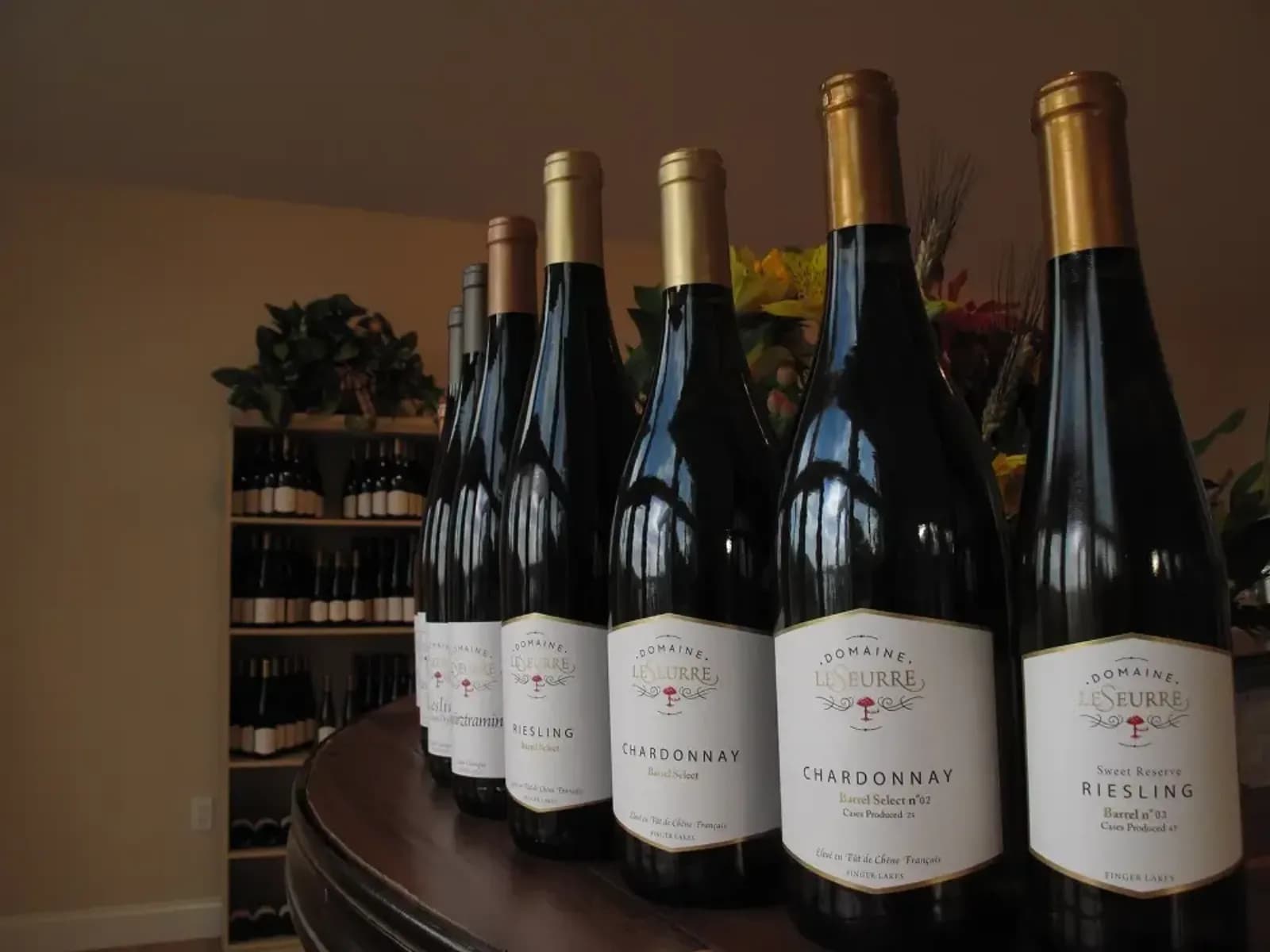
For a glazed ham, our first choice is the Semi Dry Riesling, which keeps a little grape sugar and high acidity. For a less sweet ham, our Dry Riesling or Gewurztraminer Dry works. Red wine lovers can reach for our Pinot Noir Barrel Select, whose low tannin suits a salty, sweet dish.
We make the Semi Dry Riesling by stopping fermentation before the yeast has finished all the grape sugar. A touch stays in the bottle, and our cool lakeside climate keeps the acidity high, which is the balance a honey or brown-sugar glaze asks for. Our article on whether Riesling is sweet or dry explains that cellar decision in more detail.
A smoked ham, or one glazed with mustard rather than sugar, carries less sweetness, and then a dry wine comes back into play. Our Dry Riesling handles that version. Gewurztraminer Dry, an aromatic variety with a fuller body, suits a ham served with spiced sides, and our Gewurztraminer food pairing guide has more on the grape.
Can you serve red wine with ham?
Yes, as long as the red is light and low in tannin. Tannin reacts badly with sugar, so a firm, full-bodied red can turn bitter next to a glazed ham. Pinot Noir is the safest choice, and a lighter Cabernet Franc can work with a smoked, less sweet ham. Serve either one slightly cool.
Tannin is the drying grip you feel on your gums after a sip of red. With a big steak, protein and fat soften it, but against a sweet glaze the grip gets rougher and can turn bitter. If the family insists on red, pick the lightest one in the rack; our Pinot Noir food pairing guide explains why that grape is so easy at the table. A short spell in the fridge before serving helps too, as we cover in wine serving temperature.
What about sparkling wine and rosé with ham?
Both suit an Easter brunch, where the ham shares the table with eggs, cheese, and pastries. Bubbles and acidity cut through salt and fat, which makes sparkling wine one of the easiest bottles to open at a buffet. Ours are made by the méthode champenoise and mostly reserved for Wine Club members.
A dry rosé sits between a white and a red. Our Rosé Cabernet Franc Cuvée Classique Dry carries a white wine's acidity and some of a red wine's body, which helps when half the table asks for red and the other half for white.
Before you carve
- Every slice of glazed ham carries salt, fat, and sugar.
- Choose a wine at least as sweet as the glaze.
- Acidity handles the salt and the fat.
- Keep tannin low, since a sweet glaze turns it bitter.
Where can you learn more about pairing?
Ham is one case of a broader method, and our food and wine pairing guide sets out all five matches we use. For a holiday table, our guide to the best wine for Thanksgiving follows the same logic. If you'd rather feel it than read about it, our Signature Wine & Food Pairing is a seated experience that follows the seasons.
Taste what structure does to a pairing, at our table above the lake.
Common questions about wine with ham
What wine goes with Easter ham?
An off-dry Riesling is the easiest match for a glazed Easter ham. A dry rosé, a sparkling wine, or a light, low-tannin red like Pinot Noir also works, especially at a brunch with many dishes.
Does white or red wine go better with ham?
White usually works better with a sweet, glazed ham, because a touch of sugar and high acidity handle both the glaze and the salt. If you prefer red, choose a light one with low tannin.
What wine goes with honey-glazed ham?
A wine with some residual sugar, like a semi-dry Riesling. Honey makes a dry wine feel sour and thin, so pick a wine at least as sweet as the glaze.
Written by
The Domaine LeSeurre Team
Céline & Sébastien LeSeurre and the team at Domaine LeSeurre — a family winery on Keuka Lake, in Hammondsport, New York. French roots, Finger Lakes soul.