Wine 101 · Serving
Wine Serving Temperature: The 20-Minute Rule That Fixes Most Bottles
At home, most whites get served too cold and most reds too warm, and that one habit changes a wine more than people expect. Fixing it takes twenty minutes and the fridge you already have.
At our tasting bar above Keuka Lake, temperature is one of the few things we control right up to the glass, and it's the easiest lesson to take home. Here are the ranges we go by, in Fahrenheit and Celsius, and why each one matters.
What temperature should wine be served at?
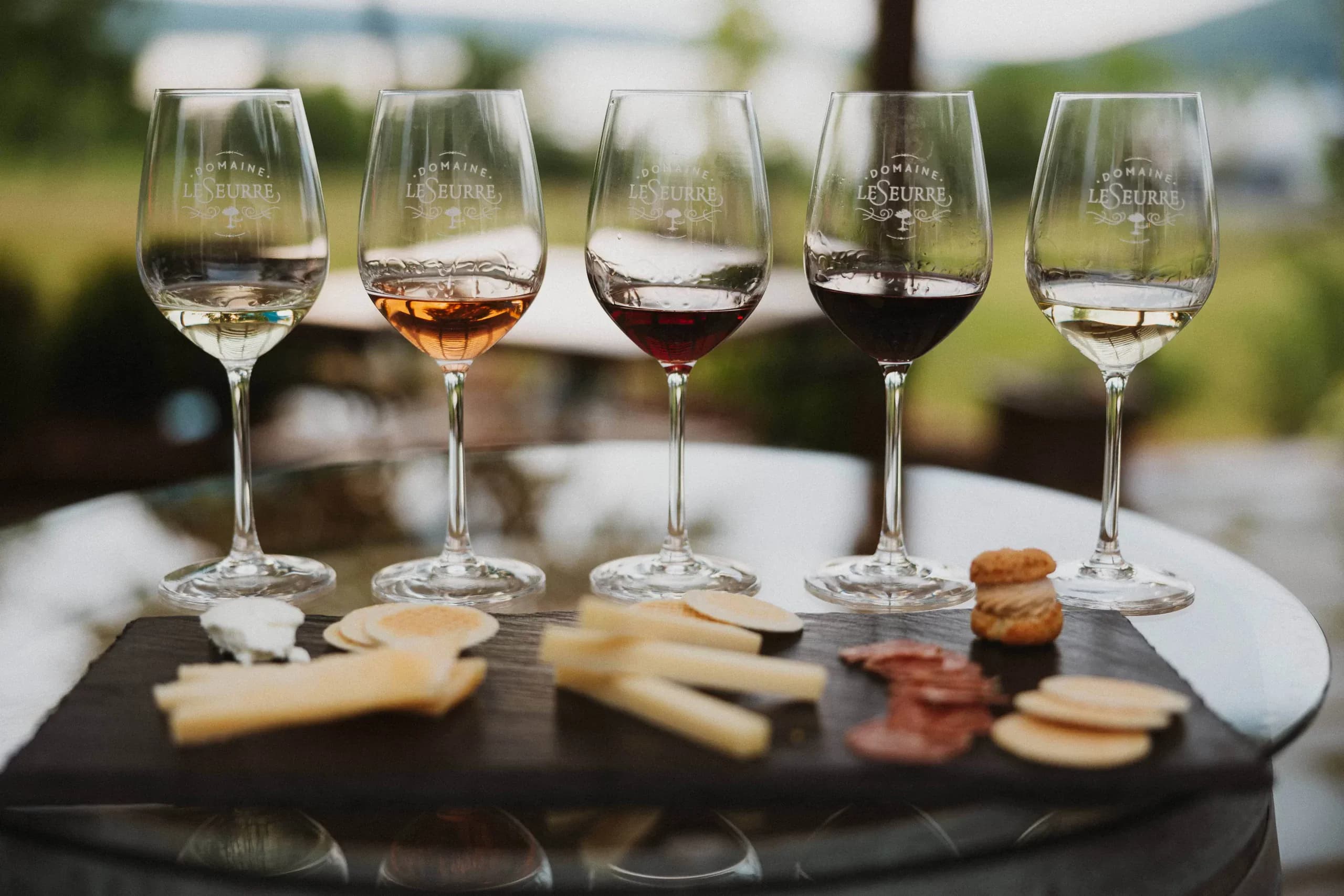
Serve sparkling wine coldest, around 40 to 50°F (4 to 10°C). Light whites and rosés go at 45 to 50°F (7 to 10°C), fuller whites at 50 to 55°F (10 to 13°C). Light reds suit 55 to 60°F (13 to 16°C), structured reds 60 to 65°F (16 to 18°C), and sweet wines 45 to 50°F (7 to 10°C).
- Sparkling wine: 40 to 50°F (4 to 10°C). Long-aged sparkling, like ours made by the méthode champenoise, is often served toward the warmer end.
- Light whites and rosés, like our Dry Riesling or Rosé Cabernet Franc: 45 to 50°F (7 to 10°C).
- Fuller, barrel-aged whites, like our Chardonnay Barrel Select: 50 to 55°F (10 to 13°C).
- Light reds, like our Pinot Noir Barrel Select: 55 to 60°F (13 to 16°C).
- Structured reds, like our Cabernet Franc, Cabernet Sauvignon, Merlot or Lemberger: 60 to 65°F (16 to 18°C).
- Sweet wines, like our Riesling Sweet Reserve or Vendanges Tardives: 45 to 50°F (7 to 10°C).
These ranges line up with the serving guides from Wine Folly and most sommelier training. Think of each one as a zone to land in. Nobody needs a thermometer at dinner, and it's enough to know roughly where a style belongs and which way to nudge the bottle.
Why does serving temperature change a wine?
Temperature changes how you perceive a wine's structure. Cold makes acidity feel sharper, tannins feel firmer and sweetness feel lighter. Warmth makes alcohol more noticeable and the wine feel heavier and softer. Serving each style at its right temperature keeps those parts in balance instead of letting one take over.
Temperature works a bit like a volume knob for different parts of the wine. Turn it too low and a white seems closed and hard, with the acidity doing all the talking. Turn it too high and a red starts to feel hot, with the alcohol out in front. Somewhere in between, acidity, tannin, sugar and alcohol sit together the way the winemaker meant.
That's also why sweet wines are served cool. Cold lifts the acidity and tames the sense of sugar, so a Riesling Sweet Reserve feels balanced instead of heavy. For the fuller story of how sugar and acidity play against each other, read dry vs sweet wine.
What temperature should red wine be served at?
Serve red wine slightly cool, between 55 and 65°F (13 to 18°C). Lighter reds like Pinot Noir go at the lower end, around 55 to 60°F. Structured reds like Cabernet Franc or Cabernet Sauvignon go a little warmer, 60 to 65°F. Both are cooler than most living rooms.
The advice to "serve reds at room temperature" comes from a time before central heating, when rooms in a European stone house were much cooler than a modern American kitchen. Today's room is often 70°F (21°C) or warmer, and at that point a red has drifted past its best range and the alcohol starts to lead.
That means your red belongs in the fridge for a little while before dinner. Guests find this half of the rule the hardest to believe, and it's the half that makes the biggest difference.
What is the 20-minute rule for wine?
The 20-minute rule is a simple home fix. Put a red wine in the fridge about 20 minutes before serving to bring it down from room temperature. Take a white out of the fridge about 20 minutes before serving to let it warm up a little. It gets most bottles into their right range.
A kitchen fridge runs around 37 to 40°F (3 to 4°C), colder than any wine needs, so a white straight out of it is several degrees too cold. A red left on the counter is several degrees too warm. Twenty minutes in the opposite direction brings both back into range.
The 20-minute rule, at a glance
- Reds go into the fridge for 20 minutes, and whites come out of it for 20 minutes.
- Cold sharpens acidity and tannin, while warmth brings the alcohol forward.
- "Room temperature" once meant a cool stone room, long before central heating.
Sparkling wine can stay in the fridge until you open it, and the cold keeps the pressure calmer, which makes opening safer. To chill a bottle fast, an ice bucket filled with ice and water works much quicker than ice alone, because the water touches the whole bottle. A handful of salt in the water speeds it up further.
Temperature also matters before you open the bottle. For keeping sealed wine at home, see does wine go bad, and for a bottle that's already open, see how long wine lasts after opening.
Where can you feel the difference in person?
Leave a wine in the glass for a quarter of an hour and it warms, and its balance shifts as it does. That's easier to notice with someone beside you who can explain it. Our Educational Wine Tasting walks through five wines with our team, and serving temperature is a fair question to bring. You can plan your visit or browse our wines ahead of time.
Come taste our wines at the temperature we'd serve them ourselves.
Common questions about serving temperature
Should red wine be chilled?
Slightly, yes. Most reds show best between 55 and 65°F (13 to 18°C), which is cooler than a typical room. About 20 minutes in the fridge before serving brings a red down into that range.
Can white wine be too cold?
Yes. Straight from a kitchen fridge, around 37 to 40°F, most whites are colder than they need to be, and their structure feels closed and sharp. Taking the bottle out about 20 minutes before serving helps.
What temperature should rosé be served at?
Serve rosé like a light white, at 45 to 50°F (7 to 10°C). A dry rosé made from a red grape, like our Rosé Cabernet Franc, can sit at the warmer end of that range.
How long does it take to chill a bottle of wine?
Two to three hours in the fridge from room temperature. An ice bucket with ice and water is much faster, usually about 15 to 20 minutes, because the water surrounds the whole bottle.
Written by
The Domaine LeSeurre Team
Céline & Sébastien LeSeurre and the team at Domaine LeSeurre — a family winery on Keuka Lake, in Hammondsport, New York. French roots, Finger Lakes soul.