Wine 101 · Storing Wine
Does Wine Go Bad? What Happens Inside a Closed Bottle
Somewhere in your kitchen there's probably a bottle someone gave you a while ago, still sealed, standing next to the stove. It's most likely still fine to drink. A closed bottle keeps changing slowly, though, and where you keep it decides how well it holds up.
Guests ask us about this all the time, usually right after buying a few bottles to take home. What follows covers wine you haven't opened yet: what happens inside the bottle, how to tell when one has gone wrong, and how to store wine at home without a cellar. For a bottle that's already open, we wrote a separate guide on how long wine lasts after opening.
Does unopened wine go bad?
Yes, eventually. A sealed bottle still ages, because a little oxygen and time keep working on the wine. Most wine is made to be enjoyed within a few years of release, and it holds up far longer when stored cool, dark and still. Old wine is rarely unsafe; it simply fades past its best.
Inside the bottle, the wine keeps evolving. A cork lets through a tiny amount of air over the years, and the wine's own components react with each other. In a wine built to age, that slow change is what you're waiting for. Most everyday bottles have a window instead, and once it closes the wine starts to lose its shape.
When wine goes bad, it rarely becomes dangerous. Alcohol and acidity keep most things from growing in it, so an old or badly kept bottle usually just turns dull and unpleasant. If that happens, pour it out and open something else; there's no health worry behind it.
How long does an unopened bottle of wine last?
It depends on the wine and on storage. Most wine sold today is made to drink within a few years. Wines with more structure, such as barrel-aged reds, or with high acidity or sugar, can last much longer. Poor storage, especially heat and temperature swings, can shorten any wine's life to months.
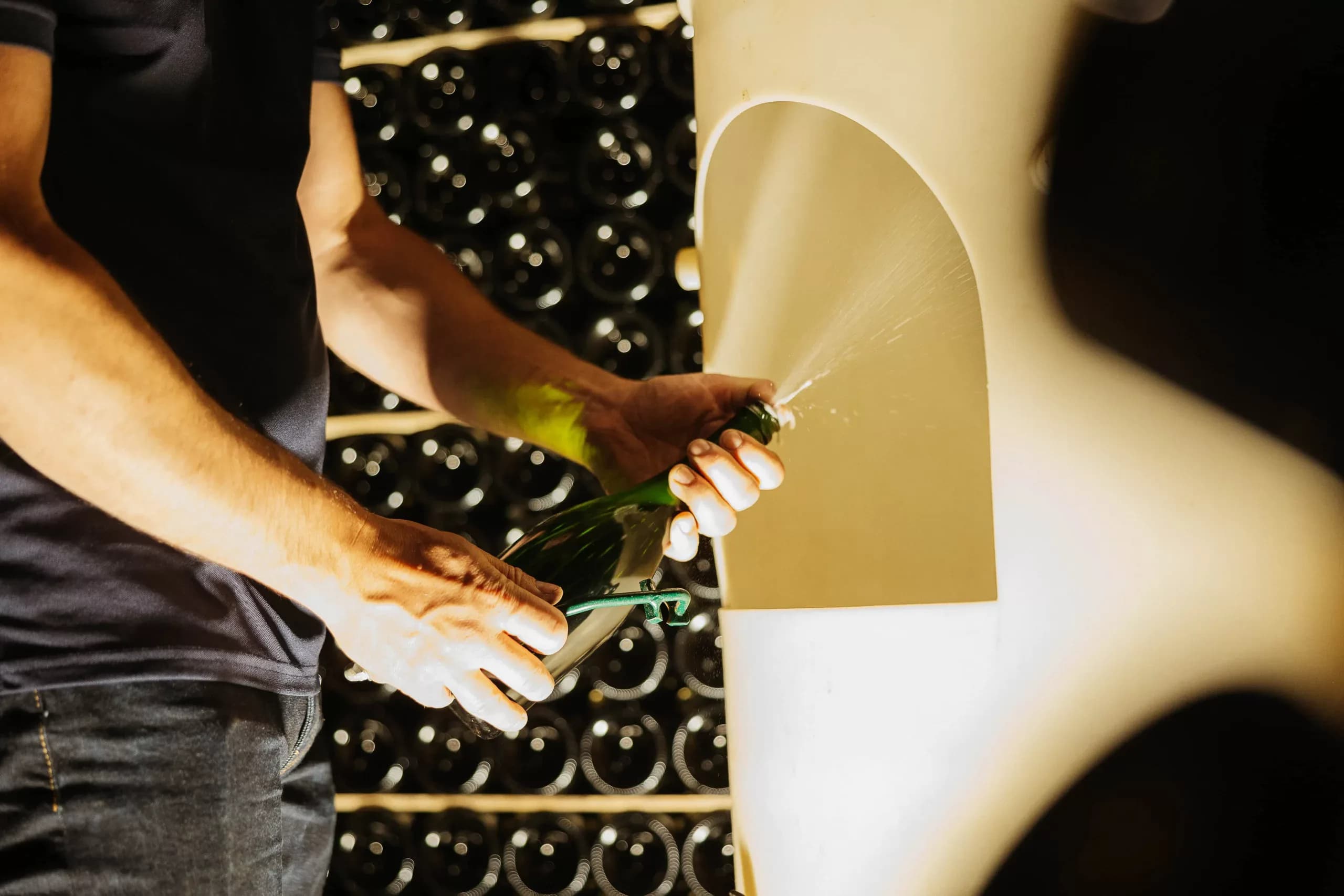
Structure is what protects a wine over time. Tannin, acidity and sugar all help it resist oxygen, which is why barrel-aged reds and sweeter, high-acid whites tend to age longest, while lighter whites and rosés are usually at their most expressive young. Sparkling wine is its own case. Ours spends over ten years on the lees before it's disgorged, so the long wait has already happened in our cellar, as we explain in the méthode champenoise, explained.
The easiest way to know is to ask the winery. When you buy a bottle from us, our team can tell you whether to open it soon or let it wait, and the same goes for our wines in each Wine Club shipment.
How can you tell if wine has gone bad?
Look before you pour. A cork pushed up or wine seeping around the capsule often means heat damage. A white that has turned brown or a red that has turned brick-orange early suggests oxidation. A musty, damp-cellar smell points to cork taint. If the wine seems flat and dull, it's past its best.
Three faults come up most often, and each has a simple cause.
- Heat damage: the bottle got too warm, the wine expanded and pushed the cork up or leaked. The wine often ends up flat and tired.
- Oxidation: too much air got in over time, often through a dried-out cork. Color is the first clue, browning in whites and orange-brown in reds.
- Cork taint: a compound called TCA, which can form in natural cork, leaves the wine smelling musty, like a damp basement, and mutes everything else. People call it a corked wine.
Some things look alarming and turn out to be harmless. Small crystals at the bottom of a bottle or on the cork are tartrate crystals, natural salts from the grape that settle out in the cold. Sediment in an older red is normal too, so pour gently and leave the last bit in the bottle.
How should you store wine at home?
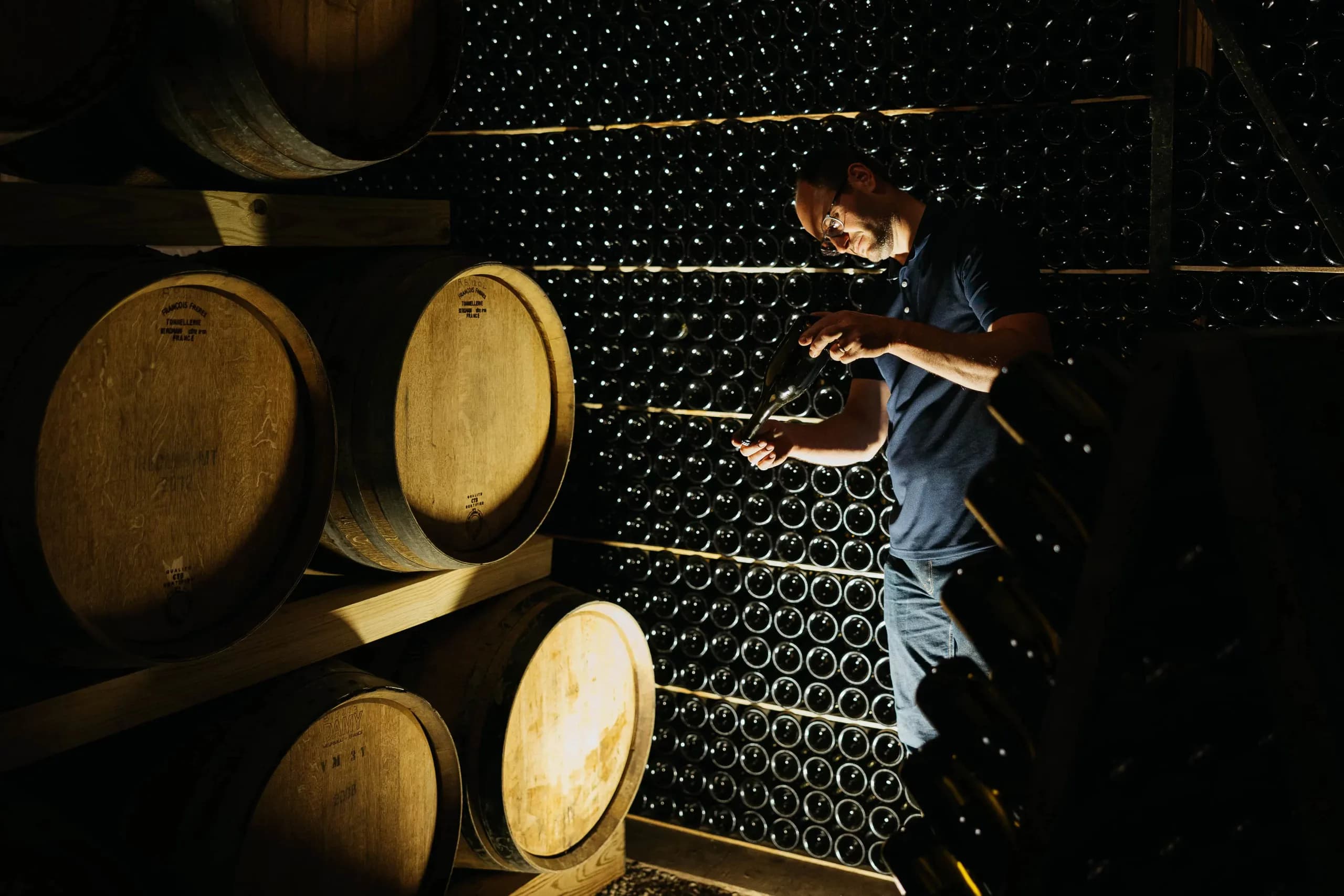
Store wine lying on its side, somewhere cool, dark and steady. Around 55°F (13°C) is ideal, but a stable temperature matters more than a perfect one. Keep it away from sunlight, heat sources and vibration. A closet on an inside wall or a basement corner works well for most bottles.
A cellar helps, but what a bottle really needs is a spot that stays the same. The Coravin Wine 101 guides come down to the same few rules, keeping bottles cool, dark, still and on their side. At home, that looks like this.
Where the bottle should live
- On its side, so the wine keeps the cork moist and the seal tight. Screw caps can stand up.
- Somewhere cool, ideally around 55°F (13°C). Avoid the top of the fridge and the cabinet by the oven.
- At a steady temperature, because repeated warming and cooling pumps air in and out past the cork.
- In the dark and out of the way, far from sunlight and from appliances that vibrate.
The kitchen fridge is fine for a few weeks, for a bottle you plan to open soon. Over months it's too cold and too dry, and the cork can shrink. A small wine fridge solves that if you keep more than a case around. The spot to avoid is the one many people choose, a rack on the kitchen counter, next to the stove, in the light.
When you do open that bottle, serve it at the right temperature. We go through it style by style in our wine serving temperature guide.
Come taste with us above Keuka Lake, and ask which bottles are built to wait.
Common questions about unopened wine
Can you drink wine that has been stored for ten years?
Often, yes, if it was built to age and kept cool, dark and still. Many everyday wines will have faded by then. Check the fill level, the cork and the color before you pour, and trust what you find in the glass.
Does wine expire?
Most bottles carry no expiration date. Wine has a window when it shows at its best, and after that it slowly fades, but an old bottle is rarely unsafe to drink.
Should wine be stored upright or on its side?
On its side for bottles with a natural cork, so the wine keeps the cork moist and the seal tight. Screw-cap bottles can be stored upright. For a few days before opening, standing a bottle up is fine.
Is it bad to store wine in the fridge?
For a few weeks, it's fine. Over months, a kitchen fridge is colder and drier than wine needs, and the cork can dry out and let air in. A cool closet or a wine fridge is better for long storage.
Written by
The Domaine LeSeurre Team
Céline & Sébastien LeSeurre and the team at Domaine LeSeurre — a family winery on Keuka Lake, in Hammondsport, New York. French roots, Finger Lakes soul.