Food & Wine · Pairing
Wine and Cheese Pairing: How a French Family Builds the Board
Walk into a cheese shop in France and the counter is usually laid out by how each cheese was made: fresh, soft, pressed, blue. It's the most useful pairing tool we know, because each family has its own structure and each structure calls for a different kind of wine.
Céline and Sébastien are French, and at a French table cheese gets its own course, after the main dish. So when guests ask what to pour with a cheese board, we start where a French cheesemonger would, by asking what kind of cheese it is before any wine comes into it.
What is the easiest way to pair wine and cheese?
Pair by cheese family. Fresh cheeses want whites with high acidity, and soft, bloomy cheeses like Brie want bubbles or acidity to cut the cream. Hard, aged cheeses can carry tannin, so they suit reds. Blue cheeses need a sweet wine to balance their salt. Match the wine to texture and salt first.
Cheese is mostly fat, protein, and salt in different proportions. A fresh goat cheese is soft, moist, and acidic, while an aged hard cheese has lost water, which concentrates its fat, protein, and salt. Blue cheese is the saltiest of them all. Those differences decide the wine far more than the milk or the brand does.
It's the same thinking as in our food and wine pairing guide, where we read the structure of the food and pick a wine whose structure answers it. With cheese, the rules are just easier to see.
What wine goes with fresh cheese like goat cheese?
Fresh cheeses such as young goat cheese, ricotta, or fresh mozzarella are soft and naturally tangy. They pair best with light, dry whites that have high acidity, like dry Riesling or Sauvignon Blanc. The wine's acidity has to match the tang of the cheese, or the wine feels flat beside it.
The French call these fromages frais, cheeses eaten young, with no rind and little aging. They're light and carry their own acidity, so a heavy wine raised in new oak buries them while a lean, high-acid white matches them weight for weight. In the Loire Valley, goat cheese and Sauvignon Blanc are made a short drive apart, and the local habit of serving them together follows the same logic.
From our cellar, we'd pour the Dry Riesling. We make it to finish with very little sugar, and the cool Finger Lakes climate keeps its acidity high. How we decide where a Riesling lands between dry and sweet is the subject of our article on whether Riesling is sweet or dry.
What wine pairs with Brie and other soft cheeses?
Soft, bloomy-rind cheeses like Brie and Camembert are creamy and high in fat. Sparkling wine is the classic match, because the bubbles and acidity cut through the cream and reset your mouth. An unoaked Chardonnay or a light, low-tannin red like Pinot Noir also works well with soft cheese.
Brie comes from just east of Paris, on the road toward Champagne, and soft cheese with sparkling wine is a familiar pairing in that part of France. It's an easy one to explain. Fat coats your mouth, the bubbles and acidity lift it away, and each bite of cheese feels as fresh as the first.
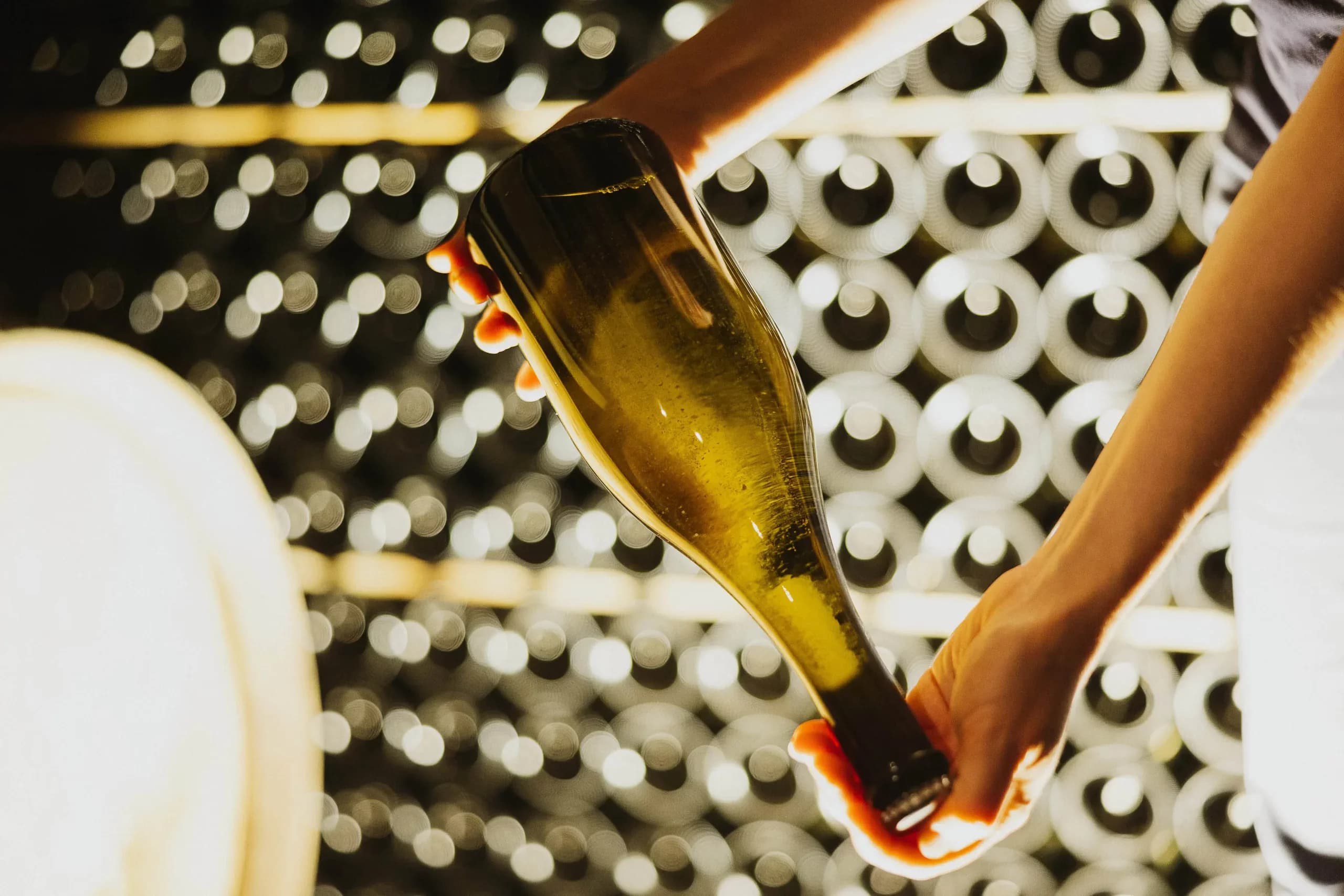
Our sparkling wines are made by the méthode champenoise, rest over ten years on the lees, and are handled at least 68 times by hand, with most bottles going to our Wine Club members. For a creamy cheese we'd open the Blanc de Blancs, made from white grapes only. If you prefer a still wine, our Chardonnay Unoaked, raised in tank, keeps the weight moderate and the acidity intact.

What wine goes with hard and aged cheese?
Hard, aged cheeses such as aged cheddar, Comté, Gruyère, or Parmesan are dense in protein, fat, and salt, which makes them among the few cheeses that can handle a red wine's tannin. Cabernet Franc, Merlot, or a barrel-aged white with more body all work. The older the cheese, the more structure the wine can have.
In French these are pâtes pressées, pressed cheeses whose curd is squeezed to drive out water and then aged for months. Less water leaves the fat and protein more concentrated, and protein is what softens tannin. That's why a firm red that feels rough on its own settles down next to a wedge of aged cheddar.
Our Cabernet Franc Barrel Select is an easy pick here. So is a barrel-aged white like our Chardonnay Barrel Select, whose time in oak gives it enough body for a firm mountain cheese. Our Cabernet Franc food pairing guide and Chardonnay food pairing guide go further.
What wine goes with blue cheese?
Blue cheese is very salty and strong, so it pairs best with a sweet wine. The classic French match is Roquefort with Sauternes, where the sugar in the wine balances the salt in the cheese, much as it does in salted caramel. A late-harvest Riesling or another dessert wine follows the same logic.
This is the pairing that wins over people who swear they hate sweet wine. Salt and sugar is one of the oldest combinations in cooking. A dry red beside a blue cheese often feels harsh, because the salt and the strong mold push against the tannin, while a sweet wine meets the salt head on.
Our Vendanges Tardives, a late-harvest Riesling aged in barrel, fills that role, and so does our Riesling Sweet Reserve. Pour a small glass. Blue cheese and sweet wine are both concentrated, and a little of each goes a long way.
The board, one family at a time
- Fresh cheese: a dry white with high acidity.
- Soft, creamy cheese: bubbles, or an unoaked white.
- Hard, aged cheese: a red with some tannin, or a barrel-aged white.
- Blue cheese: a sweet wine to meet the salt.
How do you build a cheese board for several wines?
- Pick one cheese from each of three or four families rather than five of the same kind.
- Taste from mild to strong: fresh, then soft, then hard, then blue.
- Pour the wines in the same order, dry and light first, sweet last.
- Add bread or plain crackers to reset your mouth between pairs.
- Take the cheese out of the fridge an hour ahead, since cold cheese hides its texture.
With a single bottle and a mixed board, choose a white with high acidity or a sparkling wine. Many guests are surprised that white wine is often easier with cheese than red. Its acidity handles the fat and salt of almost every family, whereas tannin gets along only with the hard, aged ones.
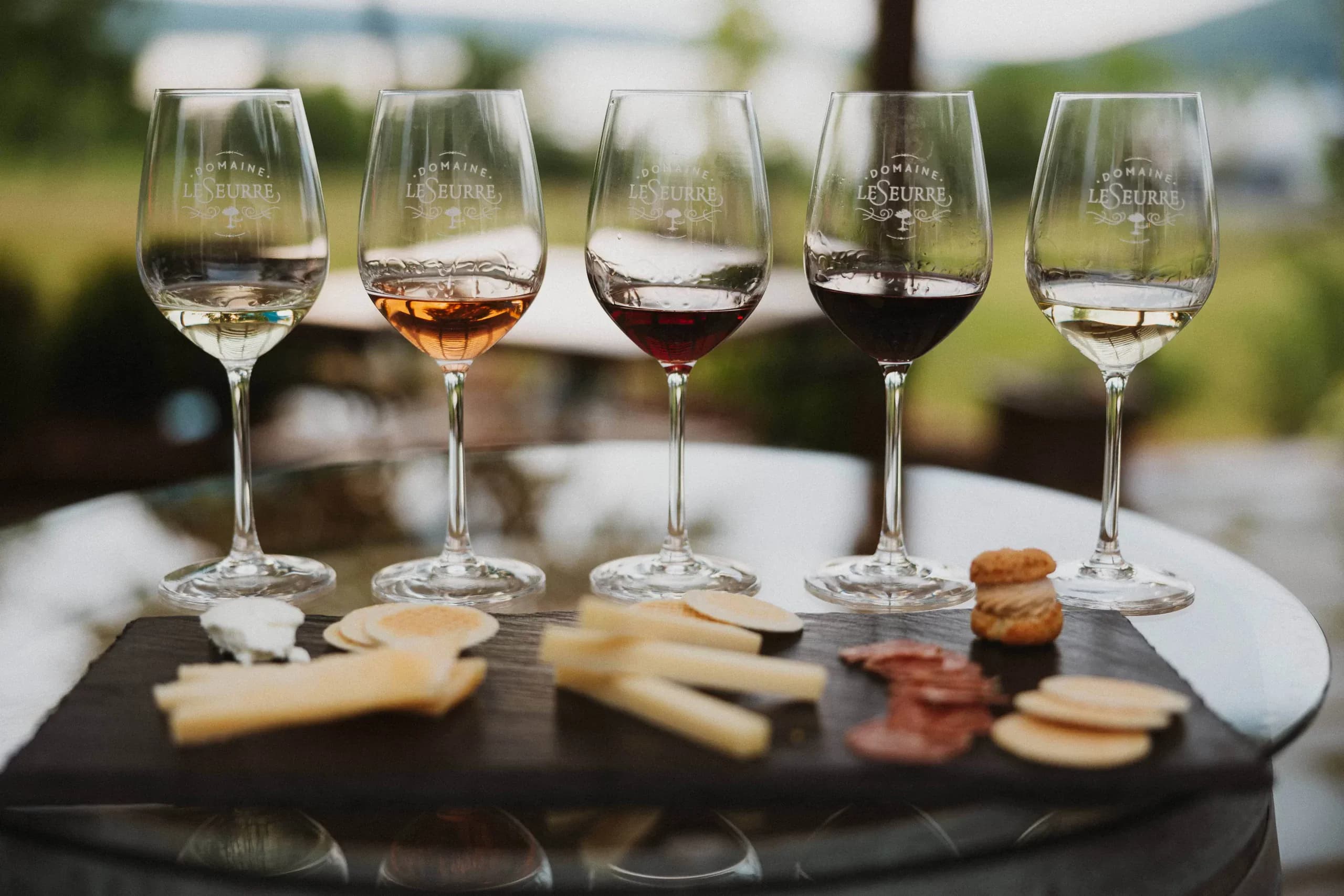
We love building these boards with our guests, because the differences are so easy to feel side by side. Our Signature Wine & Food Pairing is a seated experience that follows the seasons, and the full range of bottles is on our wines page.
Come taste the method at our table above Keuka Lake.
Common questions about wine and cheese
Is red or white wine better with cheese?
White wine is often easier. Its acidity cuts the fat and salt of most cheeses, while red wine's tannin works mainly with hard, aged ones. For a mixed board, sparkling wine is the most flexible choice.
What wine goes with cheddar?
A young, mild cheddar suits a dry white or a light red. An aged cheddar, denser in protein and fat, can take a red with more tannin, like Cabernet Franc or Merlot.
What is the rule for pairing wine and cheese?
Match the wine to the cheese family: high-acid whites with fresh cheese, bubbles with soft cheese, reds with hard cheese, and sweet wine with blue cheese. The saltier the cheese, the more a touch of sweetness helps.
Written by
The Domaine LeSeurre Team
Céline & Sébastien LeSeurre and the team at Domaine LeSeurre — a family winery on Keuka Lake, in Hammondsport, New York. French roots, Finger Lakes soul.