Food & Wine · Pairing
Wine with Oysters: Why Bubbles and Salt Belong Together
Anyone who has eaten oysters in France knows the scene: a platter on ice, a few lemon wedges, a dish of shallot vinegar, and a bottle of dry white or sparkling wine. It looks like tradition, yet the pairing rests on simple chemistry that you can repeat anywhere.
Sébastien comes from Champagne, and in France oysters and sparkling wine are a familiar pair at holiday tables. When we sit down with guests who love seafood, we explain the match through acidity, bubbles, and salt, and the rest follows from those.
What is the best wine with oysters?
The best wine with oysters is dry, high in acidity, and unoaked. Brut sparkling wine is the classic choice, since its bubbles and acidity refresh your mouth after each salty oyster. Dry Riesling, Muscadet, Chablis, and Sauvignon Blanc work too. Heavy oak and big tannin clash with raw shellfish, so leave those aside.
A raw oyster is cold, salty, and delicate, with almost no fat and very little weight. The wine has to be light as well, or it buries the oyster, and it needs acidity, because the wine in the glass can do the same job as the lemon on the shell.
That's why the French classics are all lean, unoaked whites or dry sparkling wine. Muscadet comes from near the Atlantic coast at the mouth of the Loire, and Chablis from the north of Burgundy. Both are dry and high in acidity, and both have been served with oysters for a long time.
Why does sparkling wine go so well with oysters?
Sparkling wine brings what oysters need: high acidity, a dry finish, and bubbles. The acidity acts like lemon on the shell, and the bubbles lift the salt and brine off your tongue. A Brut sparkling wine also has very little sugar, so it stays light next to a delicate raw oyster.
Salt and bubbles belong together. Salt makes you thirsty and makes a wine's acidity feel softer, and the bubbles reset your mouth between oysters, so the twelfth feels as clean as the first. Sparkling wine works with potato chips for the same reason.
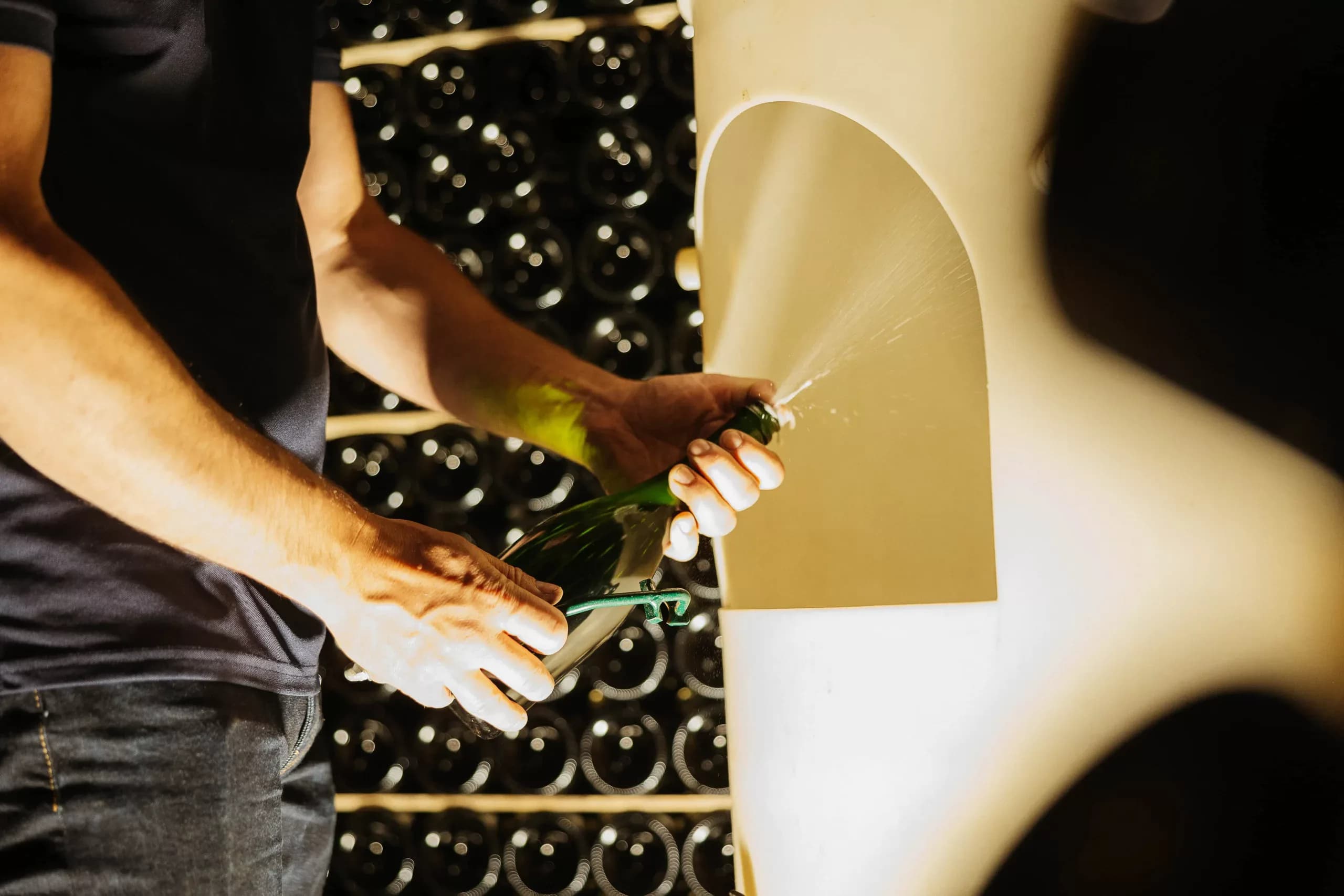
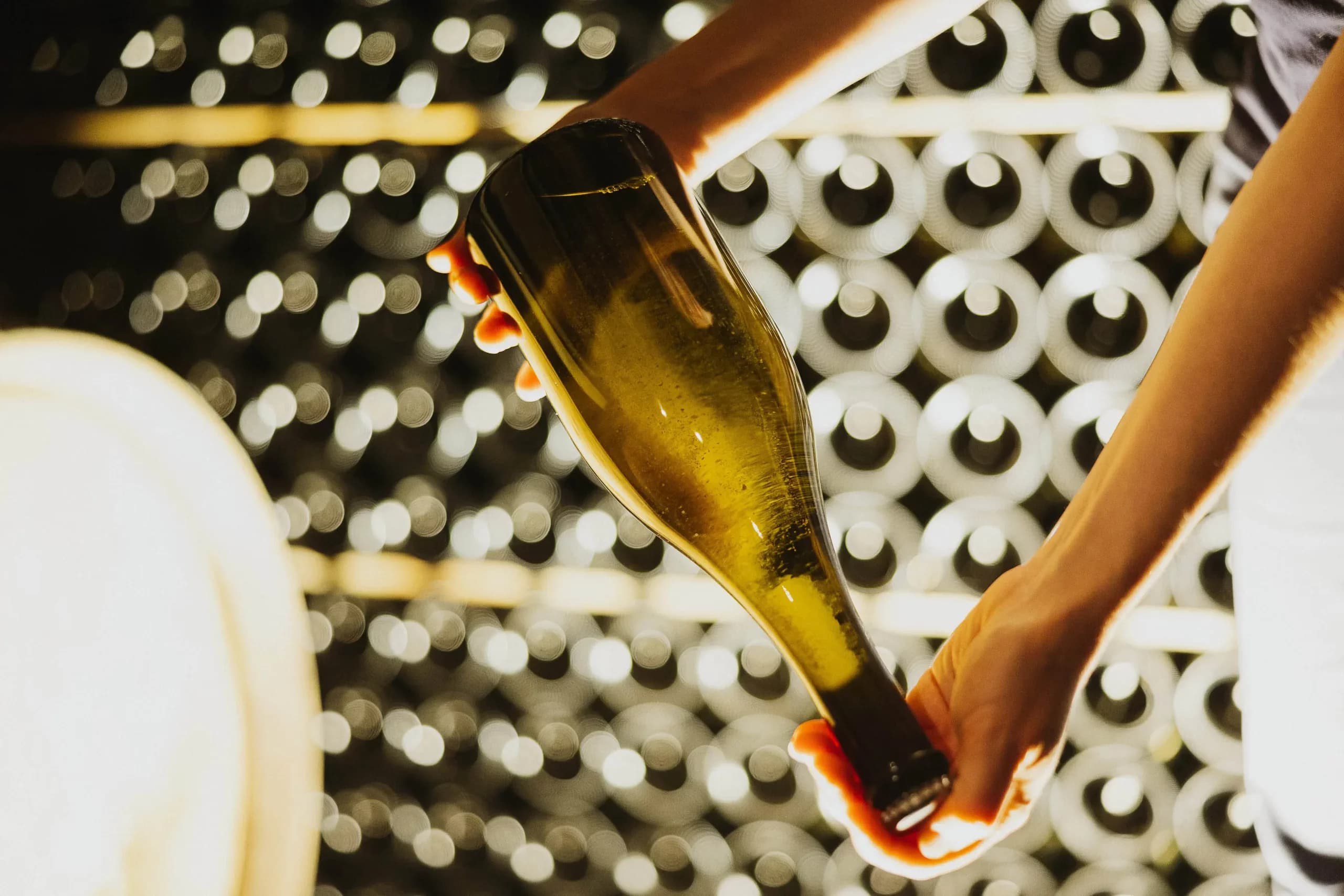
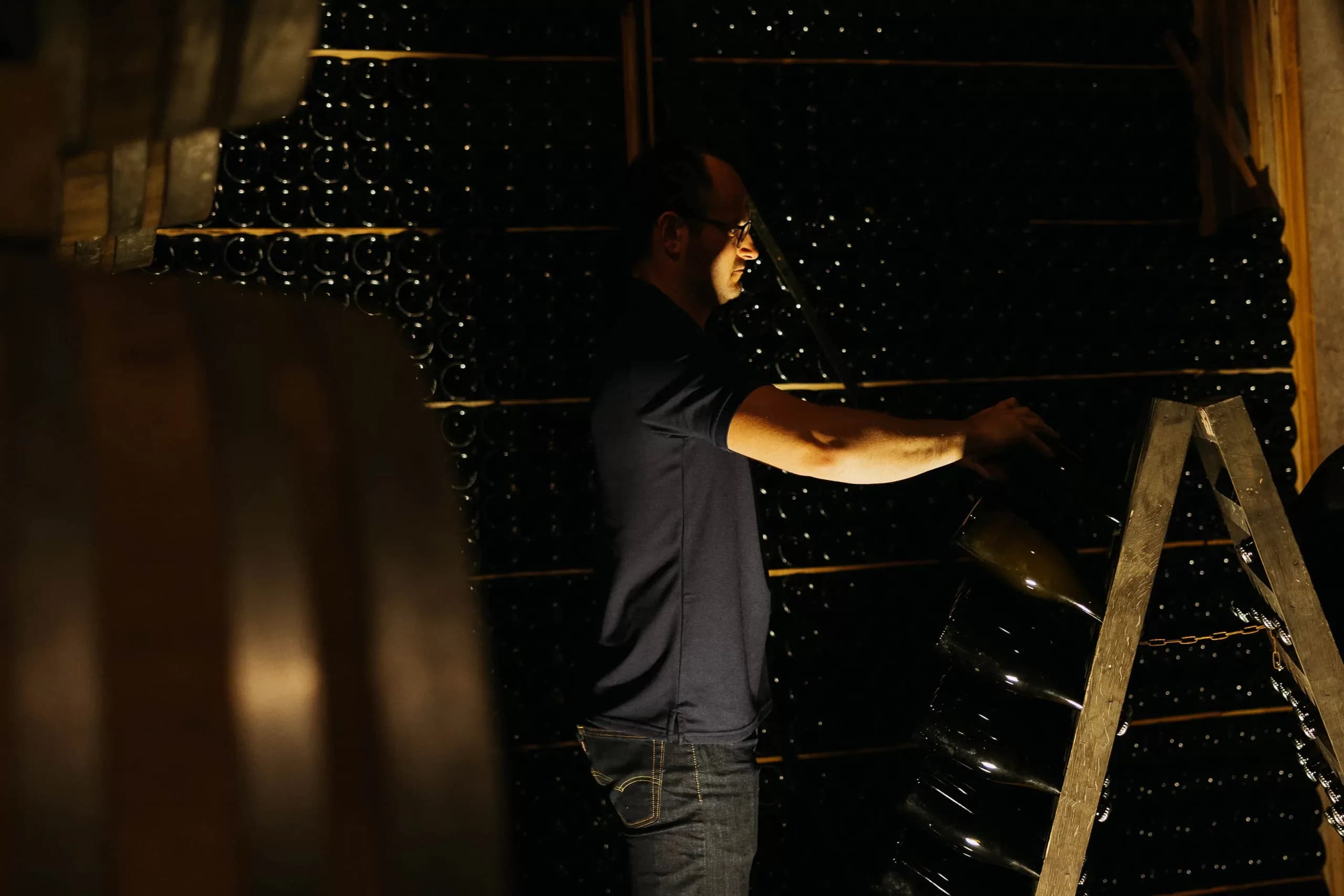
Our sparkling wines are made by the méthode champenoise, the bottle-by-bottle method Sébastien's family has used in Champagne for six generations. Each bottle rests over ten years on the lees and is handled at least 68 times by hand before it leaves the cellar. With a platter of oysters, we'd open the Sparkling Héritage Brut or the Blanc de Blancs, made from white grapes only. Most of these bottles go to our Wine Club members, and our article on the méthode champenoise walks through each step.
Does dry Riesling work with oysters?
Yes. A cool-climate dry Riesling has the high acidity and light body that raw oysters need, and no oak gets in the way. Pick a bottle labeled dry, since sugar can feel heavy next to a briny oyster. Off-dry Riesling is better kept for fried oysters or spicy seafood dishes.
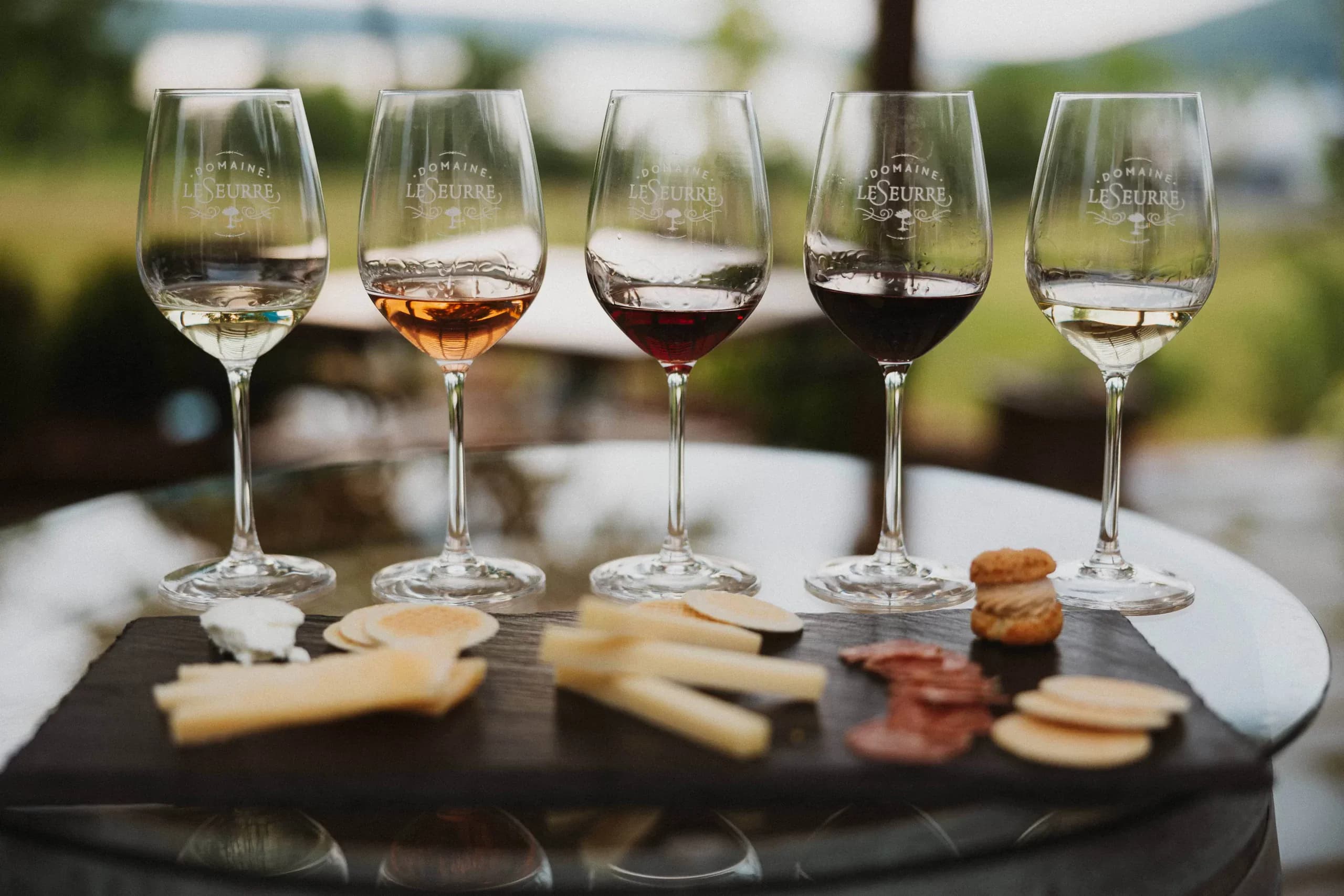
Cool-climate regions hold on to their acidity, and the Finger Lakes Wine Alliance describes ours as one, with Riesling as its signature grape. Our Dry Riesling is made to finish with very little sugar, which gives it the light body and high acidity an oyster wine needs.
Read the label carefully. A semi-dry or sweet Riesling keeps some grape sugar, which helps a great deal with spicy food and works against a raw oyster. If you're unsure which style a bottle is, our guide to whether Riesling is sweet or dry shows how to tell.
What about mignonette, lemon, and hot sauce?
Toppings change the pairing. Mignonette, the French sauce of shallots and vinegar, adds a lot of acidity, and an acidic dish needs a wine with at least as much. A lean wine that felt sharp on its own suddenly feels right, and lemon has the same effect. At the oyster table, the lemon, the vinegar, and the wine all bring acidity.
Hot sauce works the other way. Chili heat gets louder with alcohol and bubbles and softer with a little sugar, so if your table leans on hot sauce, an off-dry Riesling handles it better than a Brut sparkling wine. Our Riesling food pairing guide covers spicy dishes in more depth.
What wine goes with other seafood?
Match the wine to the cooking and the sauce. Raw shellfish and light white fish want lean, high-acid whites or sparkling wine, while lobster, crab, or scallops in butter call for a fuller white like a barrel-aged Chardonnay. Salmon and tuna can take a light red such as Pinot Noir, and fried seafood loves bubbles.
- Raw oysters, clams, and crudo: Brut sparkling wine or a dry Riesling.
- Steamed mussels and white fish: a dry, unoaked white like our Chardonnay Unoaked or Dry Riesling.
- Lobster, crab, or scallops with butter: a fuller white with oak, like our Chardonnay Barrel Select.
- Fried calamari, fish and chips, fried oysters: sparkling wine, for the bubbles against the oil.
- Grilled salmon or tuna: a dry rosé or a light, low-tannin red like Pinot Noir.
- Spicy shrimp or Thai-style seafood: an off-dry Riesling.
Tannin is the structure to watch with seafood. Firm, tannic reds and oily fish tend to clash and can leave an unpleasant aftertaste, which is why the reds that work with fish are the light ones. Our Pinot Noir food pairing guide and Chardonnay food pairing guide go into the details.
At the raw bar
- Oysters are salt and brine, so the wine brings acidity, the way the lemon does.
- Bubbles wash the salt off between oysters.
- Raw shellfish want a dry, unoaked wine.
- The richer the sauce, the fuller the white.
Where can you learn to pair seafood with us?
Seafood is an easy way into the structure-first method, which our food and wine pairing guide lays out in full. To taste it rather than read it, join our Signature Wine & Food Pairing, a seated experience that follows the seasons. Our sparkling wines are easiest to reach through the Wine Club, which includes complimentary tastings for members and three guests.
Sit down with us above Keuka Lake and taste the method.
Common questions about wine with oysters
Can you drink red wine with oysters?
It's rarely a good match, because the tannin in red wine clashes with raw shellfish. If you want red at a seafood meal, save it for grilled salmon or tuna and choose a light, low-tannin one.
Is Champagne good with oysters?
Yes. Champagne and other dry sparkling wines made the same way are a classic match, thanks to their high acidity, low sugar, and bubbles. Look for Brut or drier on the label.
What white wine goes with seafood?
For raw or lightly cooked seafood, a dry, high-acid, unoaked white like dry Riesling or Sauvignon Blanc. For seafood in a butter or cream sauce, a fuller white such as barrel-aged Chardonnay.
Written by
The Domaine LeSeurre Team
Céline & Sébastien LeSeurre and the team at Domaine LeSeurre — a family winery on Keuka Lake, in Hammondsport, New York. French roots, Finger Lakes soul.