Food & Wine · Pairing
Oaked or Unoaked? Why Your Chardonnay Changes the Menu
Two bottles of Chardonnay can call for two different dinners. We make both kinds from the same grape, one aged in a steel tank and one in an oak barrel, and we pour them with different plates. So when someone asks us for "a Chardonnay to go with dinner," our first question back is where it was aged.
On its own, Chardonnay has moderate acidity and a fairly neutral personality, so the cellar shows in it more than in most whites. Wine Folly describes it as one of the grapes most shaped by winemaking choices, and for food the choice that counts is stainless steel or oak. Our guide to food and wine pairing covers the broad rules; this page stays with Chardonnay.
What food goes with Chardonnay?
It depends on the style. Unoaked Chardonnay, aged in steel tanks, pairs with lighter dishes like shellfish, grilled fish, goat cheese and salads. Barrel-aged Chardonnay has a rounder, fuller texture and pairs with richer food: lobster, roast chicken, pork, cream sauces and squash. Match the weight of the wine to the weight of the dish.
Weight is the idea to hold on to. It is how heavy a wine feels in your mouth, the way whole milk feels heavier than skim, and food has weight too. Steamed mussels are light, while lobster with drawn butter is heavy. A pairing works when the two sit close, and when one is much heavier, it covers the other.
What is the difference between oaked and unoaked Chardonnay?
Unoaked Chardonnay is fermented and aged in stainless steel, which keeps air out, so the wine stays taut, light and high in perceived acidity. Oaked Chardonnay rests in wooden barrels, which let a tiny amount of oxygen in over time. That slow breathing softens the wine and gives it a rounder, fuller texture.
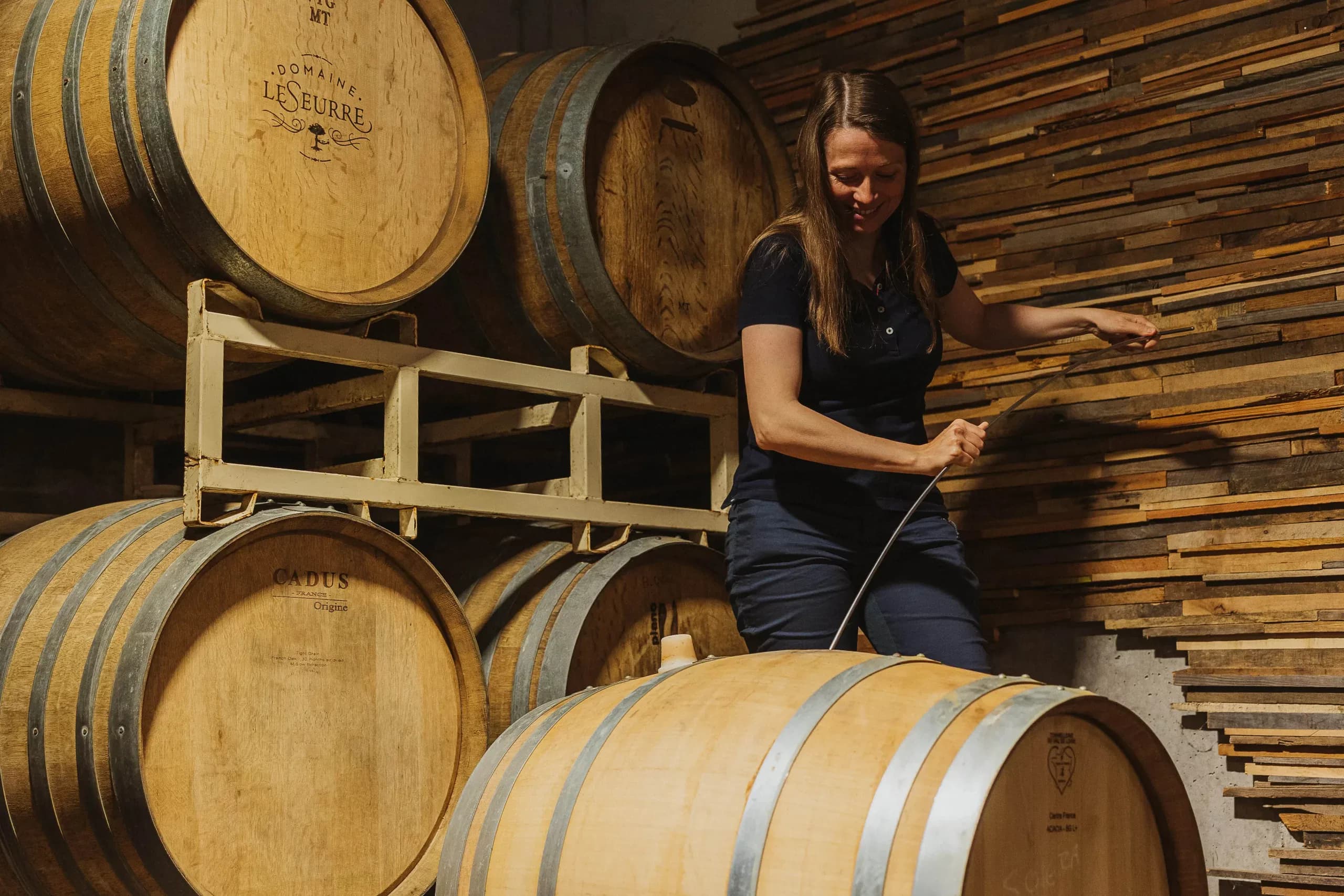
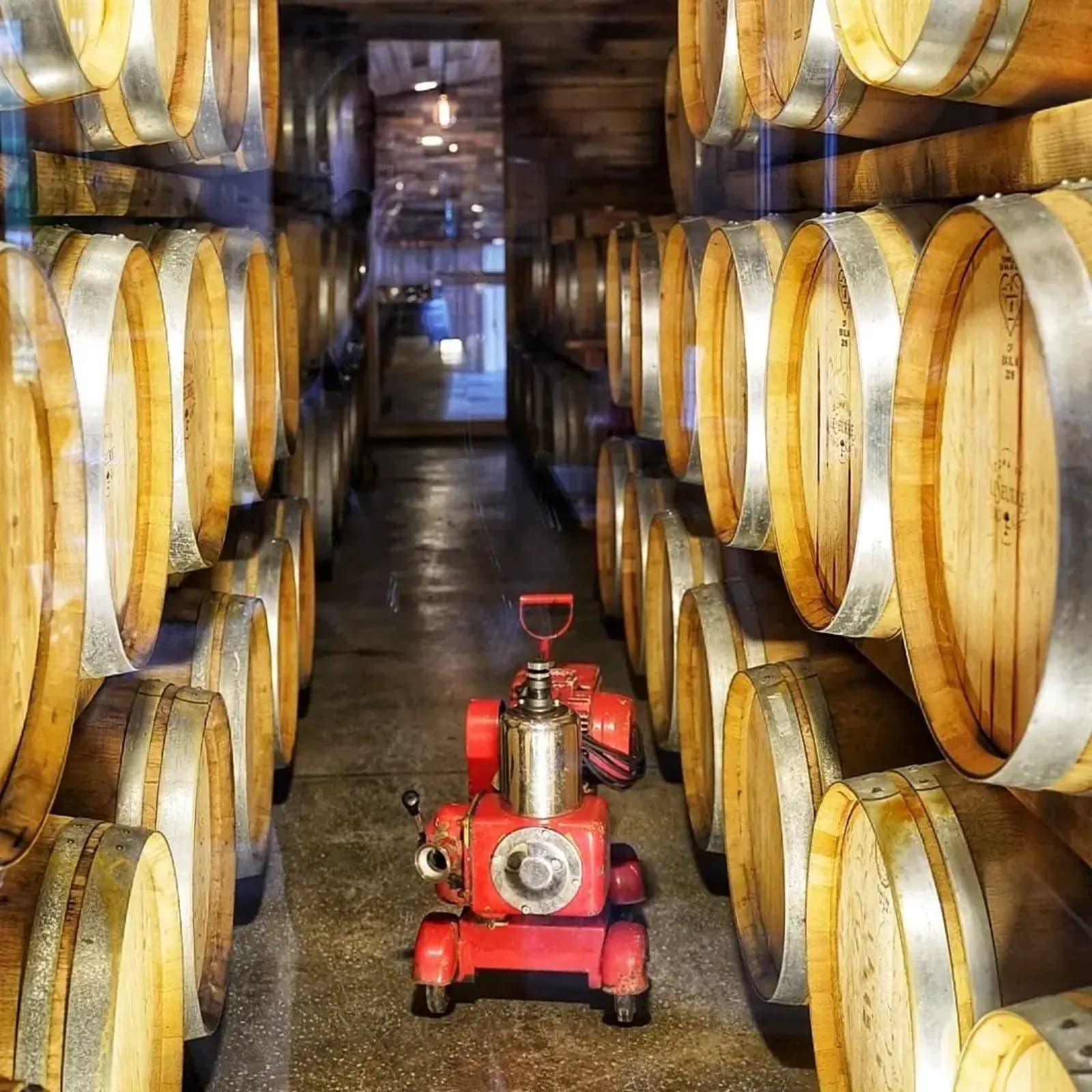
In the tasting room we describe a steel tank as a sealed room, where nothing gets in and the wine keeps the tension it had at harvest. A barrel is the same room with the windows barely open. Oak is slightly porous, so for months the wine takes in a very small amount of air, which rounds off its edges. Many barrel-aged Chardonnays also go through a natural conversion of their sharper acid into a softer one, and that adds to the rounder feel.
The same grape, in the same cellar above Keuka Lake, can therefore give two wines with two different structures. We wrote the long version of what a barrel does in French oak vs American oak.
What should you eat with unoaked Chardonnay?
Unoaked Chardonnay pairs with light, clean dishes that have some acidity of their own: oysters, clams, steamed mussels, grilled white fish with herbs, chicken piccata, goat cheese salads and sushi. Its lighter body and taut structure keep pace with delicate food, and its acidity matches lemon, vinegar and fresh herbs on the plate.
Our Chardonnay Unoaked is the bottle we open when the food is simple and bright. Pairing has a general rule that the wine should be at least as acidic as the dish, or it will seem flat beside it. A salad with vinaigrette, fish with a squeeze of lemon and fresh goat cheese all bring acidity, and a tank-aged Chardonnay has enough to meet them.
- Steamed mussels or clams with white wine and parsley
- Grilled trout or flounder with herbs
- Chicken piccata with lemon and capers
- A goat cheese and beet salad
- Sushi and simple raw fish
What should you eat with barrel-aged Chardonnay?
Barrel-aged Chardonnay pairs with rich, soft-textured food: lobster or crab with butter, roast chicken, pork chops, creamy pasta, risotto, corn chowder and roasted squash. The rounder texture from months in oak matches the weight of butter and cream, and the wine's acidity still cleans your mouth between bites. Fall dishes are a natural fit.
Our Chardonnay Barrel Select is aged in oak, and it comes out when there is butter or cream in the pan: a roast chicken with crisp skin and its juices spooned over, a butternut squash risotto, crab cakes with a rich sauce. The wine has the weight to stand next to those dishes and still be noticed.
If some of your guests prefer white wine at Thanksgiving, this is the Chardonnay to pour. Turkey, gravy, mashed potatoes and stuffing made with butter all sit on the heavy side, and a tank-aged white can feel thin beside them.
Steel or oak, plate by plate
- From the tank, lighter and taut: shellfish, lemony fish and salads.
- From the barrel, rounder and fuller: butter, cream, roast chicken and squash.
- Keep the weights close, a light wine with a light dish and a richer wine with a richer one.
- If the dish is acidic, the wine needs at least as much acidity.
How do you explain the difference at your own table?
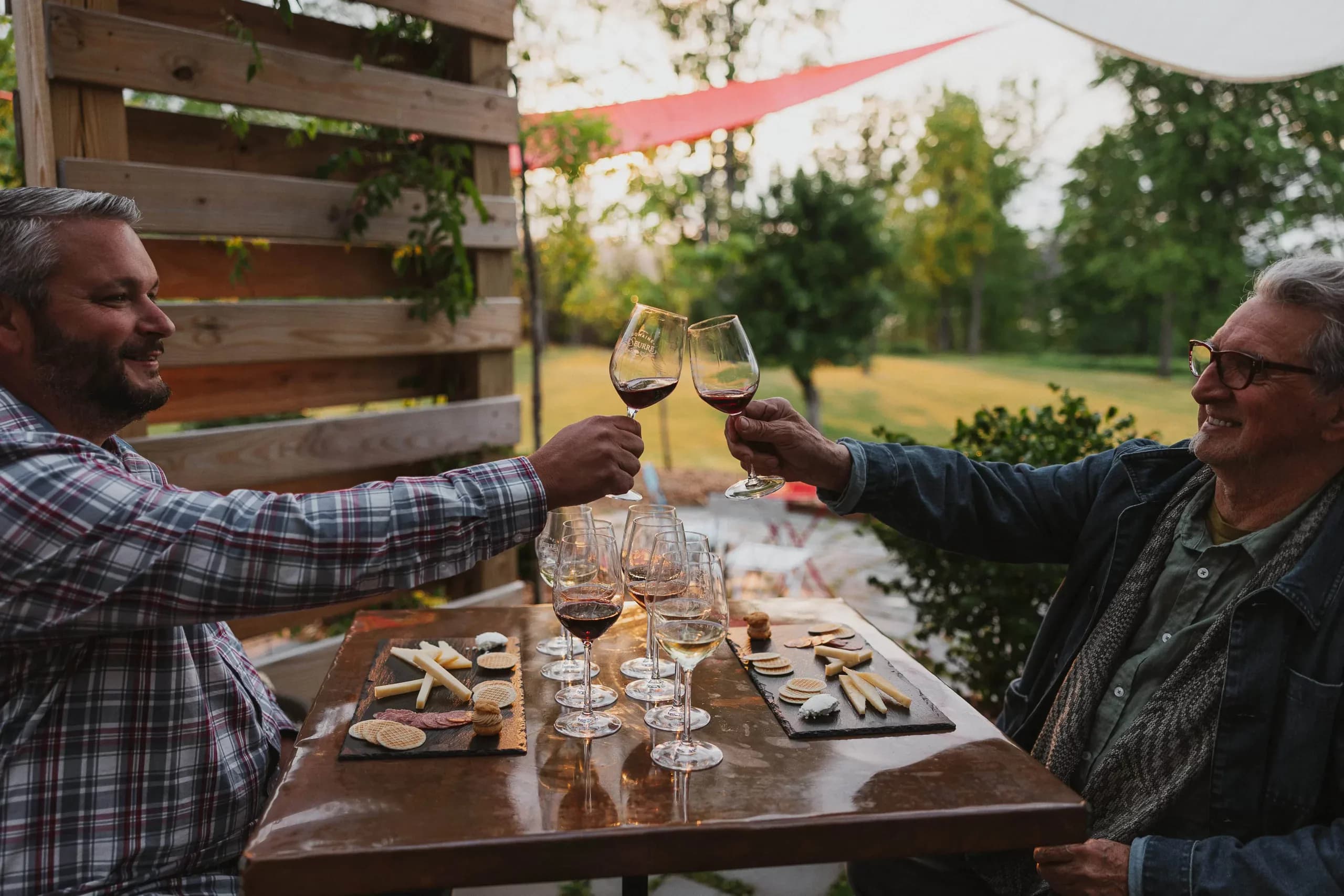
We like this exercise best of all. When friends come over, open both Chardonnays and set out two small plates, perhaps a few oysters and a spoonful of squash risotto. Tell them plainly that one stayed in a steel tank and stays light, while the other spent months in a barrel and feels rounder. Then let everyone try each wine with each plate and compare.
We want guests to leave able to explain the wine to their friends when they open it at dinner.
If you would rather have us walk you through it, our Signature Wine & Food Pairing is seated, lasts about 75 minutes and follows the season. To compare Chardonnay with our signature grape, read Riesling vs Chardonnay. Both of our Chardonnays are on our wines page.
Taste a tank-aged and a barrel-aged wine side by side, with food.
Which cheese, spice and chicken dishes suit Chardonnay?
What cheese goes with Chardonnay?
Unoaked Chardonnay suits fresh goat cheese and young, mild cheeses. Barrel-aged Chardonnay has the weight for richer cheeses like Brie, Comté or aged Gouda. Match the richness of the cheese to the texture of the wine.
Does Chardonnay go with spicy food?
It is a harder match. Alcohol makes chili heat feel stronger, and dry Chardonnay has no sugar to calm it. With mild spice, a tank-aged Chardonnay can work. With real heat, an off-dry Riesling is the easier choice.
Is Chardonnay good with chicken?
Yes, chicken is one of the easiest Chardonnay pairings. Pour an unoaked style with lemony or herb-roasted chicken, and a barrel-aged style with roast chicken in its juices or chicken in a cream sauce.
Written by
The Domaine LeSeurre Team
Céline & Sébastien LeSeurre and the team at Domaine LeSeurre — a family winery on Keuka Lake, in Hammondsport, New York. French roots, Finger Lakes soul.