Wine 101 · Serving
How to Open Sparkling Wine With a Whisper Instead of a Bang
When a sparkling wine opens with a loud bang at our table, someone went a little too fast. We aim for a whisper, a soft hiss as the cork eases out and the pressure slips away. It's safer, and the wine stays in the bottle. Once you know the gesture, it takes about ten seconds.
Whether the bottle is Champagne, Prosecco, or a méthode champenoise sparkling wine like ours, the cork, the cage, and the pressure behind them work the same way. So does the gesture we use in the cellar and at the table.
Why does a sparkling wine cork need care?
A bottle of traditional-method sparkling wine holds roughly five to six times the air pressure around us, about three times the pressure in a car tire. That pressure pushes hard on the cork. Let it go all at once and the cork can fly fast enough to hurt someone, especially an eye.
A méthode champenoise wine gets its bubbles from a second fermentation inside the sealed bottle, and the gas stays trapped there until you open it. We explain how it gets in there in méthode champenoise, explained. At opening time, the cork wants out, and you decide when and how fast it goes.
How do you open a bottle of Champagne or sparkling wine?
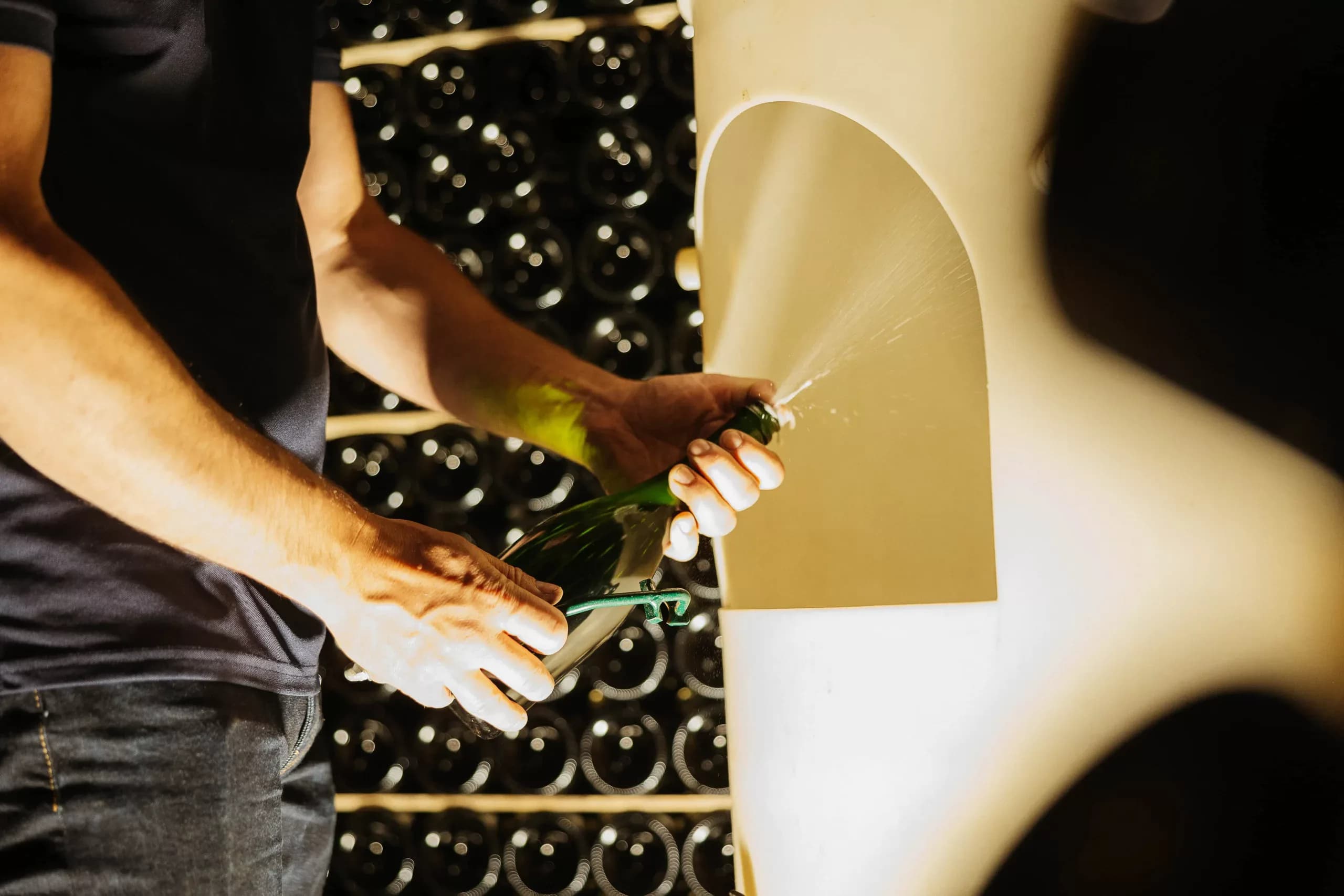
Chill the bottle well. Remove the foil, then loosen the wire cage while keeping your thumb pressed on the cork. Leave the cage on. Tilt the bottle to about 45 degrees, pointed away from people. Hold the cork firmly and slowly turn the bottle, rather than the cork, until the cork eases out with a soft hiss.
- Chill the bottle properly. Cold wine holds its bubbles more calmly than warm wine.
- Dry the bottle and drape a kitchen towel or napkin over your hand. It gives you grip and catches the cork if it jumps.
- Tear off the foil. Put your thumb on top of the cork and keep it there from now on.
- Loosen the wire cage with a few turns of its little loop, but leave it on the cork. It gives your hand something to grip.
- Tilt the bottle to about 45 degrees, pointed at a wall, well away from faces, lamps, and windows.
- Hold the cork and cage still in your towel-covered hand, and turn the base of the bottle slowly with the other.
- As the cork starts to push back, hold it harder and let it come out gently, with a whisper.
- Keep the bottle at that angle for a second or two before you pour.
Turning the bottle instead of the cork surprises people. The base gives you a big, steady handle, while the cork is small and slippery. Wine Folly describes the same steps: loosen the cage but keep it on, hold the bottle at 45 degrees, and rotate the base while holding the cork and cage firmly.

Why is a quiet whisper better than a loud pop?
A loud pop means the pressure escaped all at once. The cork flies, the wine foams up the neck, and much of the gas you paid for is gone before it reaches a glass. A slow, controlled release keeps the cork in your hand and the bubbles in the wine, where they belong.
The 45-degree tilt helps here as well. Wine Folly suggests holding the bottle at that angle for a second or two after the cork comes out, so the pressure escapes without carrying wine with it.
Before you reach for the cage
- Cold bottle, towel over the hand, thumb on the cork.
- Loosen the cage and leave it on.
- Point the bottle at about 45 degrees, away from people.
- Hold the cork still and turn the bottle.
- Ease it out until you hear a whisper.
What should you do if the cork is stuck?
Keep the cage on and your hand over the cork. Grip the cork through a towel and turn the bottle slowly, rocking the cork very slightly as you go. A wide rubber jar opener or a pair of Champagne pliers gives extra grip. Never use a corkscrew on a sparkling wine, since the pressure can drive the cork out suddenly.
A stubborn cork has usually been cold and dry for a while, and patience frees most of them. Warming the neck with your hand for a minute can help it loosen a little. Keep the bottle pointed somewhere safe the whole time, because you won't know exactly when it will give.
What about sabering a bottle?
Sabering, or sabrage, is the ceremonial way of opening sparkling wine by striking the neck with the back of a blade so the collar breaks off cleanly with the cork. It's a trained gesture. It sends glass flying and can go wrong, so we leave it to people who have practiced it with someone experienced.
We understand the pull, because sabering is a lovely bit of theater. A kitchen knife and a warm bottle at a party, though, is how evenings end in the emergency room. If you want a show, open the bottle slowly and silently in front of your guests. Most people have never seen one opened without a sound.
How should you pour sparkling wine once it's open?
Pour a little into each glass first and let the foam settle, then go back and top up. Tilting the glass slightly helps. If the bottle isn't finished, a proper hinged stopper and a cold fridge will hold it for a day or two. We cover that in how to store sparkling wine and, for every other kind of bottle, in how long wine lasts after opening.
Our own sparkling wines are made by the méthode champenoise and go mostly to our Wine Club members. The holidays are when a lot of sparkling wine gets opened, so the gesture is worth a little practice before then. If you'd rather watch it done first, we're happy to show you when you visit us above Keuka Lake.
Come sit down with us and learn the gesture at the table.
Common questions about opening sparkling wine
Should you twist the cork or the bottle?
The bottle. Hold the cork and cage firmly in one hand, ideally through a towel, and slowly turn the base of the bottle with the other. It gives you far more control than twisting the small cork.
Do you take the cage off before opening Champagne?
Loosen it, but leave it on. The loosened cage stays over the cork and gives your hand a better grip, and your thumb keeps the cork in place while you work.
How cold should sparkling wine be before opening?
Well chilled. A few hours in the fridge, or twenty to thirty minutes in an ice bucket with ice and water, calms the pressure and makes the cork easier to control. A warm bottle is the one most likely to foam over.
Is it safe to open sparkling wine with a corkscrew?
No. Sparkling wine corks are held in by pressure, and a corkscrew can loosen the cork suddenly with the screw still in it. Use your hand and a towel instead.
Written by
The Domaine LeSeurre Team
Céline & Sébastien LeSeurre and the team at Domaine LeSeurre — a family winery on Keuka Lake, in Hammondsport, New York. French roots, Finger Lakes soul.